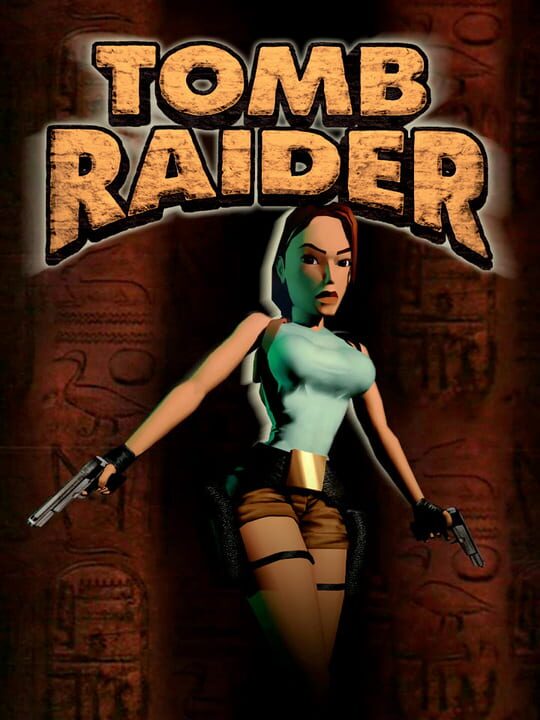
Tomb Raider
Main Game
RELEASED
8.1
Oct 24, 1996
Sega SaturnDOS+5byCore Design•Square Enix
Overview:|
As a foundational 3D action-adventure main game released in 1996, Tomb Raider tasks you with guiding archaeologist Lara Croft through perilous tombs to recover artifact fragments, specifically the Atlantean Scion. The core loop blends precise platforming and acrobatic movement with environmental puzzle-solving and third-person shooter combat against wildlife. The story follows Croft's globe-trotting pursuit across ancient sites in Peru, Greece, Rome, and Egypt after a betrayal. This influential title has since received multiple remakes and a remaster, reflecting its enduring design across various platforms.
This is the foundational 3D action-adventure title that introduced the world to the iconic archaeologist, Lara Croft. Released in 1996, this main game casts players as Croft, a highly skilled British adventurer hired to retrieve a mysterious artifact from a tomb in Peru. This initial quest quickly spirals into a globe-trotting pursuit across ancient sites in Greece, Rome, and Egypt, as Lara races to recover the remaining pieces of the powerful Atlantean Scion before they fall into dangerous hands. The atmosphere blends exploration of vast, often perilous ruins with moments of intense action and cerebral challenges.
Core Gameplay Experience and Mechanics
The gameplay loop centers on navigating complex, multi-tiered environments that demand precise movement and environmental manipulation. Players must guide Lara through intricate tombs and dangerous locales, utilizing a robust set of acrobatic maneuvers.
What are the main gameplay elements?
The experience is a distinct blend of three primary genres:
- Platforming: Precise jumping, climbing, and balancing are essential to traverse the often deadly architecture of the ancient sites.
- Puzzle Solving: Progress is frequently gated by environmental puzzles that require observation, item retrieval, and manipulation of mechanisms within the ruins.
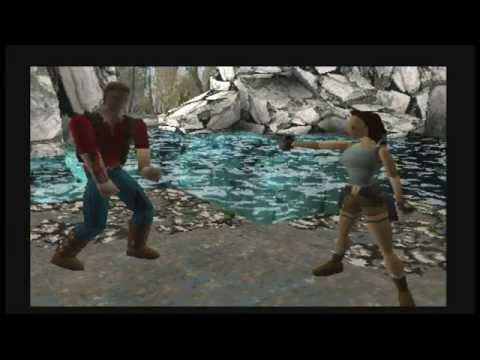
- Shooter Action: Lara must defend herself against dangerous wildlife and hostile creatures encountered during her expeditions, utilizing dual pistols as her primary means of defense.
The objective in each area is to locate treasures and artifacts, ultimately leading to the next stage of the quest for the Scion fragments. The game emphasizes exploration and careful navigation over constant combat.
Setting and Atmosphere
The game establishes a tone of isolated adventure within ancient, forgotten spaces. The atmosphere is characterized by large, open-ended level designs that encourage thorough searching. Players will explore subterranean caverns, crumbling temples, and hidden chambers, all rendered in the early 3D style that defined the era.
Platform Availability and Content
This original main game has seen several releases across various hardware generations since its debut. Original platforms included the Sega Saturn, DOS, and PC (Microsoft Windows), with later ports appearing on the original PlayStation and Nintendo 64, as well as handheld systems like the PlayStation Portable.
Regarding additional content, this specific main release contains no official Downloadable Content (DLCs) or Expansions.
What is the legacy of this influential title?
This game was critically acclaimed upon release and proved highly influential in the development of 3D action-adventure games. Its success established a major media franchise, leading to numerous sequels and related media projects.
While the original remains a landmark title, it has received several modern interpretations, including three distinct remakes and one remaster, allowing new players to experience the core adventure across different graphical fidelity levels.
Game Details
Primary Name: Tomb Raider
Alternative Names:
Tomb Raider 1 (Alternative spelling)
Tomb Raider featuring Lara Croft (Alternative spelling)
Tomb Raider I (Alternative spelling)
TR (Acronym)
古墓奇兵 (Chinese title - traditional)
古墓丽影 (Chinese title - simplified)
Tomb Raiders (Japanese title - romanization)
Tomb Raider starring Lara Croft (Alternative spelling)
TR1 (Alternative spelling)
TRI (Alternative spelling)
Type: Main Game
Series: Tomb Raider
Developer: Core Design
Publisher: Square Enix, Sony Computer Entertainment, Eidos Interactive
Engine: Core Design
Release Information
Release Date: Oct 24, 1996
Genres & Themes
Genres: Shooter, Platform, Puzzle, Adventure
Themes: Sandbox, Action, Survival
Platforms
Sega SaturnDOSPC (Microsoft Windows)PlayStation 3PlayStation PortablePlayStationNintendo 64
Game Modes
Perspective: Third person
Player Modes: Single-player
Game Modes: Single player
Age Ratings
ESRB:T (Teen)
CLASS_IND:16+

 Soren
Soren