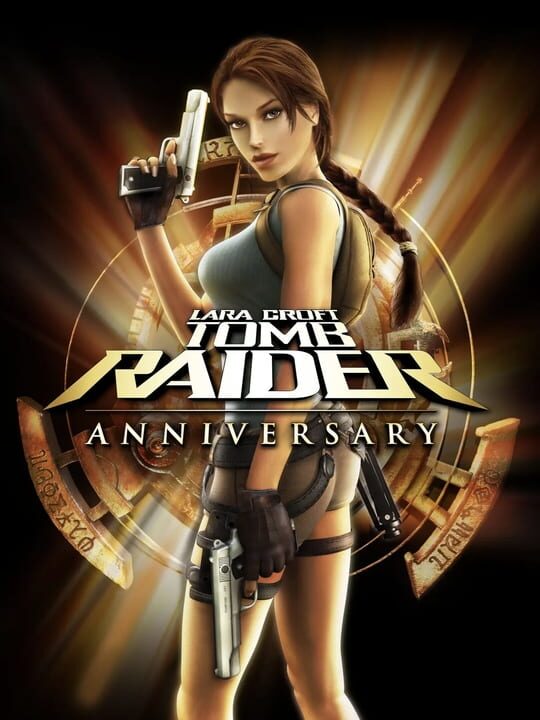
Tomb Raider: Anniversary
Remake
RELEASED
7.7
Jun 1, 2007
Xbox 360PlayStation 2+5byBuzz Monkey Software•Feral Interactive
Part of: Tomb Raider
Overview:|
As a 2007 remake, Tomb Raider: Anniversary rebuilds the original adventure using a modern engine, preserving the core story of Lara Croft seeking the Scion artifact. You explore familiar locations, but layouts and puzzles are redesigned to incorporate new mechanics like rope swinging and grappling hook use. While the sequence of levels remains faithful, expect enhanced visuals and expanded dialogue, modernizing the classic platforming and shooting experience.
This title is a comprehensive remake of the foundational adventure game, rebuilt from the ground up using modern technology. It retains the core narrative structure and level progression of the classic title while significantly overhauling its presentation and mechanics. Players step back into the role of the renowned archaeologist, Lara Croft, hired by the enigmatic Jacqueline Natla to locate the powerful artifact known as the Scion, rumored to hold secrets related to the lost continent of Atlantis and the mystery surrounding Lara's mother.
Core Experience and Fidelity to the Original
The game faithfully recreates the locations and sequence of exploration found in the initial installment. However, the environments have been entirely redesigned, featuring new layouts and puzzles that leverage the updated engine capabilities. While the fundamental goal remains the same—navigating perilous ruins and solving intricate environmental challenges—the execution of these challenges has been modernized.
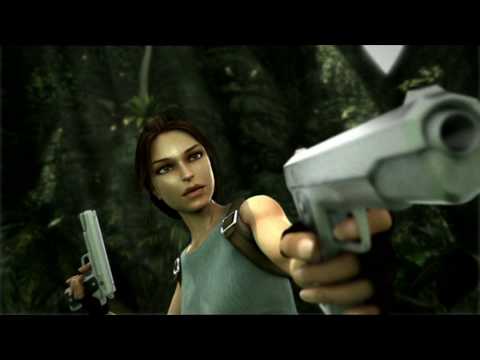
Visually, the game benefits from a technically advanced graphics engine, offering substantially improved fidelity compared to the original 1996 version. Audio elements, including dialogue and soundscapes, have also been expanded or modified to enhance the atmosphere of the adventure.
What Gameplay Mechanics Have Been Introduced in This Remake?
The modernization extends deeply into Lara's movement set. Players can now utilize new traversal options that were unavailable in the original version. This includes the ability to swing on ropes and use a grappling hook at designated points, adding layers of complexity and fluidity to platforming sequences.
The genre blend remains true to the source material, encompassing elements of Shooter, Platforming, Adventure, and environmental Simulation, requiring both precise action and thoughtful puzzle-solving.
Preserved Elements Versus Changes
The fundamental storyline and the sequence in which the various ancient sites are visited remain identical to the source material. The primary divergence lies in the puzzle design and the visual presentation. The narrative itself sees some expansion through revised cutscenes and dialogue, offering a slightly richer context to the quest for the Scion.
Platform Availability and Content
This title was released across a wide array of platforms, including the Xbox 360, PC (Microsoft Windows), PlayStation 2, PlayStation 3, Wii, Mac, and the PlayStation Portable. It was also available on the OnLive Game System.
Regarding supplementary content, there are no officially released downloadable content packs or expansions associated with this specific remake.
How does this version update the classic adventure?
The update focuses on technological enhancement and mechanical refinement. It preserves the spirit and structure of the original game while integrating modern control schemes and visual standards, making the classic journey accessible with contemporary polish.
Game Details
Primary Name: Tomb Raider: Anniversary
Alternative Names:
TR Anniversary (Acronym)
古墓奇兵: 重返禁地 (Chinese title - traditional)
Lara Croft Tomb Raider: Anniversary (Alternative title)
Томб Рейдър: Юбилейно издание (Russian title)
tra.exe (Windows Executable)
Type: Remake
Part of: Tomb Raider
Series: Tomb Raider: Legend
Developer: Buzz Monkey Software, Crystal Dynamics
Publisher: Feral Interactive, Eidos Interactive, Square Enix, Crystal Dynamics
Engine: Crystal Engine
Release Information
Release Date: Jun 1, 2007
Genres & Themes
Genres: Shooter, Platform, Simulator, Strategy, Adventure
Themes: Action
Platforms
Xbox 360PlayStation 2PC (Microsoft Windows)PlayStation 3OnLive Game SystemPlayStation PortableMac
Game Modes
Perspective: Third person
Player Modes: Single-player
Game Modes: Single player
Age Ratings
ESRB:T (Teen)
PEGI:16+
CERO:B (12+)
USK:12+
GRAC:12+
ACB:M (Mature)
Moderate violence

 Soren
Soren