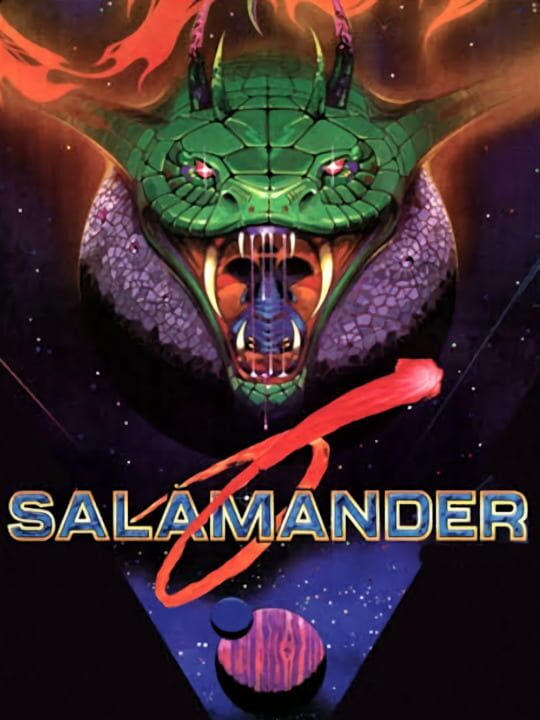
Salamander
Main Game
RELEASED
7.0
4 jul 1986
Sharp X68000ArcadebyKonami
Resumen:|
{"overview":"
Salamander es un shooter de arcade clásico de Konami, lanzado originalmente en 1986. En este juego, pilotas una nave a través de combates aéreos intensos, donde las fases alternan dinámicamente entre desplazamiento horizontal y vertical. Destaca por su sistema de potenciadores simplificado y la opción de juego cooperativo para dos jugadores. Es una experiencia arcade pura, enfocada en la adaptación constante a los cambios de perspectiva del escenario.
","tokens":{"input":1905,"output":101,"total":2006}}{"overview":"
\n
\n\nEste es un clásico de disparos (shooter) de arcade que se lanzó originalmente en 1986, llevando acción rápida a plataformas como Sharp X68000 y máquinas recreativas. Como título principal dentro del género de disparos, ofrece combate aéreo intenso y de alto riesgo a través de entornos variados.
\nMecánicas Centrales del Juego
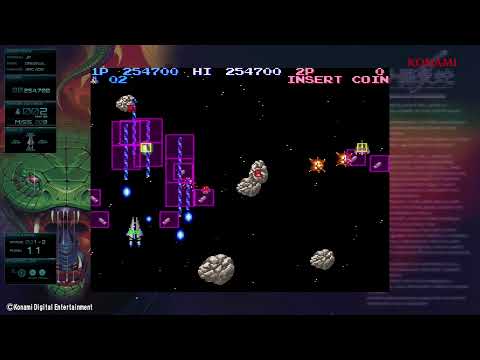
\nLa experiencia principal gira en torno a pilotar una nave espacial altamente funcional a través de oleadas de fuerzas enemigas. Los jugadores deben navegar por escenarios que cambian dinámicamente entre perspectivas de desplazamiento horizontal y vertical, lo que exige una adaptación constante en el movimiento y la estrategia.
\n\nUna característica distintiva de este título es su enfoque en las mejoras. En comparación con otros juegos del género, presenta un sistema de potenciadores simplificado, optimizando el proceso de mejorar las capacidades de la nave sin sacrificar la profundidad del combate.
\n\nJuego Cooperativo para Dos Jugadores
\n¿Cuál es la forma principal de experimentar este juego?
\nUn elemento significativo de la jugabilidad es la inclusión de cooperativo para dos jugadores. Esto permite que dos pilotos se unan simultáneamente, coordinando ataques y defensas contra el implacable asalto enemigo, añadiendo una capa de trabajo en equipo al desafío arcade.
\n\nVariedad y Diseño de Niveles
\nEl juego se estructura en torno a etapas distintas que alternan la dirección del desplazamiento. Esta decisión de diseño asegura que los jugadores no puedan depender de un único patrón de movimiento, forzándolos a dominar tanto las maniobras de desplazamiento lateral como los patrones de ascenso/descenso vertical.
\n\nEstado del Contenido Adicional
\nAl ser un título de arcade principal lanzado en 1986, este juego se mantiene enfocado en su experiencia central. Actualmente, no hay paquetes de contenido descargable (DLC) ni expansiones asociados con este lanzamiento.
\n\n¿Qué define su legado en el género?
\nMuchas de las innovaciones mecánicas introducidas aquí, particularmente los escenarios de desplazamiento alternado y la estructura de potenciadores optimizada, se convirtieron más tarde en elementos fundamentales adoptados por entregas posteriores en franquicias de disparos relacionadas.
","tokens":{"input":2095,"output":525,"total":2620}}Game Details
Primary Name: Salamander
Alternative Names:
沙羅曼蛇 (Chinese title - simplified)
Type: Main Game
Series: Salamander
Developer: Konami
Publisher: Konami
Release Information
Release Date: jul 4, 1986
Genres & Themes
Genres: Shooter, Arcade
Themes: Action, Science fiction
Platforms
Sharp X68000Arcade
Game Modes
Perspective: Side view
Player Modes: Offline Co-op, Campaign Co-op, Split Screen, Multiplayer
Game Modes: Single player, Co-operative, Split screen
Age Ratings
ESRB:E (Everyone)
CERO:A (All Ages)

 Soren
Soren