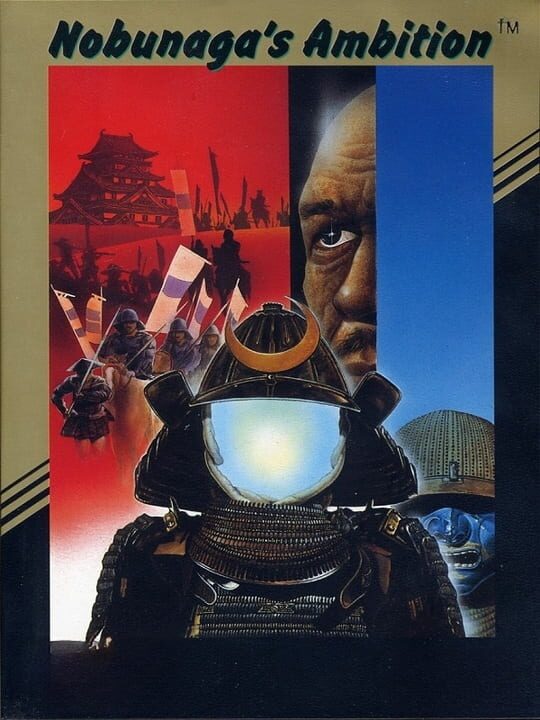
Nobunaga's Ambition
Main Game
RELEASED
6.9
1 dic 1986
Turbografx-16/PC Engine CDDOS+12byKoei
Resumen:|
{"overview":"
Nobunaga's Ambition (1986) es un juego principal de estrategia por turnos, simulación y rol donde asumes el rol de un Daimyo, como Oda Nobunaga, con el objetivo de unificar las 50 provincias de Japón. El juego se centra en gestionar recursos, desarrollar infraestructura, manejar oficiales y ejecutar campañas militares y diplomáticas. Su característica principal es la profunda simulación de gestión de dominio, donde el éxito depende tanto de la administración interna como de las victorias en el campo de batalla.
","tokens":{"input":2364,"output":115,"total":2479}}{"overview":"
\nEste título, lanzado originalmente en 1986, sumerge a los jugadores en el turbulento período Sengoku de la historia japonesa, una época definida por la guerra civil constante y la lucha por la unificación. Como una entrega fundamental en el género de estrategia, el juego encarga al jugador asumir el rol de un poderoso Daimyo —como Oda Nobunaga, Takeda Shingen o Uesugi Kenshin— y maniobrar a través de complejos paisajes políticos, militares y económicos. El objetivo final es ambicioso: conquistar y unificar los 50 reinos que se extienden desde Ezo en el norte hasta Kyushu en el sur, estableciendo un dominio único sobre Japón.\n
\n\nMecánicas Centrales de Juego y Estrategia
\n\nLa experiencia combina elementos de rol, simulación y estrategia por turnos profunda. La jugabilidad se centra en la gestión de un dominio, lo que requiere una atención cuidadosa a varios sistemas interconectados. Los jugadores deben equilibrar los asuntos internos, la expansión militar y la diplomacia para lograr el objetivo de la unificación.\n\nGestión del Dominio
\nFundamental para la experiencia es la administración de su dominio elegido. Esto incluye:
\n- \n
- Asignación de Recursos: Supervisar la recaudación de arroz (el recurso principal) a través del desarrollo agrícola y la tributación. \n
- Infraestructura: Invertir en la construcción de castillos, mejorar defensas y desarrollar centros comerciales para aumentar los ingresos y la preparación de tropas. \n
- Gestión de Oficiales: Reclutar samuráis cualificados, asignarles roles apropiados basados en sus estadísticas (como destreza militar, administración o diplomacia) y asegurar su lealtad. \n
Acción Militar y Diplomática
\nCuando se trata de interactuar con los Daimyo rivales, los jugadores participan en maniobras estratégicas por turnos. Esto abarca:
\n- \n
- Invasión y Defensa: Planificar y ejecutar campañas militares a través del mapa, utilizando las ventajas del terreno y la composición de las tropas. Las batallas se resuelven mediante cálculos estratégicos basados en la habilidad del general y el número de efectivos. \n
- Diplomacia: Negociar alianzas, concertar matrimonios para asegurar pactos o emplear el espionaje para debilitar a los rivales antes de un ataque. \n
¿Qué distingue a este simulador dentro del género de Estrategia?
\nEsta simulación destaca por su ambientación histórica integral y la profundidad de su modelo estratégico para su época. No es puramente un juego de guerra táctico; el éxito depende igualmente de una gobernanza eficaz y una planificación económica tan crucial como las victorias en el campo de batalla. La atmósfera captura la maniobra política de alto riesgo característica de la era, donde una cosecha mal gestionada o una alianza mal elegida puede conducir a la ruina.
\n\nDisponibilidad de Plataformas
\nEste título ha tenido numerosos lanzamientos a través de diversas arquitecturas informáticas desde su debut. Está disponible en plataformas que incluyen el PC Engine CD, DOS, PC (Microsoft Windows), las series PC-9800, Sharp X68000, Amiga y Sega Mega Drive/Genesis, entre otras.
\n\nContenido Adicional
\nEsta entrega principal específica no incluye contenido descargable ni expansiones oficiales asociadas.
","tokens":{"input":2556,"output":779,"total":3335}}Game Details
Primary Name: Nobunaga's Ambition
Alternative Names:
Nobunaga no Yabou: Zenkoku-ban (Japanese title - romanization)
Nobunaga's Ambition: Zenkokuban (Alternative title)
Nobunaga's Ambition: Nation (Alternative title)
Nobunaga's Ambition: National Version (Japanese title - romanization)
Nobunaga2_Launcher.exe (Windows Executable)
Type: Main Game
Series: Nobunaga's Ambition
Developer: Koei
Publisher: Koei
Release Information
Release Date: dic 1, 1986
Genres & Themes
Genres: Role-playing (RPG), Simulator, Strategy, Turn-based strategy (TBS)
Themes: Sandbox, Warfare, Fantasy, Historical
Platforms
Turbografx-16/PC Engine CDDOSSharp X1PC (Microsoft Windows)PC-9800 SeriesPC-8800 SeriesTurboGrafx-16/PC EngineSharp X68000FM-7Sharp MZ-2200MSXAmigaSega Mega Drive/GenesisMac
Game Modes
Perspective: Bird view / Isometric
Player Modes: Single-player
Game Modes: Single player, Multiplayer
Age Ratings
ESRB:E (Everyone)
PEGI:3+
CERO:A (All Ages)
Videos
No videos available for this game.

 Soren
Soren