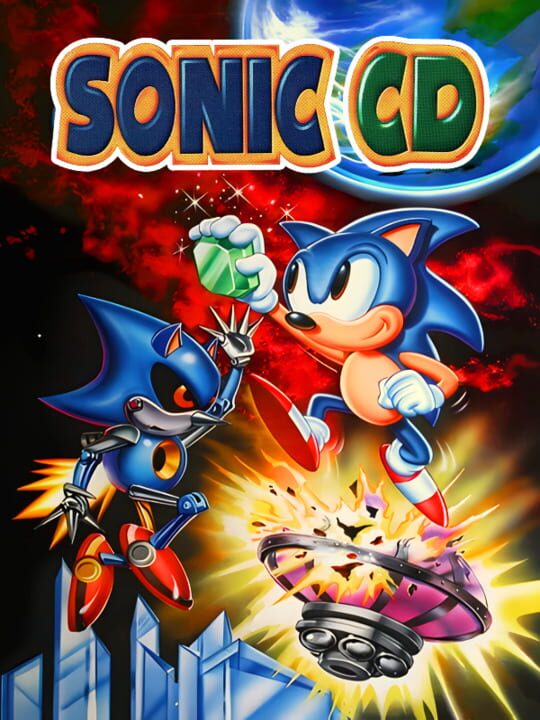
Sonic CD
Main Game
RELEASED
7.4
Sep 23, 1993
PC (Microsoft Windows)Sega CDbySonic Team•Sega
Overview:|
This 1993 main platform game sends you to the Little Planet to stop Dr. Eggman from controlling time using the Time Stones. The core loop involves high-speed traversal across levels, uniquely featuring time travel mechanics where reaching high speeds allows you to jump between Past, Present, and Future timelines. To achieve the best ending, players must strategically alter the past by destroying Eggman's machinery in earlier eras. This title has received at least one remaster since its original Sega CD release.
This is a main entry in the platform genre, originally launching in 1993 on the Sega CD platform and later seeing availability on PC (Microsoft Windows). The core experience centers on a high-speed adventure where the protagonist travels to the mysterious Little Planet—a world that materializes only once a year.
The setting is immediately characterized by conflict: the once beautiful world has been imprisoned beneath a twisted metallic shell. The antagonist, Dr. Eggman, has arrived to seize the powerful Time Stones hidden within the planet, intending to gain control over temporal mechanics.
Core Gameplay Mechanics and Temporal Traversal
The primary gameplay loop involves navigating vibrant, fast-paced platforming stages. A defining feature of this installment is the mechanic allowing players to traverse through time within specific zones. By achieving a required velocity, players can locate warp points that transport them to different eras of the same level: the Past, the Present, the Future, and a Distant Future.
The objective tied to these temporal shifts is critical to progression. To secure the favorable outcome for Little Planet, players must actively change the past by locating and destroying Dr. Eggman’s machinery in the earlier time periods. Recovering the scattered Time Stones is essential to fully reversing the villain's influence and achieving the best ending.
What makes the time mechanic unique in this platformer?
The integration of time manipulation as a central, mandatory mechanic sets this title apart from other high-speed platformers. Success is not solely dependent on reflexes in the present moment; it requires strategic interaction with the environment across multiple timelines to fundamentally alter the level layout and the narrative outcome of the world.
How does visiting different eras affect the game world?
The visual and structural state of each level changes drastically depending on the era visited. For instance, the Past often appears lush and undeveloped, while the Future can range from a technologically advanced state to a desolate, ruined landscape if the player fails to intervene in the earlier timelines. This mechanic directly ties level completion and world restoration to the player's actions across time.
Available Content and Revisions
As a main game release, this title does not feature any downloadable content (DLC) or standalone expansions. Since its initial debut, the game has received at least one remaster, updating the experience for modern hardware configurations.
Game Details
Primary Name: Sonic CD
Alternative Names:
SCD (Acronym)
Sonic the Hedgehog CD (Alternative title)
Type: Main Game
Series: Sonic the Hedgehog
Developer: Sonic Team
Publisher: Sega
Release Information
Release Date: Sep 23, 1993
Genres & Themes
Genres: Platform
Themes: Action, Science fiction
Platforms
PC (Microsoft Windows)Sega CD
Game Modes
Perspective: Side view
Player Modes: Single-player
Game Modes: Single player
Age Ratings
ESRB:E (Everyone)
PEGI:3+
CLASS_IND:L (All Ages)



 Soren
Soren