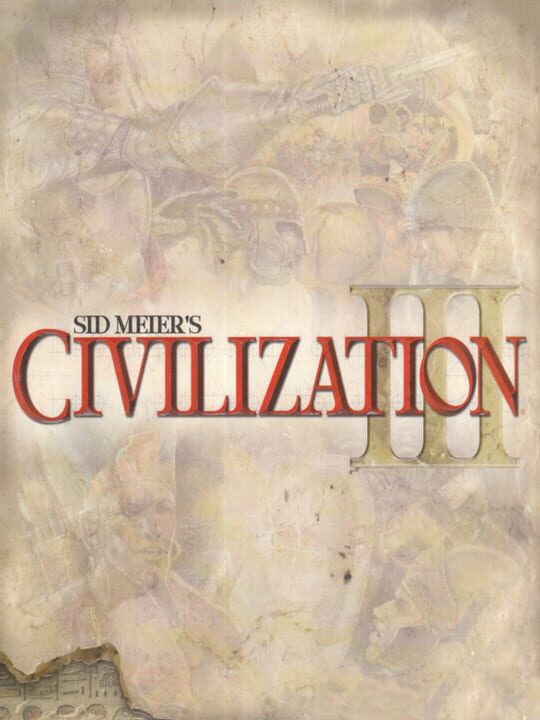
Sid Meier's Civilization III
Main Game
RELEASED
8.0
Oct 30, 2001
PC (Microsoft Windows)MacbyFiraxis Games•MacSoft Games
Overview:|
This 2001 turn-based strategy game tasks you with guiding a civilization from ancient history through the modern age. The core loop involves city management to generate resources, advancing technology via a research tree, and expanding cultural influence. Success requires balancing infrastructure, diplomacy, trade, and military power to build an enduring empire. The game features two official expansions adding further depth.
This title, released in 2001 for PC (Microsoft Windows) and Mac, is a foundational entry in the turn-based strategy genre. It places players in command of an entire civilization, tasking them with guiding their people from the dawn of recorded history through to the modern era and beyond. The core objective revolves around establishing and nurturing an empire built around a network of cities, which serve as the hubs for resource generation, construction, and technological progress. Success requires a careful balancing act across multiple critical domains: infrastructure development, resource management, diplomacy, trade, cultural growth, and military strength.
Core Gameplay and Empire Building
The primary gameplay loop centers on city management and expansion. Players must strategically place and develop their cities to maximize the output of vital resources necessary for growth. These resources fuel the construction of city improvements, the creation of monumental World Wonders, and the recruitment and maintenance of military units. As a turn-based strategy game, the pacing allows for methodical planning and deep consideration of each action taken on the world map.
Technological Advancement and Culture
A significant component of the experience is navigating a comprehensive technology tree. Advancing knowledge unlocks new capabilities, units, and buildings, fundamentally altering the trajectory of the civilization. Furthermore, the game incorporates a cultural element, where the influence radiating from established cities expands the empire's borders and secures territory, acting as a non-military form of expansion.
What makes this game unique in its genre?
The game distinguishes itself through its deep focus on the interconnectedness of various societal systems. It is not solely a military conquest game; rather, it demands a holistic approach to governance. Players must constantly weigh the immediate needs of their military against long-term investments in science, infrastructure, and cultural dominance.
Diplomacy and Trade Mechanics
Interaction with rival civilizations is crucial. Players engage in complex diplomatic negotiations, forming alliances, declaring rivalries, and establishing trade agreements. Managing these international relationships effectively can secure vital resources or prevent costly conflicts.
How is the game experienced across its lifespan?
The experience spans millennia, requiring players to manage the transition between ancient, classical, medieval, industrial, and modern eras. Each era introduces new challenges and opportunities for development. The game's structure emphasizes long-term strategic planning over short-term tactical skirmishes, though military conflicts remain a decisive factor in achieving victory.
What are the available expansions for this title?
While the base game provides the core experience, this title has received two official expansion packs, which add further depth and complexity to the core mechanics, introducing new features, units, and challenges to the historical scope of the simulation.
Game Details
Primary Name: Sid Meier's Civilization III
Alternative Names:
Civ 3 (Acronym)
Civilization 3 (Abbreviation)
Civilization III (Abbreviation)
Civ III (Abbreviation)
Type: Main Game
Series: Civilization
Developer: Firaxis Games, Westlake Interactive
Publisher: MacSoft Games, Infogrames
Release Information
Release Date: Oct 30, 2001
Genres & Themes
Genres: Simulator, Strategy, Turn-based strategy (TBS)
Themes: Educational, 4X (explore, expand, exploit, and exterminate), Fantasy, Historical
Platforms
PC (Microsoft Windows)Mac
Game Modes
Perspective: Bird view / Isometric
Player Modes: Single-player
Game Modes: Single player
Age Ratings
ESRB:E (Everyone)
 Soren
Soren