
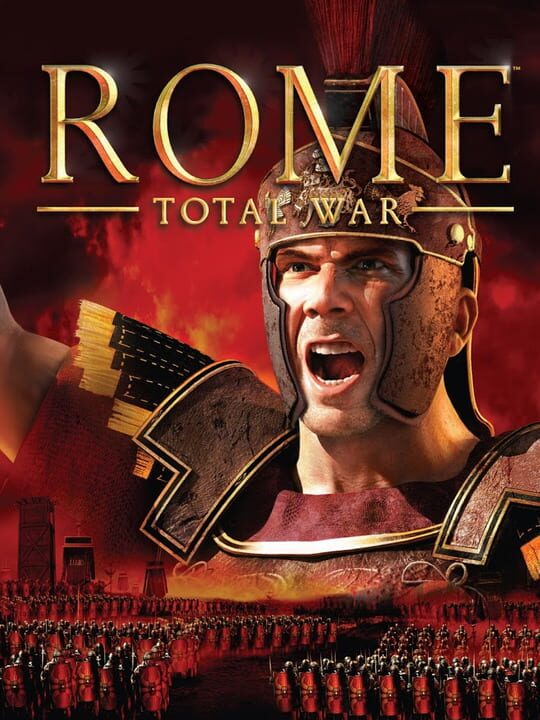
Rome: Total War
Main Game
RELEASED
8.2
Sep 22, 2004
iOSPC (Microsoft Windows)+2byThe Creative Assembly•Activision
Overview:|
Released in 2004, this Main Game blends turn-based grand strategy with real-time tactical battles set during the late Roman Republic and early Empire. You manage provinces, research, and diplomacy on a campaign map, then command thousands of troops in massive, real-time engagements when armies clash. The core loop involves conquering fifty provinces to become Emperor, with eight non-Roman factions also playable. Its distinctive feature is the seamless shift between macro-empire management and micro-battle control, available across PC, Mac, iOS, and Android.
This title, released in 2004, is a foundational entry in the strategy genre, blending grand-scale strategic management with massive real-time tactical battles. Set during the pivotal era spanning the late Roman Republic and the early Roman Empire, the game immerses players in a sprawling historical conflict across Europe, North Africa, and the Near East. Players take command of one of the great Roman families, aiming to secure dominance over the ancient world.
Core Gameplay Experience: A Dual Strategy Approach
The gameplay is structured around two distinct but interconnected layers: a turn-based campaign map and real-time tactical battles. This combination defines the core strategic loop.
The turn-based strategy layer involves managing provinces, developing cities, researching new technologies, managing finances, and maneuvering armies across the campaign map. Success here requires careful planning regarding infrastructure, diplomacy with rival factions, and troop recruitment.
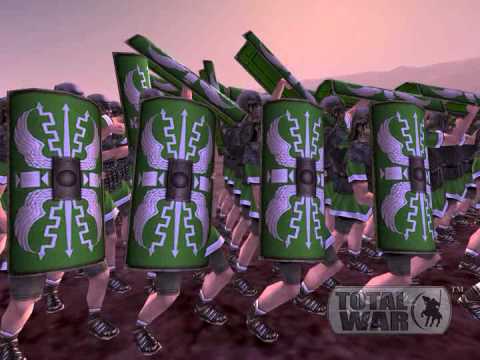
When two armies meet on the campaign map, the game transitions into the real-time tactics mode. Here, players directly control thousands of individual soldiers in large-scale battles, utilizing terrain, formation, and unit abilities to achieve victory against opposing forces. The scale of these engagements is a defining feature.
What defines the main campaign structure?
The primary objective in the main campaign is to ascend to the position of Emperor of Rome. This is achieved by conquering a significant number of provinces—specifically fifty—while maintaining the support of the Roman populace. Alternatively, a shorter campaign is available where the goal shifts to a race against other major factions to seize control of fifteen provinces.
While the core experience centers on controlling the Roman factions, the game offers eight additional non-Roman factions that players can choose to lead outside of the main Roman narrative, providing varied strategic challenges and perspectives on the historical conflicts.
Are there additional stories or content available?
While the base game provides a comprehensive experience, it is supported by two official expansion packs that introduce new scenarios, units, and challenges to the core mechanics. The game has also received one remaster, updating its presentation for contemporary systems.
What makes this historical strategy game unique?
The game's signature appeal lies in the seamless transition between the macro-level management of an empire—handling politics, economics, and troop movement over decades—and the micro-level execution of massive, historically inspired battles where unit positioning and morale are paramount. The sheer scale of the armies involved in the real-time engagements, combined with the deep strategic layer, sets a high bar for historical strategy simulation.
What platforms is this strategy game available on?
Originally launched for PC (Microsoft Windows), this title has since seen releases across multiple modern platforms, including iOS, Android, and Mac, allowing for strategic command on the go.
Game Details
Primary Name: Rome: Total War
Alternative Names:
Total War: Rome (Alternative title)
Total War: Rome 1 (Alternative title)
R:TW (Acronym)
RTW (Acronym)
Type: Main Game
Series: Total War: Rome
Developer: The Creative Assembly
Publisher: Activision, Feral Interactive, Sega
Engine: TW Engine 2
Release Information
Release Date: Sep 22, 2004
Genres & Themes
Genres: Real Time Strategy (RTS), Simulator, Strategy, Turn-based strategy (TBS), Tactical
Themes: Warfare, Historical
Platforms
iOSPC (Microsoft Windows)AndroidMac
Game Modes
Perspective: Bird view / Isometric
Player Modes: Single-player
Game Modes: Single player, Multiplayer
Age Ratings
ESRB:T (Teen)
PEGI:16+
 Soren
Soren