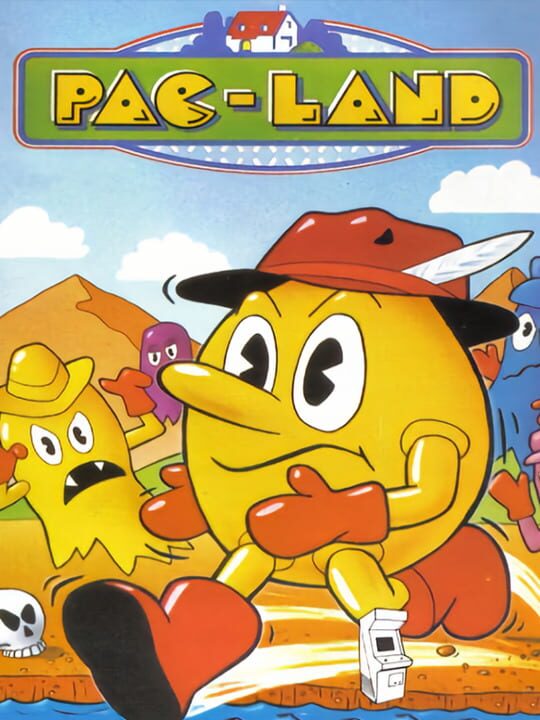
Pac-Land
Overview:|
As a 1985 Port, Pac-Land shifts the iconic character into a side-scrolling Platform/Arcade experience. The core gameplay involves precise timing to run and jump through colorful stages, avoiding various obstacles to reach the goal before time expires. This version delivers the authentic, foundational challenge of the original arcade release on platforms like the Family Computer and Wii U, focusing purely on momentum-based evasion mechanics.
This title is a direct Port of the original arcade experience, bringing the classic side-scrolling action to home consoles. Originally released in 1985, this version translates the foundational vision into a format accessible on platforms such as the Family Computer and the Wii U Virtual Console. As a port, its primary value proposition lies in delivering the authentic, foundational gameplay mechanics that defined its arcade predecessor to players seeking historical accuracy or nostalgia. The core experience centers around navigating various stages, overcoming obstacles, and maintaining momentum in a fast-paced environment.
Core Gameplay and Setting
The atmosphere of the game is bright and whimsical, set against a backdrop of colorful, cartoonish environments. Players take control of the iconic yellow protagonist, whose main objective involves traversing distinct levels filled with hazards. Unlike maze-based predecessors, this entry shifts the focus entirely to platforming challenges.
The gameplay loop emphasizes timing and precision. Players must manage jumps and movements to avoid environmental dangers, such as falling objects or moving adversaries. Successfully completing a stage requires reaching the end point before a time limit expires, adding a layer of urgency to the exploration and evasion mechanics.
What is the primary genre focus of this release?
This game firmly establishes itself within the Platform and Arcade genres. It retains the high-score chasing mentality typical of arcade titles while demanding the precise movement skills associated with platformers.
Port Specifics and Content
Being a port, this version aims to replicate the look, feel, and challenge level of the original 1985 arcade machine as closely as possible within the hardware limitations of the target console. This means the content available is generally fixed to the original release structure.
Regarding additional content, this specific release currently features no downloadable content (DLC), no expansions, and no remakes or remasters associated with this particular version. The experience offered is the complete, self-contained package as it was originally ported by Namcot and published by Bandai Namco Entertainment.
Platform Availability Context
The game has seen release across multiple generations of hardware, notably appearing on the Family Computer (Famicom) in Japan and later made available on the Wii U. This dual presence highlights its status as a historically significant title preserved across different eras of gaming hardware.
What defines the experience of this 1985 classic?
The defining characteristic is the transition from maze navigation to linear, side-scrolling progression. Success hinges on mastering the protagonist's movement capabilities—running, jumping, and utilizing specific items found within the stages—to survive increasingly complex obstacle courses.
Game Details
Release Information
Release Date: Mar 1, 1985
Genres & Themes
Genres: Platform, Arcade
Themes: Action, Fantasy
Platforms
Wii UFamily Computer
Game Modes
Perspective: Side view
Player Modes: Single-player
Game Modes: Single player
Age Ratings
ESRB:E (Everyone)
PEGI:3+
CERO:A (All Ages)
Videos
No videos available for this game.
 Soren
Soren