
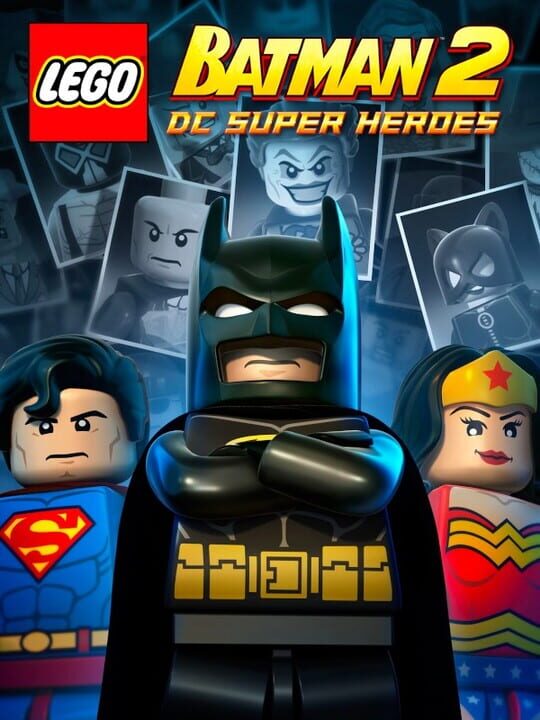
LEGO Batman 2: DC Super Heroes
Port
RELEASED
5.9
Jun 19, 2012
iOSNintendo DS+3byTT Fusion•Warner Bros. Interactive Entertainment
Part of: LEGO Batman 2: DC Super Heroes
Overview:|
As a 2012 Port, LEGO Batman 2: DC Super Heroes offers accessible hack and slash/arcade action across various handhelds, where you team up as Batman and Robin to stop The Joker and Lex Luthor. The core loop involves traversing 14 levels, collecting studs, and utilizing unique Justice League powers (like Superman's) in an open-world setting. Distinctive features include character-specific abilities, collectible unlocks (Minikits, Red Bricks), and platform-specific touch screen integration for controls on DS/3DS.
This 2012 release brings the action of the critically acclaimed console adventure to portable systems, offering a complete storyline experience tailored for mobile and handheld platforms. Players step into the iconic roles of Batman and Robin as they confront a new threat looming over Gotham City. The core narrative revolves around an unlikely alliance formed between two notorious villains, The Joker and Lex Luthor, forcing the Caped Crusader and the Boy Wonder to seek help from the wider DC Universe roster.
Core Gameplay and Setting
As a port, this version maintains the fundamental structure of its source material, blending hack and slash/beat 'em up mechanics with accessible arcade action. The game features 14 main story levels where players progress by defeating enemies, collecting studs, and interacting with the environment using character-specific abilities. The atmosphere is set in the familiar, blocky world of LEGO, juxtaposed with the serious threat posed by the villainous partnership.
A significant feature carried over is the inclusion of an open-world environment, allowing players to explore between story missions, similar to the home console editions. This exploration is key to uncovering secrets and collectibles.
Justice League Integration and Collectibles
A major draw of this installment is the introduction and integration of the Justice League. As the story progresses, players gain access to iconic heroes such as Superman, Green Lantern, The Flash, and Wonder Woman, each bringing unique powers to solve puzzles and combat challenges. After completing the main campaign, additional missions become available featuring the Justice League, which unlock five extra characters accessible via the Batcomputer.
The game rewards thorough exploration through several collectible types:
- Minikit Pieces: Collecting these unlocks a new character for each piece found.
- Red Bricks: These unlock various gameplay modifiers and abilities within the Extras menu.
- Sound Bites: A new collectible feature, these blue musical notes reveal short vocal dialogue snippets from certain characters.
How Do Handheld Controls Adapt the Experience?
The control scheme is adapted specifically for the various portable platforms released in 2012, including iOS, Nintendo DS, PlayStation Vita, Nintendo 3DS, and Android.
Platform-Specific Input Utilization
For the Nintendo 3DS and DS versions, the Touch Screen plays a crucial role. It is utilized for quick character selection, switching between a character's current abilities, and choosing a different character during Free Play sessions. The main action sequences are displayed on the Top Screen.
Conversely, the PlayStation Vita version utilizes its single-screen layout for all gameplay, integrating controls across its primary display.
A quality-of-life feature across these versions is the ability to save progress at any point within a level, allowing players to resume their progress seamlessly from the Load Game screen.
Additional Content Availability
This specific release, categorized as a Port, does not feature any downloadable content (DLCs) or expansions available post-launch.
Game Details
Primary Name: LEGO Batman 2: DC Super Heroes
Type: Port
Part of: LEGO Batman 2: DC Super Heroes
Series: Lego Batman
Developer: TT Fusion
Publisher: Warner Bros. Interactive Entertainment
Release Information
Release Date: Jun 19, 2012
Genres & Themes
Genres: Hack and slash/Beat 'em up, Arcade
Themes: Action
Platforms
iOSNintendo DSPlayStation VitaNintendo 3DSAndroid
Game Modes
Perspective: Third person
Player Modes: Single-player
Game Modes: Single player
Videos
No videos available for this game.
 Soren
Soren