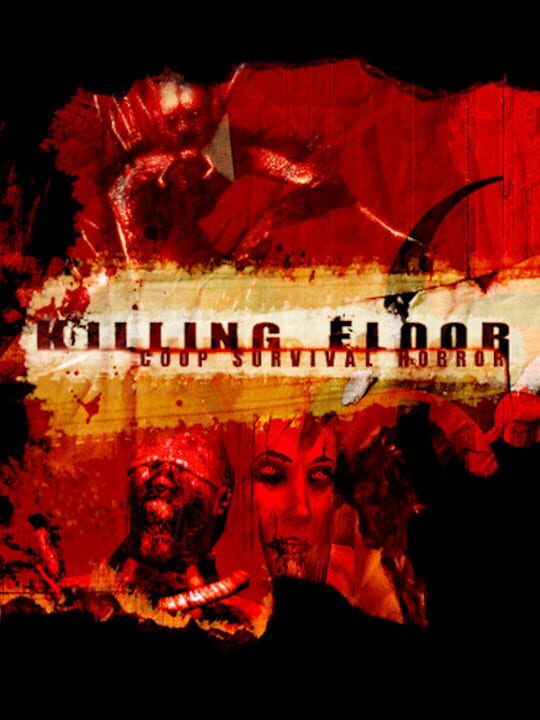
Killing Floor
Mod
RELEASED
Aug 31, 2005
PC (Microsoft Windows)byShatterline Productions
Part of: Unreal Tournament 2004
Overview:|
As a 2005 total conversion Mod for Unreal Tournament 2004, Killing Floor established its core as a cooperative survival horror shooter on PC. Players face escalating waves of specimens from the Horzine corporation, demanding teamwork and tactical positioning to endure. This version focuses purely on the wave-based survival loop, offering a foundational, community-driven experience built on intense, round-by-round combat.
This title originated in 2005 as a total conversion modification for the PC game Unreal Tournament 2004. Released exclusively for Microsoft Windows, this version established the foundation for a distinct survival horror experience rooted in cooperative gameplay. It plunges players into tense scenarios where the primary objective is enduring escalating waves of hostile specimens originating from the fictional Horzine corporation. The atmosphere leans heavily into survival horror, emphasizing resource management and teamwork under extreme pressure.
Core Gameplay Structure and Setting
The central mechanic revolves around cooperative survival against relentless enemy assaults. Players must work together to eliminate waves of mutated creatures, with the difficulty and intensity increasing as each wave is completed. While the initial concept included a short story mode, later iterations of this mod focused exclusively on the wave-based survival format.
As a modification, its value proposition lies in delivering a focused, intense cooperative shooter experience built upon a pre-existing, robust engine. The gameplay loop emphasizes tactical positioning and efficient use of limited ammunition and equipment to survive until the final wave.
What makes this game unique as a Mod?
Being a total conversion mod means this project significantly altered the base game's mechanics and content to create an entirely new game type. This specific iteration represents the genesis of a popular survival formula, offering a raw, community-driven interpretation of co-op horror survival. It stands as a significant piece of independent game development history, showcasing how dedicated creators can transform existing software into a standalone experience.
Content Availability
This original 2005 release is a self-contained experience. There are no officially released downloadable content packs or expansions associated with this specific mod version. The final official release iteration from the original mod team was Version 2.5, although community-supported versions extended slightly beyond that point.
Platform and Release Details
This version of the game is available solely on PC (Microsoft Windows) and was initially released on August 31, 2005. It falls under the genres of Shooter and Indie, reflecting its origins as a community project developed by Shatterline Productions.
Game Details
Primary Name: Killing Floor
Alternative Names:
KFMod (Alternative title)
Killing Floor Mod (Alternative title)
Type: Mod
Part of: Unreal Tournament 2004
Developer: Shatterline Productions
Publisher: Shatterline Productions
Release Information
Release Date: Aug 31, 2005
Genres & Themes
Genres: Shooter, Indie
Themes: Action, Horror
Platforms
PC (Microsoft Windows)
Game Modes
Perspective: First person
Player Modes: Online Co-op, LAN Co-op, Multiplayer
Game Modes: Single player, Multiplayer, Co-operative
Videos
No videos available for this game.
 Soren
Soren