
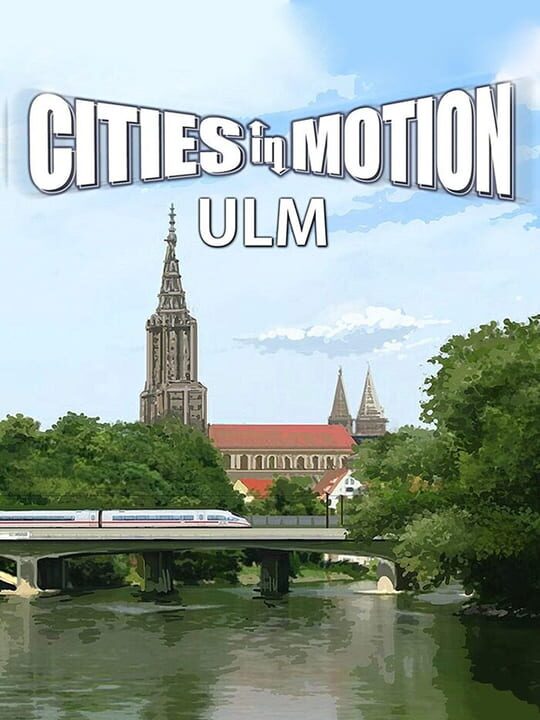
Cities in Motion: Ulm
DLC
RELEASED
Apr 12, 2012
LinuxPC (Microsoft Windows)+1byColossal Order•Paradox Interactive
Part of: Cities in Motion
Overview:|
Cities in Motion: Ulm is a downloadable expansion (DLC) for the mass transportation simulator, requiring the base game. Released in 2012, this content adds the quaint German city of Ulm as a new sandbox map, spanning 1970 to 2030. Gameplay involves building and managing transit networks within this condensed environment, featuring a unique city landmark and an additional scenario. Success relies on careful planning to service the population's real-time commuting needs within the city's specific layout.
This content is a downloadable expansion for the city-based mass transportation simulation game, Cities in Motion. Released in 2012 for PC (Microsoft Windows), Linux, and Mac platforms, this addition focuses on providing players with a new, distinct environment in which to apply their transit management skills. It requires the base game to access its features and integrates seamlessly into the core gameplay loop, challenging players to manage complex public transit networks within a specific, geographically unique setting.
Setting and Atmosphere: A German City Challenge
This expansion transports players to the quaint, idyllic German city of Ulm. Known historically as the birthplace of physicist Albert Einstein, Ulm presents a unique logistical puzzle due to its relatively small and condensed environment. The simulation spans the years from 1970 through 2030, requiring players to adapt their transit strategies across several decades of urban development and technological change. Players will observe a real-time city where the bustling population commutes between homes, jobs, and leisure sites, demanding an efficient and comprehensive transportation network.
What New Content Does This Expansion Offer?
The primary addition provided by this DLC is a brand new city map specifically modeled after Ulm. This new sandbox environment comes bundled with an additional scenario tailored to the city's layout and historical context. Furthermore, the expansion introduces a unique landmark representative of this iconic German landscape, which players must integrate into their transit planning. This content is focused on adding a new location and challenge rather than introducing entirely new gameplay mechanics to the core simulation engine.
Core Gameplay Integration and Scope
As an expansion, this content is not standalone; it necessitates the base game, Cities in Motion, to function. Its scope is centered on providing a substantial, focused challenge within the established simulation framework. Players must utilize the existing mechanics—building routes, managing vehicle fleets, and optimizing schedules—but apply them to the specific constraints and opportunities presented by the Ulm map. Success in this environment hinges on careful planning and slow, deliberate expansion, contrasting with potentially larger, more sprawling maps found in the base game.
What kind of transit challenges await players in this condensed environment?
The condensed nature of the Ulm setting means that players must be highly efficient with route placement and vehicle deployment. The challenge lies in servicing a population with high demands within a geographically limited area. Players must navigate the real-time traffic simulator as the city evolves over the 60-year period, ensuring that the citizens' commutes remain smooth despite the inherent spatial limitations of the setting.
Game Details
Primary Name: Cities in Motion: Ulm
Type: DLC
Part of: Cities in Motion
Developer: Colossal Order
Publisher: Paradox Interactive
Release Information
Release Date: Apr 12, 2012
Genres & Themes
Genres: Simulator
Themes: Business
Platforms
LinuxPC (Microsoft Windows)Mac
Game Modes
Perspective: Bird view / Isometric
Player Modes: Single-player
Game Modes: Single player
Videos
No videos available for this game.
 Soren
Soren