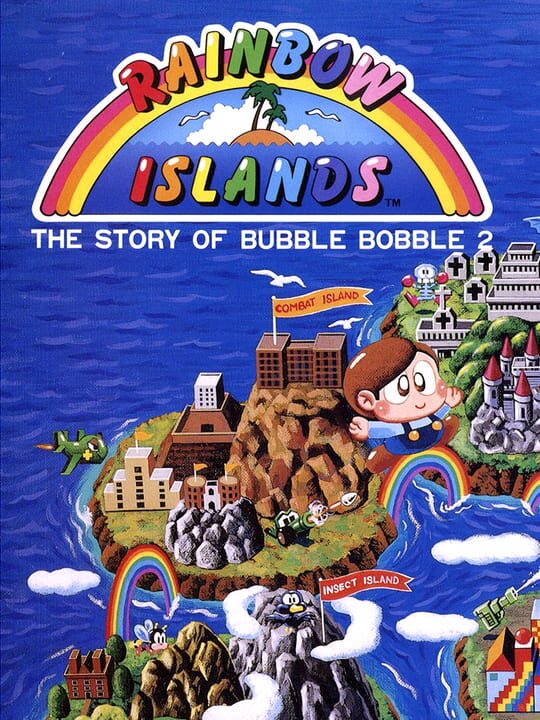
Rainbow Islands: The Story of Bubble Bobble 2
Main Game
RELEASED
7.7
31 ธ.ค. 2530
Turbografx-16/PC Engine CDPC (Microsoft Windows)+7byTaito•NEC Avenue
ภาพรวม:|
{"overview":"
Rainbow Islands: The Story of Bubble Bobble 2 เป็นเกมอาร์เคดแนวแพลตฟอร์ม/พัซเซิล ปี 1987 ที่ผู้เล่นต้องช่วยชาวเกาะที่ถูกสาปให้กลายเป็นมังกร โดยการเดินทางข้ามเกาะทั้งสิบเพื่อเก็บอัญมณีและกระจก กลไกหลักคือการใช้ฟองสบู่ดักศัตรูแล้วทำให้แตกเพื่อเคลียร์ฉาก ซึ่งต้องอาศัยการควบคุมจังหวะและการวางแผนเล็กน้อย เกมนี้มีจุดเด่นที่การใช้พลังสายรุ้งเพื่อความก้าวหน้าและทำคะแนน มีการพอร์ตลงหลายแพลตฟอร์มคลาสสิกและมีการรีมาสเตอร์หนึ่งครั้ง
","tokens":{"input":2486,"output":166,"total":2652}}{"overview":"
\nเกมนี้คือภาคต่อโดยตรงของเกมฮิตเมื่อปีก่อน โดยมีชื่อรองว่า \"The Story of Bubble Bobble 2\" เป็นเกมแนวแพลตฟอร์มและพัซเซิลคลาสสิกที่เปิดตัวครั้งแรกในรูปแบบอาร์เคดเมื่อปี 1987 ผู้เล่นจะได้ออกผจญภัยในโลกที่มีสีสันสดใสเพื่อแก้ไขการเปลี่ยนแปลงทางเวทมนตร์ที่เกิดขึ้นกับผู้อยู่อาศัยในหมู่เกาะแห่งสายรุ้ง เกมนี้ได้รับการพอร์ตลงในเครื่องคอมพิวเตอร์และคอนโซลหลากหลายแพลตฟอร์มตลอดช่วงเวลาที่ผ่านมา\n
\n\nเนื้อเรื่องและฉากหลัง
\nเรื่องราวหลักมุ่งเน้นไปที่ตัวละครเอกสองตัวที่ออกเดินทางเพื่อช่วยเหลือชาวเกาะสายรุ้ง ซึ่งถูก 'Boss of Shadow' ผู้ชั่วร้ายร่ายมนตร์ให้กลายเป็นมังกรฟองสบู่ เพื่อที่จะทำให้ทุกคนกลับสู่สภาพปกติ ฮีโร่จะต้องเดินทางข้ามเกาะสายรุ้งทั้งสิบเกาะที่แตกต่างกัน โดยต้องรวบรวม อัญมณีขนาดใหญ่และกระจก ที่กระจัดกระจายอยู่ทั่วด่าน ก่อนที่จะเผชิญหน้ากับศัตรูตัวฉกาจคนสุดท้าย
\n\nกลไกการเล่นหลัก
\nในฐานะเกมแพลตฟอร์มที่มีองค์ประกอบของพัซเซิลอย่างเข้มข้น วงจรการเล่นจะเกี่ยวข้องกับการเคลื่อนที่ผ่านด่านที่เต็มไปด้วยศัตรูและอุปสรรค กลไกสำคัญคือการใช้วิธีการที่ไม่เหมือนใครในการดักจับศัตรู แทนที่จะโจมตีโดยตรง ผู้เล่นจะต้องขังศัตรูไว้ในฟองสบู่ชั่วคราว เมื่อศัตรูถูกกักขังแล้ว ผู้เล่นจะต้องทำให้ฟองสบู่นั้นแตก ซึ่งมักจะทำได้โดยการกระโดดเหยียบหรือใช้ปฏิสัมพันธ์กับสภาพแวดล้อมเพื่อกำจัดภัยคุกคามนั้นออกไป
\n\nคุณสมบัติสำคัญที่ทำให้ภาคนี้แตกต่างคือการแนะนำ เวทมนตร์สายรุ้ง การเคลียร์ด่านสำเร็จและการเก็บไอเท็มมักจะนำไปสู่การปรากฏตัวของสายรุ้ง ซึ่งมีความสำคัญต่อความคืบหน้าและการทำคะแนน การเรียนรู้จังหวะและการวางตำแหน่งของเอฟเฟกต์สายรุ้งเหล่านี้จึงเป็นกุญแจสำคัญสู่ความสำเร็จ
\n\nอะไรที่ทำให้เกมนี้โดดเด่นในแนวเกมแพลตฟอร์ม?
\nเกมนี้ผสมผสานการเล่นแบบแพลตฟอร์มที่ต้องใช้ความเร็วเข้ากับการจัดการฟองสบู่เชิงกลยุทธ์ สร้างความท้าทายที่แตกต่างซึ่งต้องอาศัยทั้งปฏิกิริยาที่รวดเร็วและการวางแผนอย่างรอบคอบ ระบบความคืบหน้าผูกติดอยู่โดยตรงกับการรวบรวมวัตถุโบราณอันทรงพลัง—อัญมณีขนาดใหญ่และกระจก—ซึ่งจำเป็นต่อการเดินเรื่องผ่านสภาพแวดล้อมของเกาะต่างๆ
\n\nความพร้อมของเนื้อหา
\nประสบการณ์หลักของเกมนี้ถูกนำเสนอโดยไม่มีเนื้อหาดาวน์โหลด (DLCs) หรือส่วนเสริมใดๆ แม้ว่าจะมีการออก Remaster หนึ่งครั้งนับตั้งแต่เปิดตัวครั้งแรก แต่เนื้อหาหลักยังคงสอดคล้องกับการเปิดตัวครั้งแรกในปี 1987
\n\nความพร้อมใช้งานบนแพลตฟอร์ม
\nเกมนี้มีการเผยแพร่ในประวัติศาสตร์ที่กว้างขวาง โดยปรากฏบนแพลตฟอร์มต่างๆ เช่น อาร์เคด, ZX Spectrum, Amstrad CPC, Commodore C64/128/MAX, Amiga, Atari ST/STE และ TurboGrafx-16/PC Engine รวมถึงเวอร์ชัน CD-ROM สำหรับระบบหลัง นอกจากนี้ยังมีการวางจำหน่ายบน PC (Microsoft Windows) ด้วย
","tokens":{"input":2678,"output":907,"total":3585}}Game Details
Primary Name: Rainbow Islands: The Story of Bubble Bobble 2
Alternative Names:
Bubble Bobble 2 (Alternative title)
Rainbow Islands (Japanese title - translated)
Rainbow Islands: Story of Bubble Bobble II (Alternative spelling)
Type: Main Game
Series: Rainbow Islands
Developer: Taito
Publisher: NEC Avenue, MediaKite Distribution, Taito, Romstar
Release Information
Release Date: ธ.ค. 31, 2530
Genres & Themes
Genres: Platform, Puzzle, Arcade
Themes: Action, Fantasy
Platforms
Turbografx-16/PC Engine CDPC (Microsoft Windows)Commodore C64/128/MAXTurboGrafx-16/PC EngineZX SpectrumAmigaAmstrad CPCArcadeAtari ST/STE
Game Modes
Perspective: Side view
Player Modes: Single-player
Game Modes: Single player, Multiplayer

 Soren
Soren