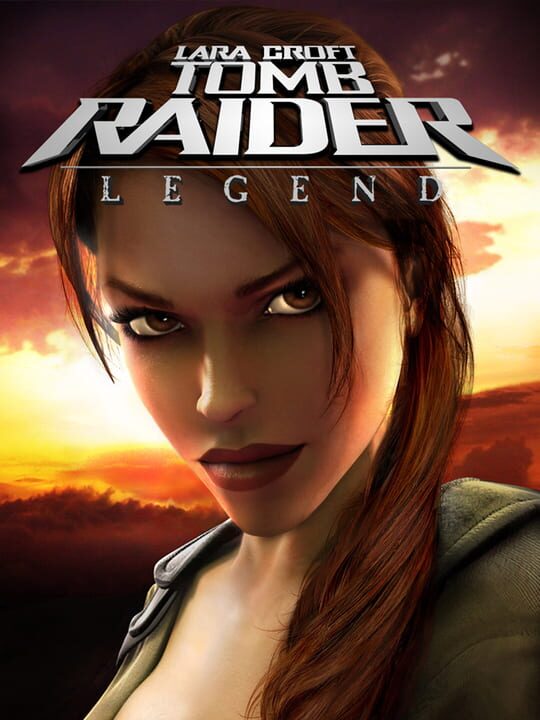
Tomb Raider: Legend
Main Game
RELEASED
7.5
7 avr. 2006
Xbox 360PC (Microsoft Windows)+2byCrystal Dynamics•Eidos Interactive
Aperçu:|
{"overview":"
Tomb Raider: Legend est un jeu d'action-aventure de 2006 qui réinvente l'icône Lara Croft. Vous explorez des environnements variés, résolvez des énigmes complexes et combattez, le tout avec une mobilité acrobatique grandement améliorée : nage, escalade, sauts et roulades sont fluides. L'histoire vous met sur la piste d'une relique sud-américaine, face à l'anthropologue renégate Amanda Evert, une ancienne connaissance présumée morte. Ce titre mise sur un gameplay de plateforme et d'exploration repensé.
","tokens":{"input":2324,"output":139,"total":2463}}{"overview":"
\nCe titre d'action-aventure, sorti en 2006, représente une réinvention significative de la franchise acclamée, servant de septième opus principal de la série. Développé par Crystal Dynamics, cet épisode introduit une nouvelle incarnation de la protagoniste emblématique, Lara Croft, tout en conservant l'exploration et la résolution d'énigmes en vue à la troisième personne qui définissent la série. Les joueurs peuvent s'attendre à un mélange de séquences d'action intenses et de traversées environnementales à travers divers lieux mondiaux souvent périlleux.\n
\n\nMécaniques de Jeu Fondamentales
\nLa boucle de jeu principale s'articule autour de la navigation dans des environnements complexes, de la résolution d'énigmes complexes pour débloquer de nouveaux chemins, et de l'engagement dans des combats. Un accent majeur de cette itération réside dans la mobilité améliorée. Lara Croft n'est plus limitée par des contraintes de mouvement rigides ; les joueurs bénéficient d'une traversée plus fluide et acrobatique. Cela inclut la course, la plongée, la natation, l'escalade de diverses surfaces comme des poteaux et des toits, l'utilisation de tyroliennes, et l'exécution d'actions telles que les sauts périlleux et les roulades pour franchir des terrains difficiles.
\n\nQuel est l'objectif principal de l'exploration dans cette aventure ?
\nL'exploration exige des joueurs qu'ils utilisent toute la gamme des capacités de mouvement de Lara pour traverser des paysages exigeants. La progression est souvent conditionnée par des énigmes environnementales qui doivent être résolues pour ouvrir de nouvelles zones ou révéler des secrets cachés. L'atmosphère mêle le mystère ancien à l'aventure à haut risque alors que les joueurs explorent des ruines et des lieux oubliés.
\n\nPrémisse Narrative
\nLe récit débute avec Lara Croft à la recherche d'une relique sud-américaine importante. Cependant, son expédition prend rapidement une tournure inattendue lorsqu'elle rencontre une figure de son passé : l'anthropologue renégate Amanda Evert. Présumée morte des années auparavant lors d'un accident dans une tombe péruvienne — un événement dont Lara fut la seule survivante — Amanda refait surface avec un objectif clair. Lara et Amanda se retrouvent dans une course contre la montre, aux côtés du personnage louche James Rutland Jr., pour s'emparer d'un artefact ancien et puissant.
\n\nPlateformes et Contenu
\nCet opus principal est sorti sur Xbox 360, PC (Microsoft Windows), PlayStation 3, et le système OnLive Game System. En tant que titre principal autonome, il ne propose pas de contenu téléchargeable (DLC) ou d'extensions officielles.
\n\nQu'est-ce qui définit cette expérience de redémarrage ?
\nCe jeu se distingue par son intégration réussie des éléments d'aventure classiques avec des commandes modernes et réactives, permettant un plus grand sentiment de liberté dans le mouvement et l'interaction avec l'environnement, établissant ainsi une nouvelle base pour le parcours du personnage.
","tokens":{"input":2516,"output":727,"total":3243}}Game Details
Primary Name: Tomb Raider: Legend
Alternative Names:
Tomb Raider 7 (Alternative spelling)
Lara Croft: Tomb Raider - Legend (Alternative spelling)
古墓奇兵:不死傳奇 (Chinese title - traditional)
古墓丽影:传奇 (Chinese title - simplified)
Tomb Raider - Легенда (Russian title)
Tomb Raider: Legenda (Polish title)
TR Legend (Acronym)
Type: Main Game
Series: Tomb Raider: Legend
Developer: Crystal Dynamics
Publisher: Eidos Interactive, Square Enix, Crystal Dynamics
Engine: Crystal Engine
Release Information
Release Date: avr. 7, 2006
Genres & Themes
Genres: Shooter, Platform, Adventure
Themes: Action
Platforms
Xbox 360PC (Microsoft Windows)PlayStation 3OnLive Game System
Game Modes
Perspective: Third person
Player Modes: Single-player
Game Modes: Single player
Age Ratings
ESRB:T (Teen)
PEGI:16+
CERO:B (12+)
USK:16+
CLASS_IND:16+
ACB:PG (Parental Guidance)
Mild violence



 Soren
Soren