
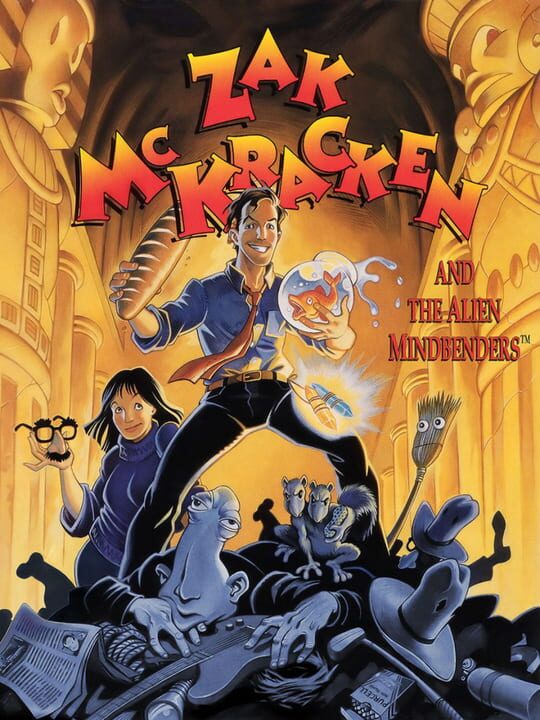
Zak McKracken and the Alien Mindbenders
Main Game
RELEASED
7.3
Oct 1, 1988
DOSLinux+6byLucasfilm Games•Fujitsu Interactive
Overview:|
This 1988 point-and-click adventure game casts you as Zak McKracken, a reporter investigating an alien plot to dumb down humanity via the phone system. Gameplay involves globe-trotting travel and puzzle-solving using verb commands to interact with the world. A key feature is managing up to four interchangeable protagonists—Zak, Annie, Melissa, and Leslie—who can trade inventory items to progress. Some puzzles offer multiple solutions, adding flexibility to this classic adventure experience.
This is a classic point-and-click adventure game, originally released in 1988. It falls under the Adventure and Point-and-click genres and functions as a standalone main game. Players assume the role of Zak McKracken, a tabloid reporter who believes a bizarre conspiracy is underway: space aliens are using the telephone system to lower the intelligence of the general public. Zak's mission is to stop this global dumbing-down process.
The Premise and Global Adventure
The core narrative centers on Zak's urgent quest to save Earth from alien manipulation. After discovering a mysterious crystal, Zak gains allies: anthropologist Annie, and her companions, Melissa and Leslie. The game requires players to manage these four unlikely heroes as they attempt to thwart the alien plot.
The atmosphere is characterized by a "globe-trotting" structure. Success demands extensive travel across various exotic international locations and even venturing beyond Earth itself to uncover the necessary clues and tools to complete the objective.
Core Gameplay Mechanics and Interaction
This title utilizes a traditional point-and-click interface common to adventure games of its era. Interaction with the environment and characters is managed through selecting specific verb commands, such as "Open," "Pick Up," or "Give." Notably, commands like "Look" or "Talk" are not directly available as selectable verbs.
A key feature of the gameplay involves managing multiple protagonists. Players can switch control between Zak, Annie, Melissa, and Leslie at any point after they are introduced. Furthermore, inventory management is cooperative; characters can exchange items if they are located in the same area, which is crucial for solving complex, multi-stage puzzles.
Puzzle Structure and Flexibility
The game offers a degree of player agency in its puzzle design. Some challenges are optional, and certain obstacles can be overcome through multiple different solutions, allowing for varied approaches to progression.
What platforms is this adventure available on?
The game saw wide release across numerous systems, including DOS, PC (Microsoft Windows), Commodore C64/128/MAX, FM Towns, Amiga, Mac, and Atari ST/STE. It is worth noting that certain hardware versions, such as the FM Towns release, featured enhanced VGA graphics with 256 colors, along with upgraded music and sound effects compared to earlier iterations.
Game Details
Primary Name: Zak McKracken and the Alien Mindbenders
Alternative Names:
scummvm.exe (Windows Executable)
Type: Main Game
Developer: Lucasfilm Games, Lucasfilm Games
Publisher: Fujitsu Interactive, Lucasfilm Games
Engine: SCUMM
Release Information
Release Date: Oct 1, 1988
Genres & Themes
Genres: Point-and-click, Adventure
Themes: Science fiction, Comedy
Platforms
DOSLinuxPC (Microsoft Windows)Commodore C64/128/MAXFM TownsAmigaAtari ST/STEMac
Game Modes
Perspective: Side view
Player Modes: Single-player
Game Modes: Single player
Videos
No videos available for this game.

 Soren
Soren