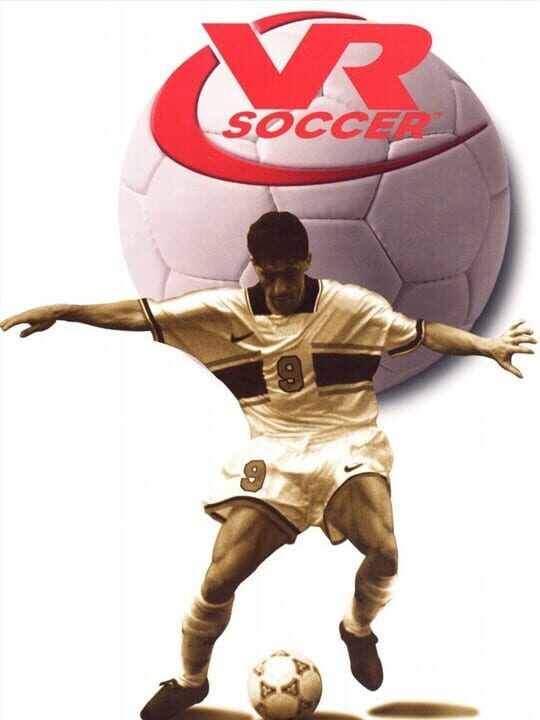
VR Soccer
Main Game
RELEASED
6.0
Oct 30, 1995
Sega SaturnDOS+4byGremlin Interactive•Interplay Entertainment
Overview:|
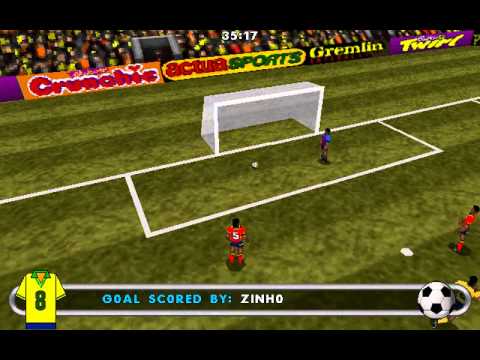
VR Soccer, a main game released in 1995, is a foundational sports simulator where you manage national teams through competitive football matches. Its core loop involves standard simulation mechanics like positioning and shooting. This title is distinct for being one of the first sports games to utilize a full 3D graphics engine, featuring player animations based on motion capture from Sheffield Wednesday players. Initially offering 44 national teams, later versions expanded content to include club teams.
This title, released in 1995, is a core sports simulator focused entirely on the world of association football (soccer). Available across multiple platforms including the Sega Saturn, PlayStation, DOS, Linux, and Mac, it aimed to deliver an authentic football experience to early digital audiences. The game centers around competitive matches between national teams, providing a straightforward simulation of the sport.
Core Gameplay and Technical Foundation
The primary gameplay loop involves controlling teams through full-length football matches. Players engage in standard match mechanics, managing team positioning, passing, shooting, and tackling against an opponent AI or another player. The focus is on replicating the flow and strategy of a real football game within the constraints of the mid-1990s technology.
What made this game a technical landmark?
This simulation holds historical significance as one of the earliest sports video games to incorporate a full 3D graphics engine. This technological leap provided a new dimension to the presentation of the sport compared to its 2D predecessors. Furthermore, to enhance the realism of player movement, the developers utilized motion capture technology, employing three players from the Sheffield Wednesday club as models for the player animations.
Content and Team Structure
The initial release of the game featured a selection of 44 national teams. Each of these international squads was comprised of 22 players, allowing users to select and compete using various countries.
Expanded Roster Options
It is important to note that subsequent content additions expanded the available roster. A later version, sometimes referenced as a separate edition, introduced club teams, specifically featuring 20 Premier League teams from the 1996/1997 season, broadening the scope beyond just international competition.
Additional Content Availability
Regarding post-launch support, this main game title does not feature any downloadable content (DLCs) or official expansions released after its initial launch period. There are no recorded remakes or remasters of this specific version available.
What kind of football experience does this offer?
This simulation provides a classic, foundational take on the sport, prioritizing the novelty of its early 3D presentation and motion-captured realism within the context of national team competition. Its success in Europe, particularly in the United Kingdom, suggests a strong reception for its simulation style during that era.
Game Details
Primary Name: VR Soccer
Alternative Names:
Fotball Feber (Norwegian title)
ranSoccer (German title)
VR Soccer '96 (Alternative title)
Launch_VR_Soccer_96.bat (Windows Executable)
Type: Main Game
Series: Actua Sports
Developer: Gremlin Interactive
Publisher: Interplay Entertainment, Greenwood Entertainment Software GmbH, Naxat Soft, Gremlin Interactive, VR Sports
Release Information
Release Date: Oct 30, 1995
Genres & Themes
Genres: Simulator, Sport
Themes: Non-fiction
Platforms
Sega SaturnDOSLinuxPC (Microsoft Windows)PlayStationMac
Game Modes
Perspective: Bird view / Isometric
Player Modes: Offline Co-op, Campaign Co-op, LAN Co-op, Multiplayer
Game Modes: Single player, Multiplayer, Co-operative
Age Ratings
ESRB:E (Everyone)
USK:0 (All Ages)
ACB:G (General)

 Soren
Soren