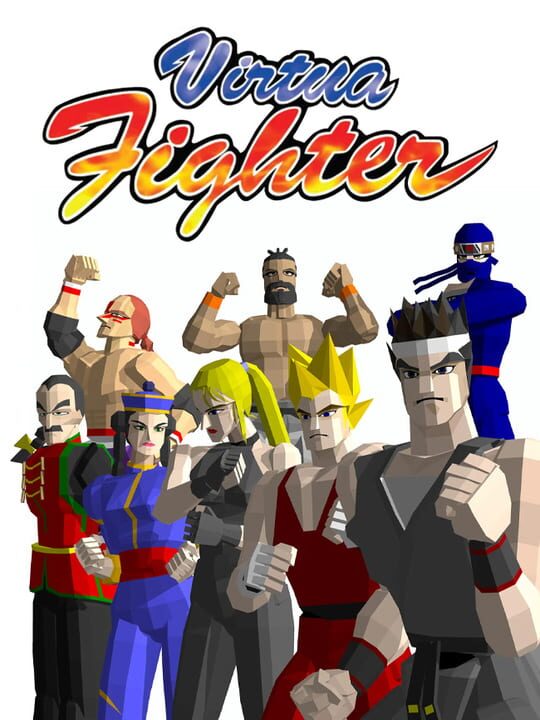
Virtua Fighter
Main Game
RELEASED
5.6
Oct 15, 1993
Sega SaturnSega 32X+1bySega AM2•Sega
Overview:|
As a foundational Main Game released in 1993, this title pioneered the 3D fighting genre, shifting combat from 2D sprites to fully rendered polygon graphics. You engage in one-on-one martial arts duels, selecting from a roster of fighters representing distinct disciplines to compete in a global tournament tied to an ancient, secretive martial art. The core gameplay emphasizes precise timing, positioning, and utilizing a three-button system (Punch, Kick, Guard) alongside crucial 3D sidestepping mechanics. This version is the original, self-contained experience.
This is a foundational title in the fighting genre, originally released in arcades in 1993 before making its way to home consoles like the Sega Saturn and Sega 32X. As a main game, it established a new standard for competitive one-on-one combat by pioneering the shift from 2D sprites to fully rendered 3D polygon graphics. Players select from a roster of distinct martial artists, each trained in a specific fighting discipline, to compete in a global tournament.
The Premise and Setting
The narrative backdrop for this tournament is rooted in a secretive history involving an ancient, powerful martial art known as Hakkyoku• ken. Following research conducted by the Japanese army during World War II into this discipline, the ultimate World Fighting Tournament is established centuries later. This competition brings together skilled combatants from across the globe, ostensibly to determine the world's best fighter. However, beneath the surface of the tournament lies an underlying intrigue orchestrated by a sinister syndicate.
Core Gameplay Mechanics
The gameplay centers on precise, real-time martial arts combat utilizing a three-button control scheme: Punch, Kick, and Guard. Unlike many contemporaries, the focus here is on deliberate positioning and timing rather than complex special move inputs. Fighters utilize a combination of standard strikes, throws, and defensive maneuvers. The introduction of 3D movement allows players to sidestep attacks, adding a crucial layer of spatial awareness to the traditional fighting game formula. Mastering the timing of blocks and counters is central to success.
What makes this game unique in the fighting genre?
This title is widely recognized as one of the very first fighting games to fully embrace three-dimensional graphics. This transition to 3D polygons fundamentally changed how players approached movement and combat strategy, allowing for true depth perception and movement around the opponent, which was revolutionary for its time.
Available Content
As a main release, this game does not feature any downloadable content (DLC) or expansions. It remains a self-contained experience. It has seen one subsequent remake, updating the core experience for modern hardware, but this original version stands alone.
When was this fighting game released?
The initial release date for this landmark fighting game was October 15, 1993.
Game Details
Primary Name: Virtua Fighter
Alternative Names:
Virtua Fighter (Japanese title - romanization)
Type: Main Game
Series: Virtua Fighter
Developer: Sega AM2
Publisher: Sega
Release Information
Release Date: Oct 15, 1993
Genres & Themes
Genres: Fighting
Themes: Action
Platforms
Sega SaturnSega 32XArcade
Game Modes
Perspective: Side view
Player Modes: Single-player
Game Modes: Single player, Multiplayer
Age Ratings
ESRB:T (Teen)
Videos
No videos available for this game.

 Soren
Soren