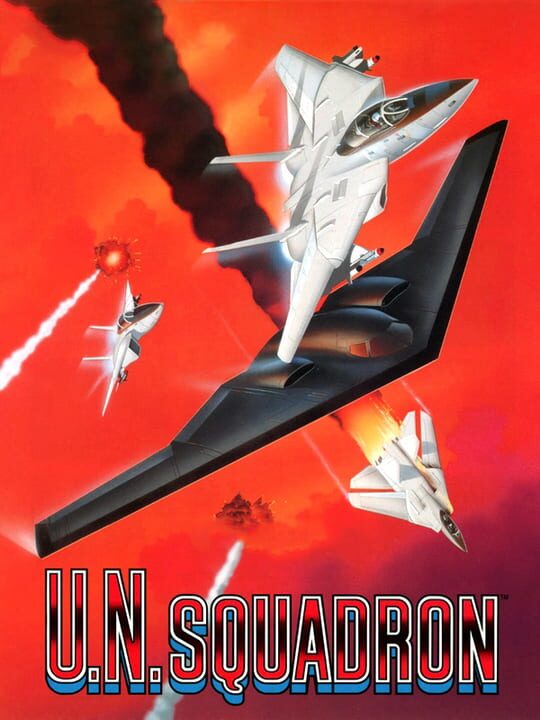
U.N. Squadron
Main Game
RELEASED
7.6
Aug 31, 1989
AmigaArcade+3byCapcom•U.S. Gold
Overview:|
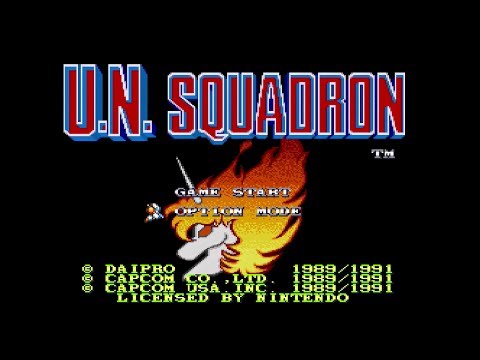
U.N. Squadron is a classic side-scrolling shoot 'em up, originally released in 1989, where you pilot military aircraft through frantic aerial combat missions defending 'Area 88.' You choose one of three pilots, each with unique starting skills, and earn cash by destroying enemies to purchase superior planes and powerful special weapons like napalm. The core loop involves intense, fast-paced shooting against diverse targets, including bases and submarines, demanding constant offensive action to survive the overwhelming enemy presence across challenging scenarios.
This is a classic side-scrolling shoot 'em up, originally released in 1989, that places players into intense, military aircraft-based combat scenarios. Set around the allied airspace known as 'Area 88,' the core objective is to systematically eliminate gathering enemy forces through a series of challenging missions. The game features fast-paced action reminiscent of seminal titles in the genre, demanding precise maneuvering and constant offensive output against overwhelming opposition.
Core Gameplay and Mission Structure
The gameplay loop revolves around selecting a mission, engaging in frantic aerial combat, and earning currency based on performance. This currency is central to progression, as players begin with a standard, less capable aircraft—the F8E Crusader—equipped only with basic weaponry. Success in missions directly translates into funds necessary to purchase superior aircraft and armaments.
Pilot Selection and Progression
Players choose from three distinct pilots: Shin Kazama, Micky Schymon, or Greg Gates. Each pilot possesses unique starting attributes concerning damage repair capabilities, proficiency with weapon handling, and overall flying skill. This initial choice subtly influences the early game experience.
The primary method of enhancing combat effectiveness is through purchasing superior aircraft. These advanced fighters offer significant advantages, including greater agility, increased resilience against enemy fire, and the ability to equip powerful special weapons, such as napalm ordnance.
What challenges await players in the skies?
Missions are varied and demanding, requiring players to tackle diverse military targets. Engagements include assaults on fortified sand bases, deep strikes against the nuclear submarine designated 'Seavet,' and the destruction of enemy supply camps. Furthermore, players must constantly defend against swarms of airborne enemy fighters attempting to breach the defenses of Area 88.
The pace of engagement is consistently high, characterized by a large volume of on-screen enemies requiring immediate attention. Survival hinges on continuous shooting and strategic use of acquired special weapons to manage the dense enemy formations.
Distinctive Features of the Combat System
What makes this title stand out within the genre is the integrated economy system. Unlike many contemporaries where upgrades are linear or automatic, here, players must actively manage earned cash to invest in better planes and specialized ordnance, directly impacting their capability to survive later, more difficult stages.
Available Platforms and Status
This title was initially launched in arcades and subsequently ported to several home systems, including the Amiga, Atari ST/STE, and the Super Nintendo Entertainment System (SNES) / Super Famicom.
As a main game release, there are no officially documented DLCs or expansions associated with this version of the title. The core experience remains focused on the challenging, mission-based aerial combat loop established at its debut.
Game Details
Primary Name: U.N. Squadron
Alternative Names:
Area 88 (Japanese title - romanization)
UN Squadron (Alternative spelling)
Type: Main Game
Series: Area 88
Developer: Capcom, Capcom
Publisher: U.S. Gold, Capcom
Release Information
Release Date: Aug 31, 1989
Genres & Themes
Genres: Shooter
Themes: Warfare, Action
Platforms
AmigaArcadeSuper Nintendo Entertainment SystemSuper FamicomAtari ST/STE
Game Modes
Perspective: Side view
Player Modes: Offline Co-op, Campaign Co-op, Multiplayer
Game Modes: Single player, Co-operative
 Soren
Soren