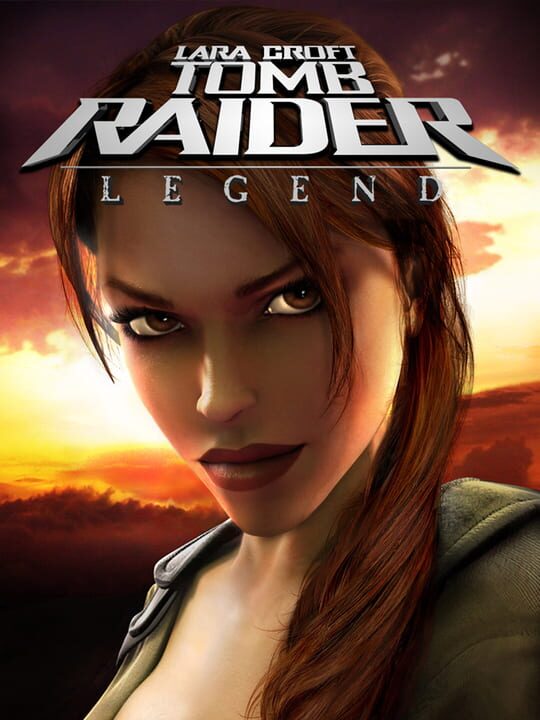
Tomb Raider: Legend
Main Game
RELEASED
7.5
Apr 7, 2006
Xbox 360PC (Microsoft Windows)+2byCrystal Dynamics•Eidos Interactive
Overview:|
As a main action-adventure title, Tomb Raider: Legend (released in 2006) centers on third-person exploration, puzzle-solving, and combat. You guide Lara Croft through diverse environments, utilizing significantly enhanced, acrobatic movement—including diving, climbing, and vaulting—to traverse terrain and unlock new areas. The story follows Lara's race against a presumed-dead rival, Amanda Evert, to secure an ancient artifact. This entry rebooted the franchise, focusing on fluid traversal mechanics.
This 2006 action-adventure title marks a significant reinvention of the celebrated franchise, serving as the seventh main installment in the series. Developed by Crystal Dynamics, this entry introduces a new incarnation of the iconic protagonist, Lara Croft, while retaining the core third-person exploration and puzzle-solving that defines the series. Players can expect a blend of intense action sequences and environmental traversal across diverse, often treacherous global locations.
Core Gameplay and Mechanics
The gameplay loop centers on navigating complex environments, solving intricate puzzles to unlock new paths, and engaging in combat encounters. A key focus of this iteration is enhanced mobility. Lara Croft is no longer constrained by rigid movement limitations; players benefit from more fluid and acrobatic traversal. This includes running, diving, swimming, climbing various surfaces like poles and roofs, utilizing zip lines, and performing actions such as vaulting and somersaults to cross difficult terrain.
What is the focus of the exploration in this adventure?
Exploration requires players to utilize Lara’s full range of movement abilities to cross challenging landscapes. Progress is often gated by environmental puzzles that must be solved to open up new areas or reveal hidden secrets. The atmosphere blends ancient mystery with high-stakes adventure as players delve into ruins and forgotten locales.
Story Premise
The narrative kicks off with Lara Croft on the hunt for a significant South American relic. However, her expedition quickly shifts course upon encountering a figure from her past: the rogue anthropologist Amanda Evert. Presumed lost years ago in a Peruvian tomb accident—an incident from which Lara was the sole survivor—Amanda has resurfaced with a clear agenda. Both Lara and Amanda find themselves in a race against time, alongside the shadowy James Rutland Jr., to secure an ancient and powerful artifact.
Platform Availability and Content
This main installment was released for the Xbox 360, PC (Microsoft Windows), PlayStation 3, and the OnLive Game System. As a core, standalone release, it features no official downloadable content (DLCs) or expansions.
What defines this reboot experience?
This game is defined by its successful integration of classic adventure elements with modern, responsive controls, allowing for a greater sense of freedom in movement and interaction with the environment, setting a new foundation for the character's journey.
Game Details
Primary Name: Tomb Raider: Legend
Alternative Names:
Tomb Raider 7 (Alternative spelling)
Lara Croft: Tomb Raider - Legend (Alternative spelling)
古墓奇兵:不死傳奇 (Chinese title - traditional)
古墓丽影:传奇 (Chinese title - simplified)
Tomb Raider - Легенда (Russian title)
Tomb Raider: Legenda (Polish title)
TR Legend (Acronym)
Type: Main Game
Series: Tomb Raider: Legend
Developer: Crystal Dynamics
Publisher: Eidos Interactive, Square Enix, Crystal Dynamics
Engine: Crystal Engine
Release Information
Release Date: Apr 7, 2006
Genres & Themes
Genres: Shooter, Platform, Adventure
Themes: Action
Platforms
Xbox 360PC (Microsoft Windows)PlayStation 3OnLive Game System
Game Modes
Perspective: Third person
Player Modes: Single-player
Game Modes: Single player
Age Ratings
ESRB:T (Teen)
PEGI:16+
CERO:B (12+)
USK:16+
CLASS_IND:16+
ACB:PG (Parental Guidance)
Mild violence



 Soren
Soren