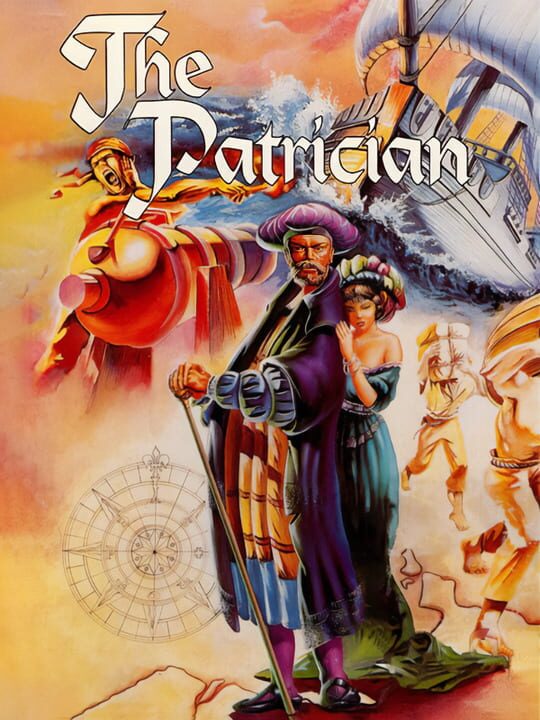
The Patrician
Main Game
RELEASED
Dec 31, 1992
DOSAmiga+1byAscaron Entertainment
Overview:|
As a foundational medieval strategy simulator from 1992, The Patrician casts you as a rising merchant navigating the complex economics of the Hanseatic League era. The core gameplay loop centers on mastering trade: buying goods cheaply in one city and transporting them to sell at maximum profit elsewhere, requiring shrewd logistical planning and fleet management. Its distinctive feature is its focus on pure economic dominance and market manipulation over military conflict, demanding strategic foresight to build a commercial empire.
This title is a foundational entry in the trading simulator and strategy genre, originally released in 1992 for platforms including DOS, Amiga, and Atari ST/STE. It establishes the core experience of a medieval merchant operating within the economic sphere of the Hanseatic League. The central objective revolves around accumulating wealth and influence through astute commercial activities across a network of historical cities.
Setting and Atmosphere
The game immerses the player in a historical setting focused on Northern European trade routes during the Middle Ages. The atmosphere is defined by economic calculation, where success is measured by the expansion of one's commercial reach and financial standing. Players must contend with the realities of supply, fluctuating market prices, and the logistical challenges inherent in moving goods between distant urban centers.
Core Gameplay Mechanics
As a deep trading simulator, the primary gameplay loop centers on arbitrage: buying commodities where they are produced cheaply and transporting them to markets where demand drives up the selling price. Key systems that govern progression include:
- Market Dynamics: Success requires diligent monitoring of local production capacities and consumer demand profiles in each city to identify profitable trade routes.
- Logistics and Fleet Management: Players are directly responsible for acquiring, maintaining, and upgrading their fleet of trading vessels. Efficient management of these assets is necessary to minimize transit time and cargo loss.
- City Interaction: Building and maintaining relationships with city councils and local authorities is a key strategic element, often necessary to secure favorable trade agreements and expand market access.
What makes this simulation unique in the strategy genre?
What distinguishes this simulation is its emphasis on economic dominance as the primary path to victory, rather than military conquest. Progression is achieved by mastering complex economic systems, requiring players to strategically allocate capital between expanding their shipping capacity, investing in local infrastructure, and maintaining sufficient liquid funds to exploit sudden market opportunities. The political maneuvering required to maintain influence among rival merchants and city-states adds a significant layer of strategic depth.
Game Content Availability
As the initial release in its series, this game offers a self-contained experience. It was launched without any official expansions or supplementary downloadable content, focusing entirely on the core economic simulation mechanics established at its debut.
Is this a complex simulation experience?
The game presents a robust system for economic management that demands long-term strategic planning across multiple in-game years. Players must carefully balance resource allocation, forecast market trends, and manage the inherent risks of medieval commerce, providing a challenging strategic layer built upon the foundation of detailed trading mechanics.
Game Details
Primary Name: The Patrician
Type: Main Game
Series: Patrician
Developer: Ascaron Entertainment
Publisher: Ascaron Entertainment
Release Information
Release Date: Dec 31, 1992
Genres & Themes
Genres: Simulator, Strategy
Themes: Historical, Business
Platforms
DOSAmigaAtari ST/STE
Game Modes
Perspective: Bird view / Isometric
Player Modes: Single-player
Game Modes: Single player, Multiplayer
Videos
No videos available for this game.
 Soren
Soren