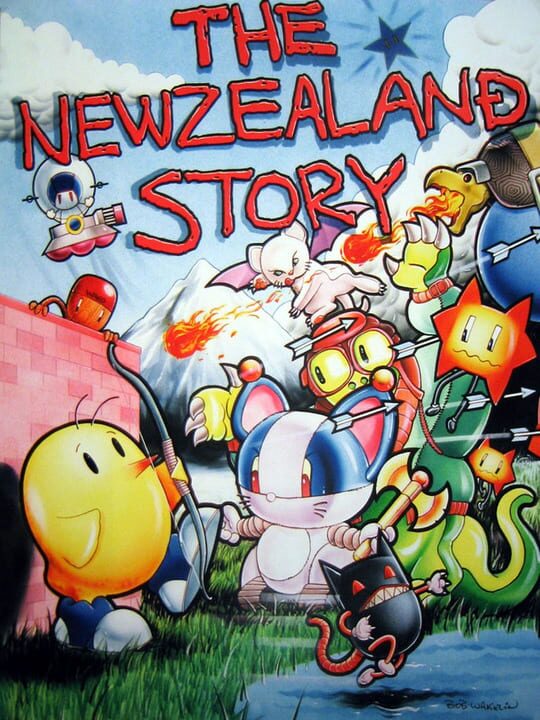
The NewZealand Story
Overview:|
This 1989 Port of a classic platformer, available on Atari ST/STE, tasks you with navigating vibrant, whimsical levels inspired by New Zealand environments. The core gameplay involves precise jumping, movement across multi-tiered stages, and collecting items to progress toward the objective of rescuing captured friends. As a port, this version focuses on translating the original's level design and timing challenges to the home computer hardware of that era.
This title, originally released in 1989, is classified as a Port of a classic platform game. It transports players to a vibrant, whimsical world inspired by New Zealand's unique fauna and landscapes. The core experience centers on a small, agile protagonist embarking on a quest through various colorful environments filled with peculiar enemies and hidden pathways.
As a port, this version brings the original arcade experience to the Atari ST/STE platform, aiming to replicate the precise timing and level design of the source material for home computer users of that era.
Core Gameplay Mechanics and Setting
The gameplay is characterized by precise jumping and movement across multi-tiered levels. Players must navigate obstacles and utilize unique abilities to progress. A key feature involves collecting items scattered throughout the stages, which are essential for completing objectives and advancing the narrative.
The atmosphere is lighthearted, featuring distinct visual elements drawn from the setting. The protagonist interacts with a variety of whimsical, often mischievous, creatures that serve as obstacles throughout the journey.
What is the primary objective of this platform adventure?
The central goal involves rescuing captured friends, which drives the player through the game's sequence of stages. Success relies on mastering the platforming challenges and understanding the patterns of the opposing characters.
Available Content and Iterations
This specific release for the Atari ST/STE is a standalone platform game. There are currently no recorded DLCs or expansions associated with this 1989 version.
Platform Availability Context
Released in late 1989, this version was developed for the Atari ST/STE systems, representing a specific iteration of the game tailored for those home computers. The publisher for this port was Ocean, while Taito developed the original concept.
What defines the experience of playing a classic platform port?
Playing a port means experiencing a faithful recreation of an older title on new hardware. For this game, it means focusing on the fundamental challenge of mastering the controls and level layouts as they were originally conceived, rather than modern mechanics or extensive content additions.
Game Details
Primary Name: The NewZealand Story
Type: Port
Part of: The NewZealand Story
Developer: Taito
Publisher: Ocean
Release Information
Release Date: Dec 31, 1989
Genres & Themes
Genres: Platform
Themes: Fantasy
Platforms
Atari ST/STE
Game Modes
Perspective: Side view
Player Modes: Single-player
Game Modes: Single player
Screenshots
No screenshots available for this game.
Videos
No videos available for this game.
 Soren
Soren