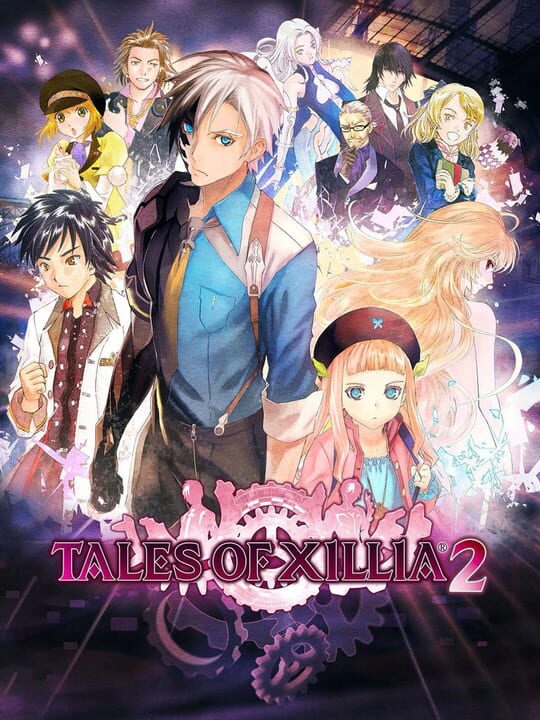
Tales of Xillia 2
Main Game
RELEASED
7.8
Nov 1, 2012
PlayStation 3byBandai Namco Studios•Bandai Namco Games
Overview:|
This 2012 Role-playing Game (RPG) continues the story one year after its predecessor, focusing on Ludger Will Kresnik, who gains unique Kresnik powers after incurring debt to Clanspia Inc. The core gameplay involves real-time combat, character progression, and party management as Ludger navigates a world threatened by unstable alternate timelines. Its distinctive feature is the narrative integration of dimensional travel and the protagonist's dual combat styles tied to his abilities, all while searching for his implicated brother.
This is a main entry in the Role-playing (RPG) genre, originally released in 2012 for the PlayStation 3 platform. The narrative unfolds one year after the events of its predecessor, focusing on the protagonist, Ludger Will Kresnik. Following a dramatic train incident, Ludger finds himself indebted to Clanspia Inc. and employed by them to utilize his unique Kresnik powers. His primary, high-stakes task involves intervening in alternative timelines to stabilize the world's soul abundance, while concurrently searching for his brother, Julius Will Kresnik, who is being held responsible for the initial hijacking. The setting blends personal drama with large-scale dimensional conflict.
Core Gameplay Loop and Mechanics
The gameplay centers on traditional RPG elements, requiring players to explore environments, engage in character development, and participate in real-time combat scenarios. Party management is crucial, as players must strategically utilize the distinct skills and abilities of their assembled team members to overcome various challenges.
A distinctive mechanical feature tied directly to the protagonist is his access to dual combat styles derived from his Kresnik abilities. This allows for varied approaches to encounters, adding a layer of tactical depth to the action sequences.
What makes the combat system unique in this RPG?
The integration of the protagonist's inherent powers directly into the combat system allows for dynamic shifts in playstyle mid-battle. This mechanic is intrinsically linked to the overarching story concerning alternate realities and the protagonist's role as a dimensional stabilizer.
Setting and Narrative Focus
The story advances the established lore by one year, placing the player into a world grappling with the consequences of dimensional instability. The narrative structure balances the immediate, personal objective—locating Ludger's missing brother—against the immense, corporate-mandated responsibility of managing alternate timelines. Themes explored include consequence, personal debt, and the nature of reality across different dimensions.
Current Content Status
This title is presented as a complete, standalone main game experience. As of its release context, there are no reported official expansions or downloadable content packs available for this specific version.
Audience Appeal
Fans of narrative-heavy Japanese RPGs, particularly those who enjoy complex character relationships and stories involving parallel worlds or alternate realities, are likely to find the core experience engaging. The real-time combat system appeals to players who prefer active engagement over purely turn-based encounters.
Game Details
Primary Name: Tales of Xillia 2
Alternative Names:
Teiruzu obu Ekushiria 2 (Hepburn)
Type: Main Game
Series: Tales of Xillia
Developer: Bandai Namco Studios
Publisher: Bandai Namco Games, Namco Bandai Games
Release Information
Release Date: Nov 1, 2012
Genres & Themes
Genres: Role-playing (RPG)
Themes: Action, Fantasy
Platforms
PlayStation 3
Game Modes
Perspective: Third person
Player Modes: Offline Co-op, Campaign Co-op, Multiplayer
Game Modes: Single player, Co-operative
Age Ratings
ESRB:T (Teen)
PEGI:16+
Violence in the game is mostly unrealistic with bright flashes of light visible upon impact and minimal physical responses to being hit without blood. However, cinematic sequences in the game depict stronger more realistic violence with blood, including characters being punched, shot, and stabbed with large bladed weapons. The game also contains virtual gambling including poker with instructions.
ACB:PG (Parental Guidance)
Mild fantasy violence and coarse language


 Soren
Soren