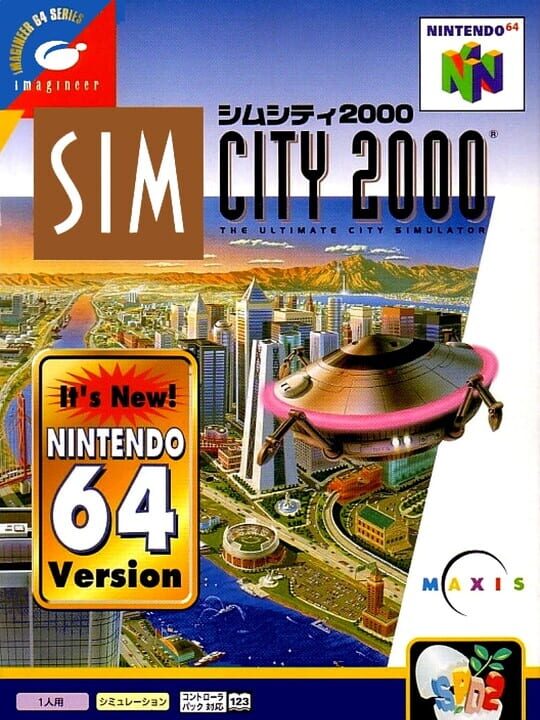
SimCity 2000
Overview:|
As an Expanded Game simulation released around 1998 for the Nintendo 64, this title tasks you with comprehensive urban planning: zoning land for residential, commercial, and industrial use, managing budgets, and developing infrastructure like power and transport. Its core value is deep municipal management, where balancing citizen needs against fiscal solvency is key. This version builds upon established city-builder mechanics, focusing on strategic, long-term development within a console environment.
This title, released in 1998, is an expanded version of a foundational city-building simulation experience, specifically tailored for the Nintendo 64 platform. As a simulator, its core appeal lies in providing players with comprehensive control over urban development, resource management, and civic planning. The atmosphere is one of meticulous management, where the player assumes the role of the city planner, tasked with transforming a modest settlement into a thriving metropolis. This version builds upon the established mechanics of its predecessor, offering a deep dive into the complexities of municipal governance.
Core Gameplay and Mechanics
The central gameplay loop revolves around zoning, infrastructure development, and balancing the city's budget. Players must designate areas for residential, commercial, and industrial use, ensuring that these zones are properly connected by roads and powered by utilities. Maintaining citizen happiness requires careful attention to public services such as police, fire protection, education, and healthcare, all while managing tax rates to ensure fiscal solvency.
A key feature of this simulation is the introduction of advanced infrastructure options, including various power generation methods, water systems, and transportation networks that go beyond simple road construction. Success is measured by population growth, economic stability, and the overall quality of life within the city limits.
What Makes This Expanded Game Unique?
As an Expanded Game, this iteration takes the established framework of the original simulation and introduces significant enhancements and new content tailored for the console experience. This classification suggests a richer feature set compared to the base experience, often including new buildings, scenarios, or refined control schemes optimized for the Nintendo 64 controller.
The value proposition here is depth; players are not just building a city, but managing a complex, interconnected ecosystem where every decision—from approving a new power plant to setting zoning density—has cascading effects on the population and treasury.
Platform Availability and Content
This specific iteration of the simulation is available exclusively on the Nintendo 64 platform. It is important to note that, according to available records, this release does not feature any downloadable content (DLCs) or further standalone expansions released after its initial launch.
How Does This Version Handle City Management?
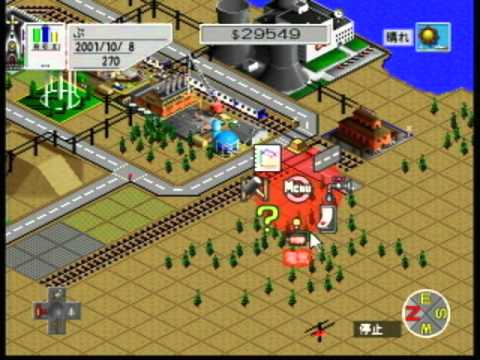
The Nintendo 64 version focuses on translating the intricate management systems into a console-friendly interface. Players utilize the controller to navigate the map, place structures, and access detailed statistical readouts concerning pollution levels, land value, and service coverage. The atmosphere remains focused on strategic planning rather than real-time action, demanding foresight in infrastructure placement and long-term financial planning to avoid economic collapse or civil unrest.
Key Simulation Elements
The game emphasizes environmental factors, requiring players to mitigate issues like pollution generated by industrial zones and manage waste disposal. Furthermore, players must contend with natural disasters, which test the resilience and preparedness of the infrastructure they have painstakingly constructed.
Game Details
Primary Name: SimCity 2000
Type: Expanded Game
Part of: SimCity 2000
Series: SimCity
Developer: Maxis
Publisher: Imagineer
Release Information
Release Date: Feb 3, 1998
Genres & Themes
Genres: Simulator
Themes: Science fiction, Business
Platforms
Nintendo 64
Game Modes
Perspective: First person
Player Modes: Single-player
Game Modes: Single player
 Soren
Soren