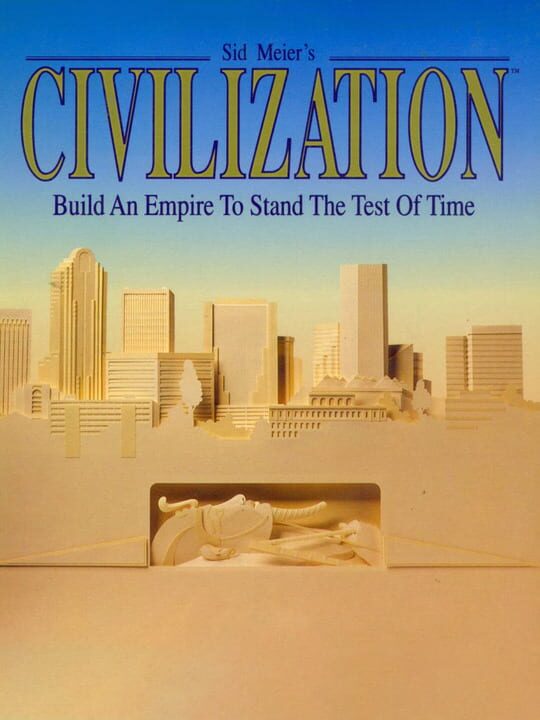
Sid Meier's Civilization
Main Game
RELEASED
9.0
Sep 30, 1991
DOSPC (Microsoft Windows)+4byMPS Labs•MicroProse Software, Inc.
Overview:|
As a foundational turn-based strategy main game released in 1991, Sid Meier's Civilization tasks you with guiding an empire from 4000 BC through the ages to the modern era. The core loop involves exploring, founding cities, researching technology, diplomacy, and military management to build an empire that stands the test of time. Its distinctive feature is simulating the entire sweep of human history across various ages, requiring players to balance competing priorities like science versus military strength on classic platforms like DOS and Amiga.
This is a foundational title in the strategy genre, a turn-based experience that tasks players with guiding a nascent civilization from the dawn of history to the modern era and beyond. Released in 1991, this game established the core loop of empire management that has defined its legacy. The objective is straightforward yet immensely deep: build an empire that would stand the test of time, spanning millennia of human development.
Core Gameplay and Premise
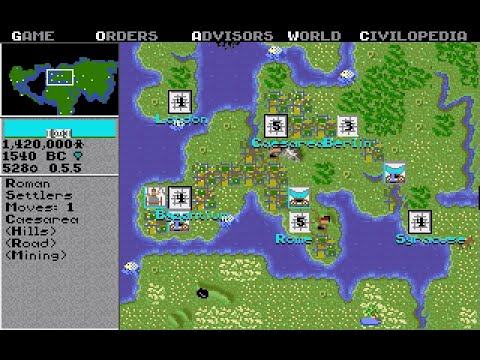
The game begins in 4000 BC, placing the player in command of a single settler unit. From this humble start, players must explore the surrounding world, found new cities, and begin the long process of technological and societal advancement. The gameplay is strictly turn-based, allowing for careful planning and strategic consideration before committing to actions.
The primary mechanics revolve around city management, technological research, diplomacy, and military expansion. Players must balance the needs of their growing population, manage resource allocation, and decide which scientific breakthroughs to pursue next. Discovering new technologies unlocks new units, buildings, and societal structures, fundamentally changing how the empire operates and interacts with its neighbors.
How Does Progression Work?
Advancement is structured across distinct historical ages. As players research key innovations—such as writing, the wheel, or gunpowder—their empire transitions through these eras, unlocking access to more advanced military units and infrastructure. This progression is central to the experience, creating a tangible sense of historical movement under the player's command.
Unique Features and Mechanics
What sets this title apart is its comprehensive scope, attempting to simulate the entire sweep of human history within a single strategic framework. Players engage in complex interactions with rival civilizations, each led by historical figures who possess distinct personalities and diplomatic tendencies.
The strategic depth comes from the interplay between different systems. Military strength is crucial for defense and conquest, but unchecked aggression can lead to widespread diplomatic isolation. Similarly, neglecting scientific progress will leave an empire technologically obsolete and vulnerable to more advanced rivals.
What defines the strategic challenge of this game?
The challenge lies in managing competing priorities across vast timescales. Players must decide whether to invest heavily in culture and infrastructure, focus on military dominance, or prioritize rapid scientific discovery. Success requires adapting strategies as the world evolves from tribal settlements to complex, interconnected global powers.
Technical Details and Availability
This main game was originally launched for platforms including DOS, Amiga, Mac, and Atari ST/STE, with subsequent releases for PC (Microsoft Windows) and PC-9800 Series. It is important to note that this specific 1991 release is the core experience; there are no official downloadable content packs or expansions associated with this original version.
Game Details
Primary Name: Sid Meier's Civilization
Alternative Names:
Civ 1 (Alternative title)
Civ (Abbreviation)
Civilization (Alternative title)
Sid Meier's Civilization: Shin Sekai Nadaibunmei (Japanese title - romanization)
Type: Main Game
Series: Civilization
Developer: MPS Labs
Publisher: MicroProse Software, Inc.
Release Information
Release Date: Sep 30, 1991
Genres & Themes
Genres: Strategy, Turn-based strategy (TBS)
Themes: 4X (explore, expand, exploit, and exterminate), Historical
Platforms
DOSPC (Microsoft Windows)PC-9800 SeriesAmigaAtari ST/STEMac
Game Modes
Perspective: Bird view / Isometric
Player Modes: Single-player
Game Modes: Single player
Age Ratings
USK:0 (All Ages)

 Soren
Soren