
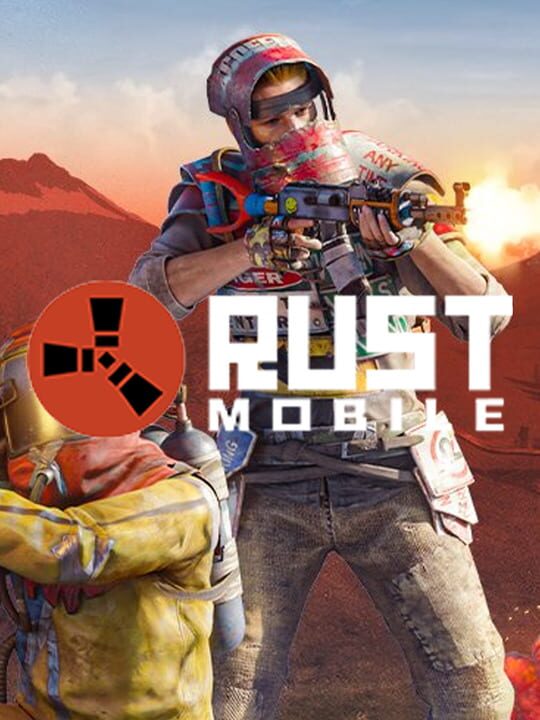
Rust Mobile
Overview:|
Rust: Mobile translates the core open-world survival sandbox to mobile platforms. In this persistent environment, you must gather resources, craft essential items, and construct defensive bases to endure harsh conditions. The gameplay loop is defined by player-driven interactions and constant threats from both the environment and other players in a challenging PvP framework.
This title translates the core open-world survival experience of its established PC counterpart to mobile platforms. It functions as a persistent sandbox where players are dropped into a harsh environment with minimal resources. The fundamental objective revolves around immediate survival against environmental hazards, wildlife, and, critically, other players.
Core Gameplay Loop and Mechanics
The primary gameplay cycle involves gathering essential resources—such as wood, stone, and metal—through manual collection and exploration. These materials are then used for crafting tools, weapons, armor, and structural components. Base building is a central mechanic, allowing players to construct defensive fortifications to protect gathered loot and personal space from raids by other inhabitants.
Interaction is predominantly player-driven. Success hinges on managing hunger, thirst, and health while navigating a world populated by both hostile NPCs and other human players. The game emphasizes emergent narratives stemming from player alliances, betrayals, and territorial conflicts within the shared server space.
Setting and Persistent World Structure
The setting is a rugged, unforgiving landscape where the threat of permanent loss (permadeath mechanics, depending on server settings) drives player decisions. Unlike session-based games, this environment is persistent; actions taken by players remain in effect, shaping the landscape and the balance of power over time. Exploration uncovers blueprints, advanced components, and potential points of interest necessary for progression.
What defines the mobile survival experience?
The distinctive feature of this iteration is the adaptation of complex survival mechanics for touch-based controls and mobile hardware specifications. While retaining the high-stakes PvP survival framework, developers have focused on optimizing the building interface and combat systems for on-the-go play. The community reception often centers on the fidelity of this translation—how closely the mobile experience mirrors the depth of the original sandbox.
Current State and Community Focus
Recent development efforts have concentrated on stability improvements and ensuring the integrity of the persistent world infrastructure required for a large-scale mobile survival environment. Community discussion frequently revolves around balancing resource scarcity against the pace of progression and the effectiveness of anti-cheat measures necessary in a highly competitive player-versus-player setting.
Key Features Overview
- Resource gathering and complex item crafting systems.
- In-depth base construction for defense and storage.
- Open-world exploration with environmental dangers.
- Direct player-versus-player (PvP) interaction as a primary threat vector.
Game Details
Primary Name: Rust Mobile
Alternative Names:
Rust Mobile (Acronym)
Type: Port
Part of: Rust
Developer: Level Infinite
Publisher: Level Infinite
Release Information
Release Date: Announced (no release date)
Platforms
iOSAndroid
Game Modes
Perspective: Unknown
Player Modes: Online Co-op, Multiplayer


 Soren
Soren