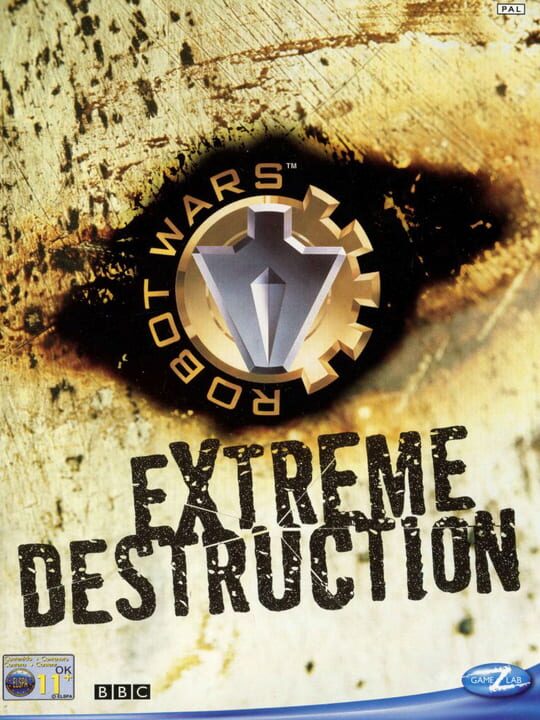
Robot Wars: Extreme Destruction
Port
RELEASED
Oct 25, 2002
Game Boy AdvancebyWarthog Games•BBC Multimedia
Part of: Robot Wars: Extreme Destruction
Overview:|
This 2002 Game Boy Advance port of Robot Wars: Extreme Destruction centers on the simulator/sport experience of designing and battling custom robots. You utilize a database of parts—armor, weapons, engines—to build your machine, or select a pre-built bot for immediate 3D arena action. The core loop involves engineering prowess followed by competitive destruction across varied environments like the Acid Factory. As a port, it delivers the complete televised robot combat concept for the handheld.
This title, released in 2002, is a portable adaptation of the popular television phenomenon, bringing the high-stakes world of televised robotic combat to the Game Boy Advance. Classified as a Port, this version aims to replicate the core experience of its source material, focusing on the design, construction, and competitive destruction of custom-built machines. The atmosphere is centered entirely around the competitive sports arena, where engineering prowess meets brute force.
Core Gameplay Mechanics: Build and Battle
The central appeal of this simulation and sports title lies in its robust customization system. Players gain access to an extensive database of components, allowing for detailed robot construction. This includes selecting from various body parts, armor plating, engine types, locomotion systems (wheels), and an arsenal of weaponry.
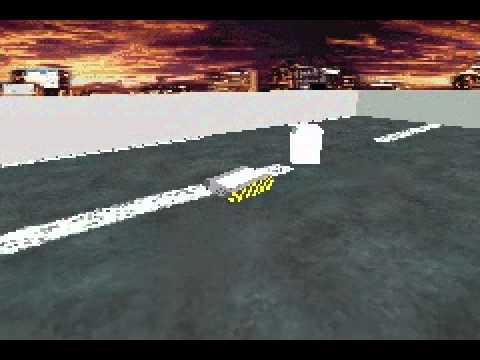
Once a machine is assembled, players can immediately test their creation in head-to-head combat scenarios rendered in realistic 3-D action.
What is the core experience of this adaptation?
The game successfully translates the essence of the TV show into a portable format. Beyond the deep building mechanics, there is an accessible entry point for immediate action. Gamers who prefer to skip the design phase can utilize a quick-start function to select from a roster of pre-built robots and jump straight into the arena action.
Arena Environments and Presentation
The combat takes place across several distinct and improved arenas, each offering a unique backdrop for the destruction. These environments include locations such as the Desert Outpost, Sub-Zero Station, the Iron Foundry, and the Acid Factory.
Platform Availability and Content Status
This specific version was developed for the Game Boy Advance and launched on October 25, 2002. As a standalone port, the game does not feature any downloadable content (DLC) or official expansions, meaning the content available at launch is the complete package offered for this platform release.
How does this port relate to other versions?
As a port of the television show's concept, this game focuses on delivering the complete competitive robot fighting experience tailored for the GBA hardware, emphasizing the design-to-battle loop that defined the source material.
Game Details
Primary Name: Robot Wars: Extreme Destruction
Type: Port
Part of: Robot Wars: Extreme Destruction
Developer: Warthog Games
Publisher: BBC Multimedia
Release Information
Release Date: Oct 25, 2002
Genres & Themes
Genres: Simulator, Sport
Themes: Action
Platforms
Game Boy Advance
Game Modes
Perspective: Bird view / Isometric
Player Modes: Single-player
Game Modes: Single player
 Soren
Soren