

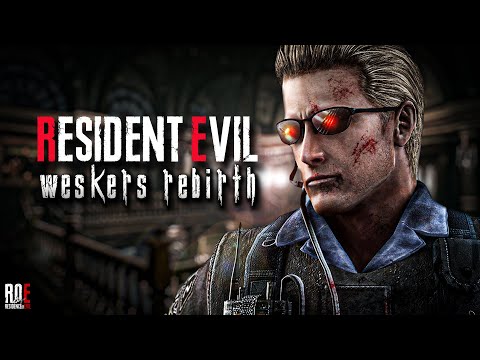
Resident Evil: Wesker Rebirth
Overview:|
Released in 2021, Resident Evil: Wesker Rebirth is an action-adventure shooter blending arcade elements. You assume the role of Albert Wesker, navigating the dangerous Arklay Research Facility and Spencer Mansion with the primary objective of survival and escape before a self-destruct sequence initiates. The core experience focuses on action-oriented navigation and combat within a tense, confined setting.
This title, released in 2021, functions as a survival-action game blending elements of classic adventure and arcade mechanics. Players assume the role of Albert Wesker, navigating the immediate aftermath of the Arklay Research Facility incident and the Spencer Mansion. The core experience centers on intense resource management and combat against biological threats within a confined, hostile environment.
Core Gameplay Loop and Mechanics
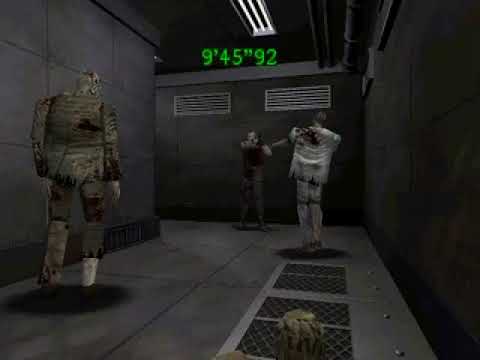
The primary objective is focused on survival and escape. Players must traverse interconnected, labyrinthine environments, solving environmental puzzles to unlock new areas and progress toward freedom before a catastrophic event concludes the scenario. Gameplay emphasizes action, requiring precise aiming and strategic use of limited ammunition and health items.
As an action-adventure title, the experience is heavily weighted toward moment-to-moment combat encounters. Players manage an inventory system, deciding which weapons and consumables to carry, which directly impacts their survivability against the facility's inhabitants.
Setting and Narrative Premise
The setting plunges the player into a dark, bio-hazard-laden complex. The narrative follows Wesker's perspective as he attempts to secure his survival and potentially uncover further secrets related to the facility's research. The atmosphere is defined by themes of corporate conspiracy and biological horror.
What is the main focus of the experience?
The main focus is action-oriented survival. Unlike some entries in the genre, this iteration places a strong emphasis on direct confrontation and fast-paced maneuvering through dangerous zones, demanding quick reflexes from the player.
Distinctive Features
The game utilizes a single-player game mode, focusing entirely on the protagonist's desperate bid for escape. Its structure blends exploration typical of adventure games with the constant threat management found in survival horror, all filtered through a more arcade-like action lens.
How does the environment impact gameplay?
The environment itself acts as an antagonist. The complex layout forces players to backtrack and utilize newly acquired keys or tools, while the looming threat of facility self-destruction creates a persistent time pressure, encouraging aggressive forward movement rather than slow, methodical exploration.
Game Details
Primary Name: Resident Evil: Wesker Rebirth
Type: Mod
Part of: Resident Evil
Series: Resident Evil
Developer: Unknown
Publisher: Unknown
Release Information
Release Date: Apr 11, 2021
Genres & Themes
Genres: Shooter, Adventure, Arcade
Themes: Action, Horror, Survival
Platforms
PC (Microsoft Windows)
Game Modes
Perspective: Bird view / Isometric
Player Modes: Single-player
Game Modes: Single player
 Soren
Soren