
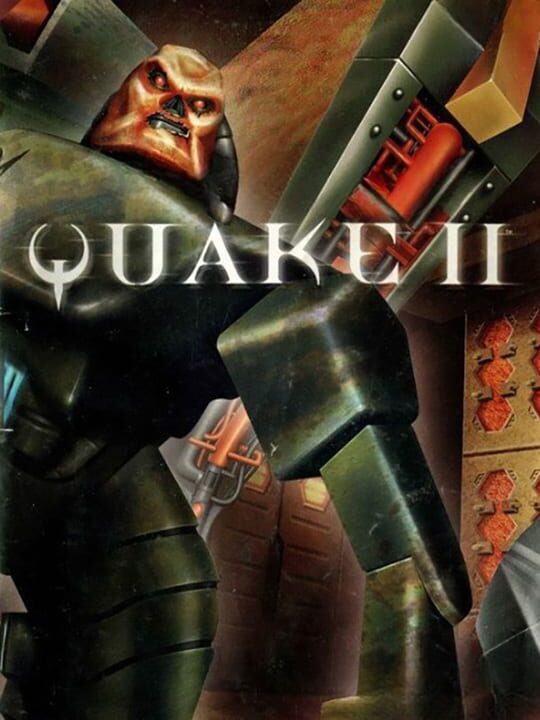
Quake II
Overview:|
Quake II, released in 1999, is a fast-paced first-person shooter set in industrial sci-fi environments. The core gameplay involves intense firefights utilizing diverse weaponry against enemy forces. This specific port features shorter level designs than the original release, enhanced graphical effects like improved lighting, and supports local multiplayer for up to four players. The experience is self-contained, offering a complete single-player campaign and multiplayer modes.
This title, originally released in 1999, is a first-person shooter (FPS) set within industrial, science-fiction environments. The core gameplay loop centers on navigating complex, often labyrinthine levels while engaging in intense, fast-paced combat against hostile enemy forces using an arsenal of distinct weaponry.
Core Gameplay Mechanics and Setting
Players assume the role of a commando tasked with infiltrating an enemy stronghold. The experience emphasizes constant movement and quick reflexes, typical of the genre's roots. Progression involves moving through distinct maps, managing limited resources such as ammunition and health packs, and locating key items or switches to unlock subsequent areas.
Distinctive Features of This Version
This specific iteration of the game offers a unique presentation compared to its original counterpart. It features redesigned level layouts, generally resulting in shorter, more focused stages. A notable technical enhancement includes improved lighting effects integrated directly into the combat sequences, adding visual depth to the dark, metallic settings.
Multiplayer and Content Structure
The game supports local multiplayer functionality, allowing up to four players to compete or cooperate. This version is presented as a self-contained experience; there are no plans or existing structures for downloadable content (DLC) to expand the core offering.
How Does the Combat Feel in This Version?
The combat maintains a high velocity, demanding precise aiming and strategic weapon cycling. The variety of enemy types requires players to adapt their tactics, often switching between rapid-fire weapons for large groups and heavy ordnance for more durable targets. The focus remains firmly on direct confrontation rather than stealth or complex puzzle-solving.
What Environments Await the Player?
The setting is characterized by gritty, technological architecture—think military bases, factories, and processing plants. The visual design strongly supports the theme of an isolated, hostile alien installation.
Game Details
Release Information
Release Date: Jul 7, 1999
Genres & Themes
Genres: Shooter
Themes: Action, Science fiction
Platforms
Nintendo 64
Game Modes
Perspective: First person
Player Modes: Split Screen, Multiplayer
Game Modes: Single player
Age Ratings
ESRB:M (Mature)
Videos
No videos available for this game.
 Soren
Soren