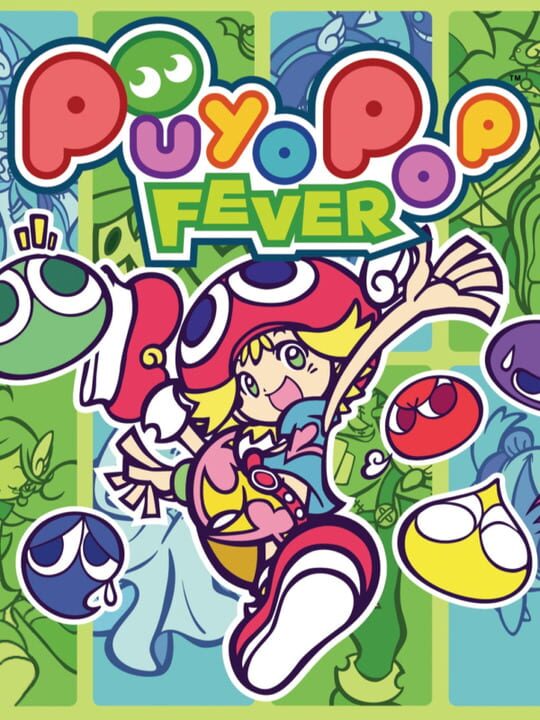
Puyo Pop Fever
Main Game
RELEASED
7.6
Nov 26, 2003
PlayStation 2Dreamcast+7bySonic Team•Sega
Overview:|
As a main entry in the classic puzzle series, this 2003 title centers on aligning four or more colorful Puyos to clear them, sending garbage blocks to opponents. The core loop emphasizes creating chain reactions for competitive advantage. Its distinctive feature is the "Fever Mode," which activates after filling a gauge, dramatically increasing the pace for high-scoring bursts. The story follows Amitie searching for a lost magic wand across a world featuring overhauled, hand-drawn visuals, with a two-player competitive mode available.
This is a main entry in the classic puzzle series, originally released in late 2003 across multiple platforms including PlayStation 2, Nintendo GameCube, Xbox, and PC. The core experience centers on the familiar, addictive mechanic of aligning colorful, blob-like entities—Puyos—to make them pop. Players must strategically drop these pairs of Puyos onto a grid, aiming to connect four or more of the same color vertically or horizontally to clear them from the board. Clearing Puyos sends "garbage" blocks to an opponent's screen, creating a competitive, chain-reaction-based challenge.
Setting and Narrative Premise
The game introduces a distinct, vibrant atmosphere characterized by overhauled, hand-drawn visuals. The primary story mode follows the adventures of Amitie, a spirited student attending a magic school. Under the tutelage of her instructor, Accord, Amitie learns to utilize Puyos as a form of magical spellcasting. The central plot kicks off when Accord misplaces her essential Flying Cane, prompting a search across the Puyo Puyo world. Players guide Amitie as she explores, encounters a roster of unique characters, and engages them in puzzle battles to locate the missing item. A more challenging story path allows players to experience the events from the perspective of Amitie's rival, Raffina, leading to different character interactions and narrative outcomes regarding the cane's whereabouts.
Core Gameplay Mechanics
The fundamental puzzle mechanics remain true to the series' roots, focusing on creating cascading chain reactions. When Puyos are cleared, any blocks resting above them fall, potentially triggering subsequent matches. Successfully executing these chains is crucial for overwhelming opponents in competitive play.
What is the defining new feature of this puzzle entry?
The most significant addition to the gameplay loop is the introduction of the Fever Mode. This mechanic actively builds tension and speed during matches. As players successfully clear Puyos and execute chains, a dedicated "fever gauge" on the screen fills up. Once this gauge is completely charged, the player can activate Fever Mode, which significantly cranks up the action, often leading to frantic, high-scoring sequences designed to secure victory.
Multiplayer Competition
While the game features an expansive single-player adventure, competitive play is available for two players to face off. These head-to-head matches focus either on achieving the highest score within a time limit or surviving longer than the opponent by preventing their screen from filling up with garbage blocks.
Content Availability
This title is presented as a complete main game experience. There are currently no officially released downloadable content packs or major expansions associated with this version. It has seen one official remake since its initial launch across its various platform releases.
Game Details
Primary Name: Puyo Pop Fever
Alternative Names:
Puyo Puyo Fībā (Japanese title - romanization)
Puyo Puyo Fever (Japanese title - translated)
Puyo Puyo 5 (Working title)
Puyo Puyo 5 (Other Alias)
Puyo Puyo Fever (Other Alias)
Type: Main Game
Series: Puyo Pop Fever
Developer: Sonic Team
Publisher: Sega
Release Information
Release Date: Nov 26, 2003
Genres & Themes
Genres: Music, Puzzle, Strategy
Themes: Action
Platforms
PlayStation 2DreamcastPC (Microsoft Windows)XboxNintendo GameCubePlayStation PortablePalm OSArcadeMac
Game Modes
Perspective: Side view
Player Modes: Single-player
Game Modes: Single player, Split screen
Age Ratings
ESRB:E (Everyone)
PEGI:3+
CERO:A (All Ages)
 Soren
Soren