
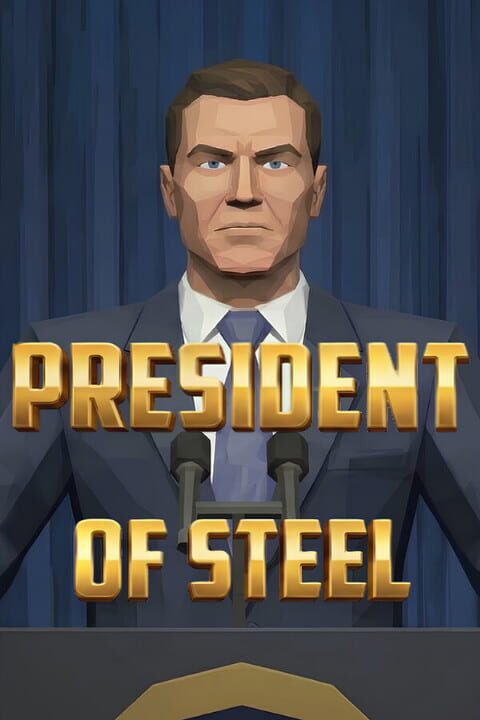
President of Steel
Main Game
RELEASED
May 7, 2026
PC (Microsoft Windows)byUnknown
Overview:|
President of Steel is a newly released (2026) PC political strategy/RPG simulator where you govern a nation by balancing power, stability, and economy. The core loop involves making high-stakes choices to navigate political intrigue, organized crime, and war threats. Its unique feature is integrating personal relationships into the strategic simulation, meaning diplomacy and alliances heavily influence national outcomes.
This is a choice-driven political strategy experience that places the player directly into the highest office of a nation. Released today, February 1st, 2026, this main title is available exclusively on PC (Microsoft Windows). It blends elements of Role-playing (RPG), Simulation, and Strategy genres, challenging players to manage the complex machinery of statecraft where every decision carries significant weight. The core appeal lies in navigating a dynamic political landscape where maintaining national equilibrium is a constant balancing act.
Core Gameplay and Mechanics
The gameplay loop centers on high-stakes decision-making across multiple critical national sectors. Players must constantly monitor and adjust the delicate balance between national power, internal stability, and the overall economy. Success hinges on strategic resource allocation and timely policy implementation within this simulation framework.
Navigating National Crises and Intrigue
The simulation immerses the player in volatile scenarios beyond standard governance. This includes managing the looming threat of international war, confronting the pervasive influence of organized crime networks, and handling complex domestic political intrigue. These challenges often require difficult trade-offs, forcing players to prioritize immediate threats over long-term goals, adding a layer of tension to the strategic management.
What makes this title unique in its genre?
A significant feature of this title is the integration of personal relationships into the political simulation. Decisions are not made in a vacuum; they affect the player's standing with key figures and factions within the government and society. This RPG layer adds a personal dimension to the strategic management, where diplomacy and personal alliances can be as crucial as economic policy.
What kind of experience can players expect?
Players can anticipate a deep, narrative-infused strategy experience where the atmosphere is one of constant pressure and consequence. The game focuses heavily on the narrative outcomes stemming directly from player choices, ensuring high replayability as different paths lead to vastly different national fates.
Content Availability
As of its release date, this is the main game offering, with no currently announced or available downloadable content (DLCs) or expansions.
Game Details
Primary Name: President of Steel
Alternative Names:
President of Steel.exe (Windows Executable)
Type: Main Game
Developer: Unknown
Publisher: Unknown
Release Information
Release Date: May 7, 2026
Genres & Themes
Genres: Role-playing (RPG), Simulator, Strategy
Platforms
PC (Microsoft Windows)
Game Modes
Perspective: Unknown
Player Modes: Single-player
Game Modes: Single player
Videos
No videos available for this game.
 Soren
Soren