
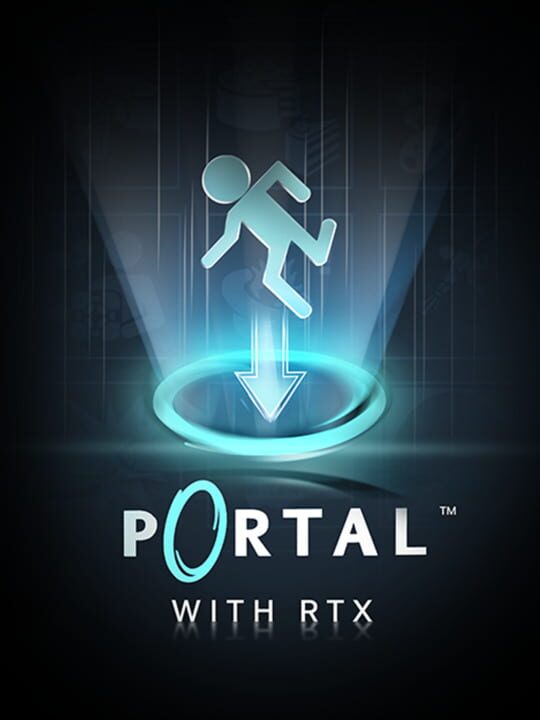
Portal with RTX
Overview:|
Portal with RTX, released in 2022, is a first-person puzzle game where you navigate test chambers by creating interconnected portals using a specialized gun. The core gameplay loop involves using spatial reasoning and momentum to traverse obstacles within the Aperture Science Enrichment Center. This version uniquely features full ray tracing implementation, significantly enhancing the visual fidelity through realistic lighting and shadows across the classic experience.
This title is a puzzle game released in late 2022 for PC. It presents the core experience of the original game, enhanced with modern graphical technology. The primary game mode involves single-player navigation through a series of test chambers within the Aperture Science Enrichment Center.
Core Gameplay Mechanics
The central mechanic revolves around the use of a specialized device, the portal gun. This tool allows the player to create two interconnected portals on specific surfaces. Objects, energy pellets, and the player character can pass through these portals, maintaining their momentum. Success in the test chambers requires spatial reasoning, precise timing, and the strategic manipulation of physics to overcome environmental obstacles.
Setting and Progression
Players progress sequentially through numerous test chambers, each designed to challenge their understanding of the portal mechanics. The environment is characterized by sterile, industrial settings typical of a scientific testing facility. While the narrative context is present, the focus remains heavily on the physics-based puzzle solving rather than extensive story exposition.
What is the distinctive feature of this version?
The most significant enhancement in this iteration is the integration of full ray tracing. This technology fundamentally alters the visual presentation by introducing highly realistic global illumination, reflections, and shadows. This graphical overhaul impacts the atmosphere of the test chambers, providing a visually distinct experience compared to the original release.
Audience Appeal
This version is primarily aimed at players familiar with the original puzzle structure who are interested in experiencing the classic challenges rendered with advanced lighting technology. It appeals to those who enjoy physics-based problem-solving and appreciate detailed visual fidelity in their gaming experiences.
How does the gameplay loop function?
The loop consists of entering a chamber, analyzing the layout and required objective, experimenting with portal placement to manage momentum and trajectory, executing the solution, and advancing to the next, increasingly complex test.
Game Details
Release Information
Release Date: Dec 8, 2022
Genres & Themes
Genres: Puzzle
Themes: Action
Platforms
PC (Microsoft Windows)
Game Modes
Perspective: First person
Player Modes: Single-player
Game Modes: Single player
 Soren
Soren