
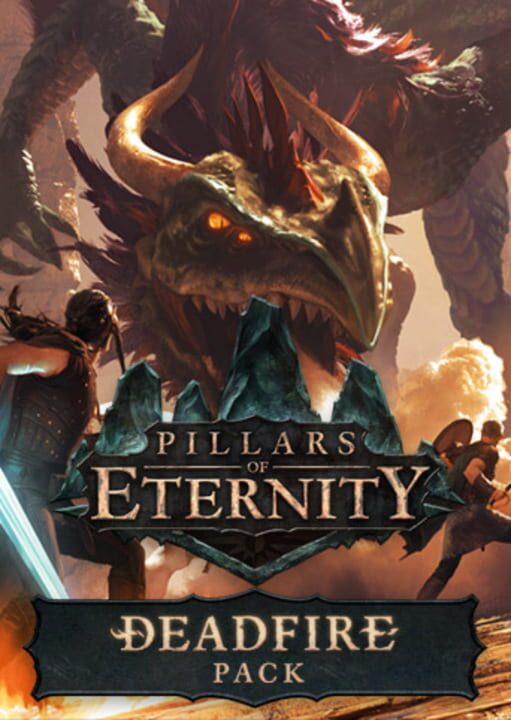
Pillars of Eternity: Deadfire Pack
Pack / Addon
RELEASED
Nov 15, 2017
LinuxPC (Microsoft Windows)+1byObsidian Entertainment•Paradox Interactive
Part of: Pillars of Eternity
Overview:|
The Pillars of Eternity: Deadfire Pack is an add-on for the core Role-Playing Game, *Pillars of Eternity*, requiring the base game for access. Released in 2017, this pack enhances the existing adventure by integrating new in-game items and cosmetic character portraits themed after the forthcoming sequel. It does not introduce new major story arcs or gameplay systems, focusing instead on supplemental content to bridge the gap between the original title and its successor. The base game features deep character customization, tactical real-time-with-pause combat, and narrative choices across PC, Linux, and Mac platforms.
This content package, classified as a Pack/Addon for the core Role-Playing Game, *Pillars of Eternity*, serves primarily as supplemental material bridging the original title with its forthcoming sequel. It requires the base game to be accessed and integrated into the existing adventure; it is not a standalone experience. Released in late 2017, this material focuses on providing immediate, tangible additions to the player's current playthrough rather than introducing major new story arcs or expansive regions typical of a full expansion.
What Content Does This Pack Add to the Base Game?
The primary function of this add-on is to offer players a preview of the aesthetic and world design of the next major installment in the series. Specifically, players receive a collection of new in-game items that can be utilized immediately within their ongoing campaign, offering fresh loot opportunities.
Furthermore, this pack introduces a selection of new character portraits. These cosmetic additions allow players to customize the appearance of their created heroes with visuals drawn directly from the art direction of the sequel, enhancing immersion for those anticipating the next chapter.
How Does This Content Integrate with the Main Game Experience?
As an integrated pack, the new items are woven directly into the existing game structure. This means the content supplements the established narrative and core mechanics of the original adventure without fundamentally altering them. The scope is focused on supplemental assets rather than introducing new gameplay systems or narrative branches.
Core Gameplay Loop of the Base Experience
The underlying game is a deep Role-Playing Game (RPG) emphasizing tactical combat, which often utilizes a real-time-with-pause system. Players engage in extensive party management, deep character customization, and navigate a world shaped by complex moral choices. The core loop involves exploration, dialogue-heavy interactions, and managing a party of companions with distinct abilities and backgrounds within a rich fantasy setting.
What Platforms Support This Add-on?
This content pack is available for players on Linux, PC (Microsoft Windows), and Mac operating systems.
Game Details
Primary Name: Pillars of Eternity: Deadfire Pack
Alternative Names:
Pillars of Eternity - Deadfire Pack (Alternative spelling)
Type: Pack / Addon
Part of: Pillars of Eternity
Developer: Obsidian Entertainment
Publisher: Paradox Interactive
Release Information
Release Date: Nov 15, 2017
Genres & Themes
Genres: Role-playing (RPG), Adventure
Themes: Fantasy
Platforms
LinuxPC (Microsoft Windows)Mac
Game Modes
Perspective: Unknown
Player Modes: Single-player
Game Modes: Single player
Videos
No videos available for this game.
 Soren
Soren