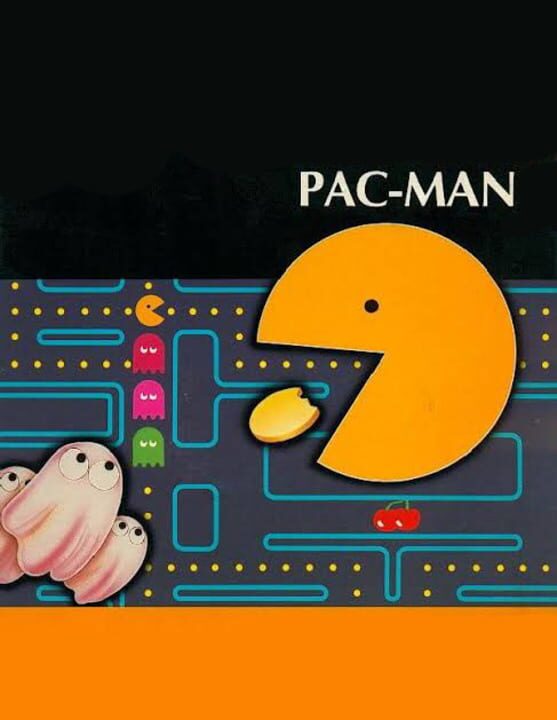
Pac-Man
Overview:|
This 1982 release is a Port of the classic arcade experience, adapted for Atari 8-bit computers. The core gameplay involves navigating a maze to consume all dots while evading four distinct ghosts. A key feature is the strategic use of Power Pellets, which temporarily allow the player to eat the pursuers for bonus points. This version delivers the foundational maze-chase formula, focusing entirely on pattern recognition and quick reflexes within its self-contained environment.
This title, released in 1982, represents a direct translation of the iconic arcade experience to the Atari 8-bit computer platform. As a port, its primary value proposition lies in bringing the celebrated maze-chase action to home computer users of the era. The core atmosphere remains consistent with its source material: a bright, geometric world where survival depends on quick reflexes and strategic movement.
The setting is a simple, top-down maze populated by collectible dots and four distinct, color-coded antagonists. The player controls the central protagonist, navigating the labyrinth to consume all the pellets while evading the pursuing ghosts. This fundamental loop defines the entire experience.
Core Gameplay Mechanics and Features
The gameplay centers on pattern recognition and timing. Players must consume all the standard dots scattered throughout the maze to advance to the next level. Interspersed within the maze are larger, flashing Power Pellets. Consuming one of these temporarily reverses the dynamic, allowing the player to consume the ghosts for bonus points before they return to their base.
Key features of this version include:
- Maze navigation under constant threat.
- The strategic use of Power Pellets to turn the tables on pursuers.
- Scoring based on dot consumption and ghost capture.
What is the nature of this specific release?
This game is classified as a Port. This means it is a version of an existing, highly successful arcade game adapted specifically to run on the Atari 8-bit hardware. For players familiar with the original, this offers the chance to experience that established gameplay on a different system. For those new to the concept, it delivers the definitive, foundational maze-chase formula that established a genre.
Platform Availability and Content
This specific iteration was developed for the Atari 8-bit computers. It was published by Atari, with development contributions noted from Namco, Roklan Corporation, Datasoft, Inc., and U.S. Gold across its lifecycle.
Regarding additional content, this release contains no downloadable content (DLCs) or expansions. It stands as a self-contained experience based on the original arcade design.
How does this port compare to the original arcade experience?
As a port to home computer hardware from 1982, the focus is on faithfully recreating the core mechanics and visual structure of the source material within the technical constraints of the Atari 8-bit system. The atmosphere is driven entirely by the immediate action of evasion and consumption within the enclosed maze environment.
Game Details
Release Information
Release Date: Jun 1, 1982
Genres & Themes
Genres: Arcade
Themes: Action
Platforms
Atari 8-bit
Game Modes
Perspective: Bird view / Isometric
Player Modes: Single-player
Game Modes: Single player
Videos
No videos available for this game.
 Soren
Soren