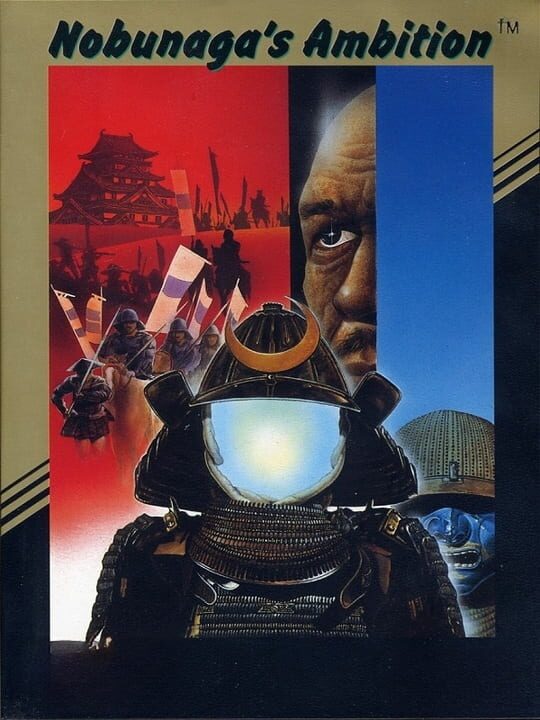
Nobunaga's Ambition
Main Game
RELEASED
6.9
Dec 1, 1986
Turbografx-16/PC Engine CDDOS+12byKoei
Overview:|
This classic strategy/simulation RPG, first released in 1986, casts you as a powerful Daimyo during Japan's Sengoku period. The core loop involves turn-based management of domain resources, infrastructure development, and officer assignment. Your objective is to conquer and unify all 50 provinces through careful military planning and diplomacy. Success hinges on balancing governance and expansion, making it a deep historical simulation available across various classic platforms.
This title, first released in 1986, plunges players into the tumultuous Sengoku period of Japanese history, a time defined by constant civil war and the struggle for unification. As a foundational entry in the strategy genre, the game tasks players with assuming the role of a powerful Daimyo—such as Oda Nobunaga, Takeda Shingen, or Uesugi Kenshin—and maneuvering through complex political, military, and economic landscapes. The ultimate objective is ambitious: to conquer and unify all 50 provinces spanning from Ezo in the north down to Kyushu in the south, establishing a single, dominant rule over Japan.
Core Gameplay Mechanics and Strategy
The experience blends elements of role-playing, simulation, and deep turn-based strategy. Gameplay revolves around managing a domain, which requires careful attention to several interlocking systems. Players must balance domestic affairs, military expansion, and diplomacy to achieve their goal of unification.
Domain Management
Central to the experience is the management of your chosen domain. This involves:
- Resource Allocation: Overseeing the collection of rice (the primary resource) through agricultural development and taxation.
- Infrastructure: Investing in building up castles, improving defenses, and developing commercial centers to boost income and troop readiness.
- Officer Management: Recruiting skilled samurai, assigning them appropriate roles based on their stats (such as military prowess, administration, or diplomacy), and ensuring their loyalty.
Military and Diplomatic Action
When it comes to interaction with rival Daimyo, players engage in turn-based strategic maneuvers. This includes:
- Invasion and Defense: Planning and executing military campaigns across the map, utilizing terrain advantages and troop composition. Battles are resolved through strategic calculations based on general skill and troop numbers.
- Diplomacy: Negotiating alliances, arranging marriages to secure pacts, or employing espionage to weaken rivals before an attack.
What makes this simulation unique in the Strategy genre?
This simulation stands out due to its comprehensive historical setting and the depth of its strategic simulation for its time. It is not purely a tactical wargame; success hinges equally on effective governance and economic planning as it does on battlefield victories. The atmosphere captures the high-stakes political maneuvering characteristic of the era, where a single mismanaged harvest or poorly chosen alliance can lead to ruin.
Platform Availability and Game Status
This title has seen numerous releases across various computing architectures since its debut in 1986. It is available on platforms including the PC Engine CD, DOS, Windows PCs, PC-9800 Series, Sharp X68000, Amiga, and Sega Mega Drive/Genesis, among others. As a foundational Main Game, this entry does not feature any official downloadable content or standalone expansions.
Game Details
Primary Name: Nobunaga's Ambition
Alternative Names:
Nobunaga no Yabou: Zenkoku-ban (Japanese title - romanization)
Nobunaga's Ambition: Zenkokuban (Alternative title)
Nobunaga's Ambition: Nation (Alternative title)
Nobunaga's Ambition: National Version (Japanese title - romanization)
Nobunaga2_Launcher.exe (Windows Executable)
Type: Main Game
Series: Nobunaga's Ambition
Developer: Koei
Publisher: Koei
Release Information
Release Date: Dec 1, 1986
Genres & Themes
Genres: Role-playing (RPG), Simulator, Strategy, Turn-based strategy (TBS)
Themes: Sandbox, Warfare, Fantasy, Historical
Platforms
Turbografx-16/PC Engine CDDOSSharp X1PC (Microsoft Windows)PC-9800 SeriesPC-8800 SeriesTurboGrafx-16/PC EngineSharp X68000FM-7Sharp MZ-2200MSXAmigaSega Mega Drive/GenesisMac
Game Modes
Perspective: Bird view / Isometric
Player Modes: Single-player
Game Modes: Single player, Multiplayer
Age Ratings
ESRB:E (Everyone)
PEGI:3+
CERO:A (All Ages)
Videos
No videos available for this game.

 Soren
Soren