
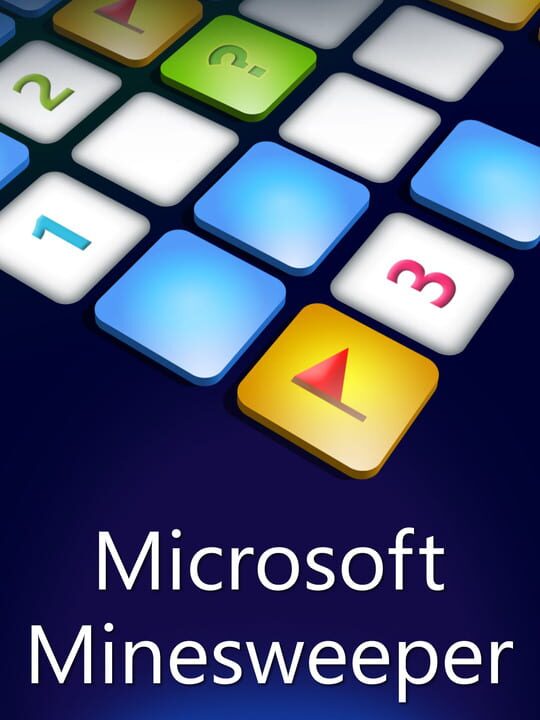
Microsoft Minesweeper
Remake
RELEASED
5.0
Jan 30, 2007
PC (Microsoft Windows)byOberon Media•Microsoft
Part of: Microsoft Minesweeper
Overview:|
This 2007 puzzle remake preserves the core logic of the classic Minesweeper experience, tasking players with deducing hidden mine locations on a grid using numerical adjacency clues. As a modernization bundled with Windows Vista/7, it features updated visuals and interface elements while remaining fundamentally faithful to the original deduction-based gameplay loop. The game offers a purely cerebral challenge with no narrative content.
This is a Remake of the classic logic puzzle, originally released for PC (Microsoft Windows) in 2007. It serves as the version integrated into operating systems such as Windows Vista and Windows 7, offering a modernized presentation of the foundational grid-based challenge. The core objective remains consistent: players must deduce the placement of hidden explosive devices scattered across a field by systematically clearing safe squares, guided only by the numerical clues revealed upon uncovering them.
Core Gameplay Loop and Mechanics
The gameplay centers entirely on logical deduction. Players interact with the grid by selecting squares to reveal their contents. If a square is safe, it displays a number indicating how many adjacent tiles (including diagonals) contain mines. Players use this information to strategically place flags on suspected mine locations, preventing accidental detonation. The game is won when all non-mine squares are cleared without triggering an explosion.
What are the key updates in this remake?
As a modernization, this version features significant enhancements to the visual and user interface experience compared to earlier iterations. While the fundamental rules of deduction are strictly preserved, the graphics and overall presentation are updated to align with contemporary operating system aesthetics. This includes improved graphical fidelity and potentially refined input methods designed for modern PC environments. The focus remains on delivering the pure, satisfying process of solving the logic puzzle.
Fidelity to the Original Experience
This iteration prioritizes faithfulness to the established formula. It is not a radical departure in terms of mechanics; rather, it functions as a polished update. Long-time enthusiasts will find the core challenge immediately familiar. The primary changes are cosmetic and technical, ensuring clarity and accessibility on current hardware.
Content and Scope
This specific release is structured as a self-contained puzzle experience. There are currently no officially documented Downloadable Content (DLC) packs or standalone expansions associated with this version of the puzzle game.
What is the game's atmosphere?
The atmosphere is strictly cerebral and functional. There is no narrative, character development, or overarching setting; the environment is a clean, grid-based interface designed solely to facilitate concentration on the mathematical and logical requirements of the puzzle itself.
Game Details
Primary Name: Microsoft Minesweeper
Alternative Names:
Minesweeper (Alternative title)
Type: Remake
Part of: Microsoft Minesweeper
Developer: Oberon Media
Publisher: Microsoft
Release Information
Release Date: Jan 30, 2007
Genres & Themes
Genres: Puzzle
Platforms
PC (Microsoft Windows)
Game Modes
Perspective: Unknown
Player Modes: Single-player
Game Modes: Single player
Videos
No videos available for this game.
 Soren
Soren