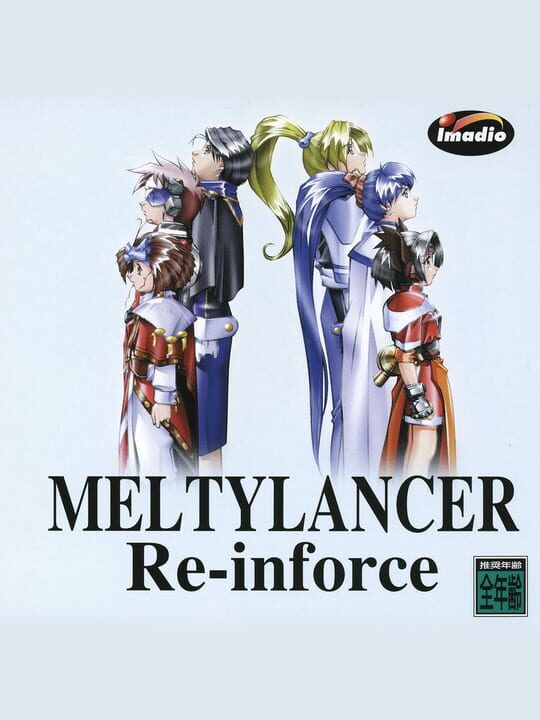
Meltylancer Re-inforce: Special Edition
Overview:|
Meltylancer Re-inforce: Special Edition, originally released in 1998, blends tactical RPG combat with visual novel elements. Gameplay centers on strategic unit commanding during battles, interwoven with character-driven story segments. This edition notably includes an expanded narrative via an audio drama CD.
Originally released in 1998, this title blends deep tactical role-playing game (RPG) mechanics with elements of adventure and visual novel storytelling. The core experience centers on strategic command over various units during combat scenarios, interwoven with narrative segments that drive character development and plot progression.
Core Gameplay Mechanics
The gameplay loop is structured around turn-based tactical engagements where positioning, unit synergy, and resource management are crucial for success. Players navigate grid-based battle maps, issuing commands to their roster of characters. Success in these tactical encounters directly influences the unfolding narrative.
Beyond combat, the game incorporates significant visual novel components. These sections focus on dialogue trees, relationship building, and story exposition, requiring player choices that can impact the game's progression and available tactical options later on.
What is the focus of the Special Edition?
Distinctive Features and Content
The Special Edition iteration builds upon the original foundation, often including enhanced content or quality-of-life improvements over the initial release. A notable addition in this version is supplementary material, such as an included audio drama CD, which serves to further expand the established lore and character backstories outside of the main game script.
Genre Blending
The game distinguishes itself by its commitment to integrating two distinct genres: the deep strategic planning of tactical RPGs and the narrative focus of visual novels. This dual focus means players must balance their time between optimizing combat formations and engaging with character-driven plot points.
Unit Command and Strategy
Players manage a growing roster of unique characters, each possessing distinct abilities and roles on the battlefield. Mastering the interplay between these units—understanding when to utilize defensive formations versus aggressive maneuvers—is central to overcoming the game's strategic challenges.
Game Details
Primary Name: Meltylancer Re-inforce: Special Edition
Alternative Names:
MeltyLancer Re-inforce: Special Edition (Stylized title)
Type: Expanded Game
Part of: Meltylancer Re-inforce
Series: Meltylancer
Developer: Tenky Co.
Publisher: Imagineer
Release Information
Release Date: May 21, 1998
Genres & Themes
Genres: Role-playing (RPG), Tactical, Adventure, Visual Novel
Themes: Science fiction, Business, Romance
Platforms
Sega Saturn
Game Modes
Perspective: First person
Player Modes: Single-player
Game Modes: Single player

 Soren
Soren