
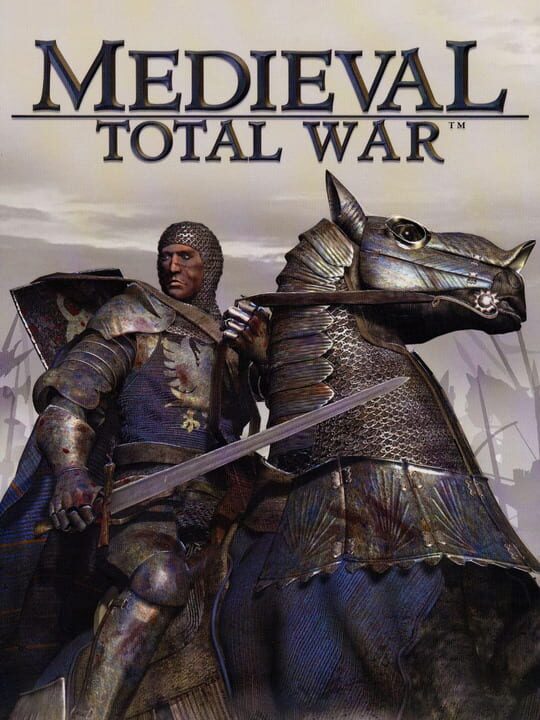
Medieval: Total War
Main Game
RELEASED
8.3
Aug 19, 2002
PC (Microsoft Windows)byThe Creative Assembly•Activision
Overview:|
This 2002 main game blends turn-based strategy on a campaign map with massive real-time tactical battles across the Middle Ages. You manage empire-building through diplomacy, trade, and espionage while commanding armies in large-scale combat. A key feature is the influence of religion (Muslim, Orthodox, Christian) on allegiances, requiring players to manage papal demands or risk internal instability and rebellion across four centuries of dynastic rule.
This is a grand strategy experience set across the turbulent centuries of the Middle Ages. Released in 2002 for PC, this title blends deep strategic planning with massive, real-time tactical battles, allowing players to guide a faction from the early Crusades through to the fall of Constantinople. The atmosphere captures the "blood-soaked magnificence" of the era, spanning diverse geographical regions from Western Europe to the deserts of North Africa. Players are tasked with building a dynastic empire, requiring mastery over warfare, diplomacy, trade, and religion to secure dominance across four centuries.
Core Gameplay Structure: A Dual Approach to Conquest
The gameplay is fundamentally divided into two distinct yet interconnected modes: the turn-based campaign map and the real-time tactical battles. This structure defines the core loop of the experience.The strategic layer unfolds on the campaign map, where players manage the macro-level decisions of their empire. This involves recruiting and positioning armies, managing regional economies through trade, and deploying agents for espionage, assassination, or diplomatic maneuvering. Success hinges on long-term planning, resource allocation, and maintaining internal stability across the centuries.
When armies clash on the campaign map, the game transitions to the real-time tactical layer. Here, players directly command thousands of individual units in large-scale battles, utilizing terrain and unit formations to outmaneuver the opponent. Naval engagements also occur in real-time, requiring mastery of ship positioning and firepower.
The Role of Faith and Faction Allegiance
Religion plays a critical and defining role in the political landscape of the game. Factions are categorized as Muslim, Orthodox, or Christian, which directly influences allegiances and diplomatic relations between realms.For Catholic nations, adherence to the wishes of the Papal States is mandatory. Failure to comply with papal directives, such as participating in a required holy war, can result in severe penalties, including excommunication, which destabilizes the realm and can lead to internal conflict.
Internal Stability and Agent Actions
Maintaining public order within provinces is as crucial as external defense. If loyalty drops too low in a region, it can erupt into rebellion or civil war. Players must then choose sides—supporting the existing rulers or siding with the rebels—to resolve the internal conflict. Agents, such as spies and emissaries, are vital tools for covert operations, whether securing alliances, offering bribes, or executing clandestine actions against rivals.What makes this game unique in its genre?
The defining feature is the seamless integration of large-scale, real-time tactical combat with a deep, turn-based strategic layer spanning four centuries. This combination demands both the foresight of a statesman and the tactical acumen of a battlefield commander. Furthermore, the emphasis on religious politics and the potential for internal strife due to loyalty issues adds layers of complexity beyond simple military conquest.Available Content Status
This main game title was released without any downloadable content (DLC). However, it did receive one official expansion pack, which added further depth and content to the core experience. The game is available on PC (Microsoft Windows).Game Details
Primary Name: Medieval: Total War
Alternative Names:
Total War: Medieval 1 (Alternative title)
Total War: Medieval (Alternative title)
M:TW (Acronym)
MTW (Acronym)
Type: Main Game
Series: Total War: Medieval
Developer: The Creative Assembly
Publisher: Activision
Engine: TW Engine 1
Release Information
Release Date: Aug 19, 2002
Genres & Themes
Genres: Real Time Strategy (RTS), Strategy, Turn-based strategy (TBS), Tactical
Themes: Warfare, 4X (explore, expand, exploit, and exterminate), Fantasy, Historical
Platforms
PC (Microsoft Windows)
Game Modes
Perspective: Bird view / Isometric
Player Modes: Single-player
Game Modes: Single player, Multiplayer
Age Ratings
ESRB:T (Teen)

 Soren
Soren