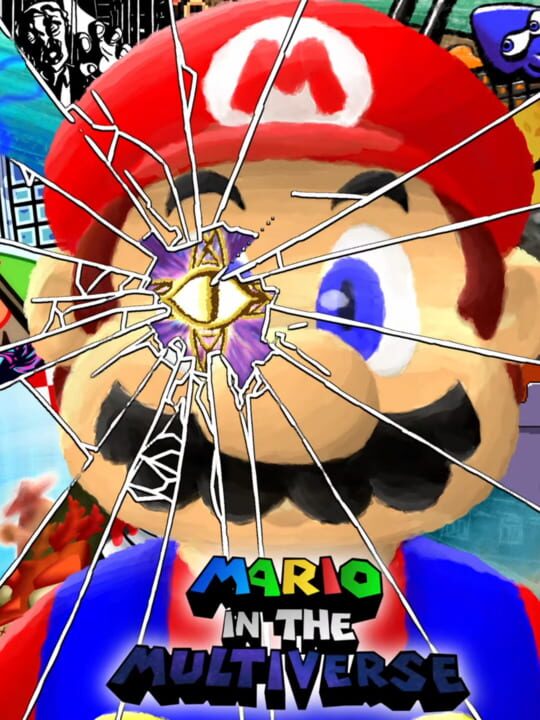
Mario in the Multiverse
Overview:|
Mario in the Multiverse is a 3D platformer released in late 2024, built upon the foundation of classic 3D platforming mechanics. Players guide Mario through unique levels that draw inspiration and themes from various other video game franchises, adapting familiar obstacles and enemies within the established engine. This title focuses on exploration and precise movement across these distinct, cross-genre environments.
This title is a 3D platformer released in late 2024. It functions as a significant modification of an established 3D platforming foundation, focusing on exploration and movement within distinct, themed environments. The primary game mode centers around single-player progression through varied stages.
Core Gameplay Mechanics
The fundamental experience revolves around precise 3D platforming. Players control the main character, navigating complex, multi-tiered levels utilizing jumping, climbing, and various movement techniques inherent to the original engine. The core loop involves exploring these environments to locate objectives, often requiring mastery of movement skills to overcome environmental puzzles and enemy placements.
Distinctive Level Design and Themes
What sets this experience apart is the thematic integration within the level architecture. While the underlying mechanics are familiar, the visual design, obstacles, and enemy types are heavily inspired by, or directly reference, concepts and aesthetics from numerous other established video game franchises. This results in a diverse set of worlds, each presenting unique visual challenges and thematic interpretations layered onto the classic platforming structure.
How does the game update the classic formula?
The primary update lies in the level construction and objective placement. Familiar enemies and hazards are repurposed within these new thematic contexts, demanding players adapt their established platforming strategies. The game maintains a focus on collecting items scattered throughout the stages to unlock further areas, adhering closely to the structure of its base engine.
Audience Appeal
This game is primarily aimed at players familiar with classic 3D platforming challenges who appreciate creative reinterpretations of established gameplay systems. Those who enjoy discovering references and seeing familiar mechanics applied in novel settings are likely to find the experience engaging.
Current State and Community Reception
Since its release, community feedback has largely centered on the creativity demonstrated in the level design and the technical execution of integrating diverse themes within the existing engine constraints. Ongoing discussions often focus on optimizing routes through the more complex, crossover-inspired stages.
Game Details
Primary Name: Mario in the Multiverse
Type: Mod
Part of: Super Mario 64
Developer: Rovert
Publisher: Rovert
Release Information
Release Date: Dec 24, 2024
Genres & Themes
Genres: Platform
Themes: Action, Science fiction
Platforms
Nintendo 64
Game Modes
Perspective: Third person
Player Modes: Single-player
Game Modes: Single player
 Soren
Soren