
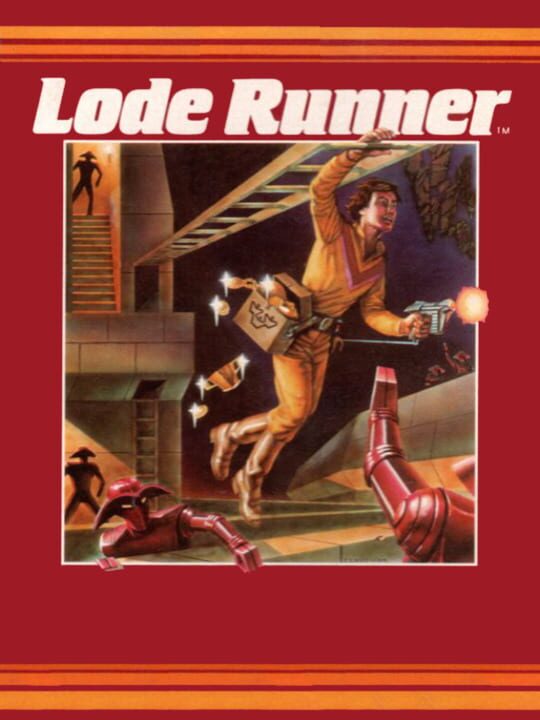
Lode Runner
Main Game
RELEASED
7.7
Oct 30, 1983
DOSSharp X1+18byBrøderbund Software•SystemSoft
Overview:|
As a foundational 1983 Platform/Puzzle main game, you navigate single-screen levels collecting gold while avoiding relentless guards. The core loop involves strategic movement and using your ability to dig holes to temporarily trap enemies. Its most distinctive feature is the integrated level editor, allowing players to design and share custom stages, significantly extending replayability across its many platform releases.
This title, first released in 1983, is a foundational entry in the platform and puzzle genres. It places players in the role of a determined runner tasked with collecting gold while navigating complex, single-screen environments populated by guards who relentlessly pursue them. The core objective revolves around strategic movement and environmental manipulation to secure all the treasure before being captured.
Core Gameplay Mechanics
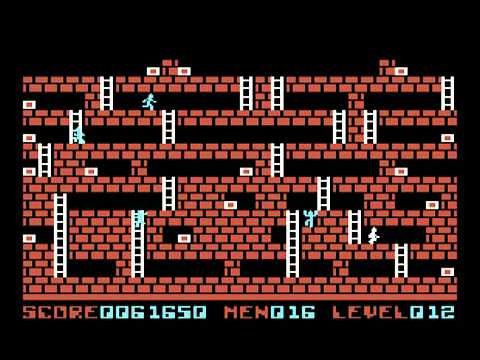
The gameplay loop centers on precise timing and spatial reasoning. Players must traverse multi-tiered structures, climbing ladders and traversing beams to reach scattered gold pieces. A critical mechanic involves the ability to dig holes in the terrain. This action temporarily traps pursuing enemies, allowing the player a window of opportunity to escape or reposition. However, digging must be done strategically, as enemies can climb out of the holes after a short delay.
The atmosphere is one of tense, solitary navigation against persistent opposition. While the premise is simple—collect the gold and move to the next screen—the increasing complexity of the level layouts and enemy patterns provides a consistent challenge.
What makes this game unique?
One of the most significant features that set this game apart upon its initial release was the inclusion of a robust level editor. This tool allowed players to design and construct their own unique challenges, fundamentally expanding the game's longevity and replayability far beyond its pre-set content. This feature fostered a community aspect where players shared and competed over the most intricate or difficult custom-made stages.
How does the puzzle element function?
The puzzle aspect arises from managing enemy movement patterns in conjunction with the limited actions available to the player. Enemies react predictably to the player's presence, but the layout of the platforms and the strategic placement of traps (the holes dug by the player) dictate the optimal path. Successfully completing a level often requires solving a sequence puzzle involving luring guards into specific locations before securing the final pieces of gold.
Platform Availability and Content
This main game has seen numerous releases across a wide array of systems, including DOS, various Japanese home computers (PC-9800 Series, Sharp X1), classic consoles like the Atari 8-bit family and Commodore 64, as well as arcade hardware. It has also appeared on modern platforms such as Windows Phone.
Regarding additional content, there are currently no official DLCs or expansions associated with this core release. The game has, however, seen multiple official remakes over the years, offering updated interpretations of the original concept.
Game Details
Primary Name: Lode Runner
Type: Main Game
Series: Lode Runner
Developer: Brøderbund Software, Irem, Brøderbund Software
Publisher: SystemSoft, Brøderbund Software, Software Projects, Microsoft Studios, Sony, Banpresto, Soft Pro International, Sega Enterprises, Ltd., Irem
Release Information
Release Date: Oct 30, 1983
Genres & Themes
Genres: Platform, Puzzle
Themes: Action, Science fiction
Platforms
DOSSharp X1Atari 8-bitPC-9800 SeriesPC-8800 SeriesCommodore C64/128/MAXFM-7NEC PC-6000 SeriesWonderSwanBBC Microcomputer SystemCommodore VIC-20Windows PhoneSG-1000ZX SpectrumMSXAmstrad CPCArcadeAtari ST/STEApple IIMac
Game Modes
Perspective: Side view
Player Modes: Offline Co-op, Online Co-op, Multiplayer
Game Modes: Single player
Age Ratings
ESRB:E (Everyone)
PEGI:12+

 Soren
Soren