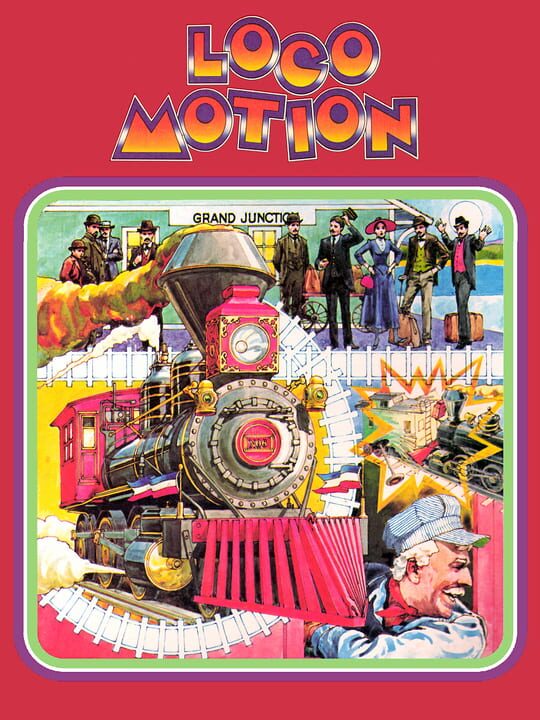
Loco-Motion
Main Game
RELEASED
6.0
Mar 1, 1982
IntellivisionMSX+1byKonami•Mattel Electronics
Overview:|
Loco-Motion is a classic Main Game puzzle/strategy title from 1982 where you manipulate a sliding block grid to build railway tracks. The core loop involves sliding track pieces to guide a constantly moving locomotive to collect passengers at stations while avoiding dead-ends and track gaps. A distinctive feature is the real-time pressure, as you can accelerate the train, demanding swift strategic adjustments to the environment.
This is a classic puzzle and strategy title originally released in 1982. It offers a unique twist on the sliding block puzzle genre, transforming the static picture completion into a dynamic logistical challenge centered around railway management. Players are tasked with manipulating the environment to ensure the safe and timely passage of a constantly moving locomotive. The core appeal lies in the real-time strategic thinking required to build and maintain functional track layouts under pressure.
Core Gameplay Mechanics and Objective
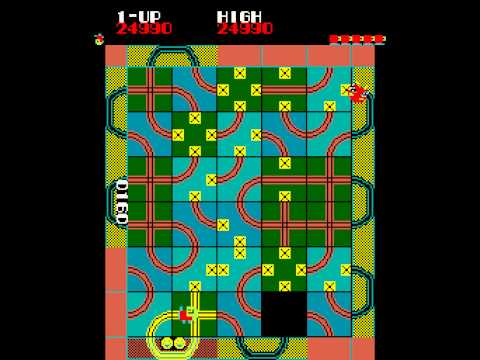
The central objective of this title is to guide a locomotive around a confined playfield to collect passengers waiting at various stations situated along the edges of the screen. The player does not directly control the train's movement; instead, they control the track layout itself.
The primary mechanic involves sliding individual track pieces horizontally or vertically into an empty space within the grid. This action alters the path available to the locomotive. Players must strategically shift these track segments to create a continuous, safe route from the train's current position to the next required station.
Real-Time Pressure and Control
A critical element complicating the puzzle is that the locomotive is always moving. This constant motion demands quick decision-making. Furthermore, players have the option to increase the train's speed using a dedicated button, which can hasten the collection of passengers but significantly reduces the reaction time available for track adjustments.
What makes this game unique in its genre?
While rooted in sliding block puzzles, this game introduces high-stakes environmental navigation. Unlike traditional sliding puzzles where the goal is a static image, here the goal is dynamic routing for a moving object.
The challenge is compounded by hazards that result in the loss of a life:
- Dead-End Barricades: The locomotive must avoid crashing into fixed barricades marked visually as a yellow 'X'.
- Boundary Collisions: The train must not run off the edge of the playfield or into gaps in the track layout.
Success hinges on anticipating the train's trajectory and pre-emptively constructing the necessary path segments while avoiding fatal errors.
How does the player interact with the environment?
Interaction is managed primarily through a joystick used to select and slide the track segments into the vacant square on the grid. A separate button is dedicated solely to accelerating the locomotive, adding a layer of risk-versus-reward management to the strategic puzzle solving.
Game Information Summary
This title is classified as a Main Game, focusing purely on its core puzzle experience. It was originally released on platforms including the Arcade, Intellivision, and MSX.
Game Details
Primary Name: Loco-Motion
Alternative Names:
Crazy Train (Alternative title)
Type: Main Game
Developer: Konami, Konami Industry
Publisher: Mattel Electronics, Sega, Centuri, Sony
Release Information
Release Date: Mar 1, 1982
Genres & Themes
Genres: Puzzle, Strategy
Themes: Non-fiction
Platforms
IntellivisionMSXArcade
Game Modes
Perspective: Bird view / Isometric
Player Modes: Single-player
Game Modes: Single player, Multiplayer, Split screen

 Soren
Soren