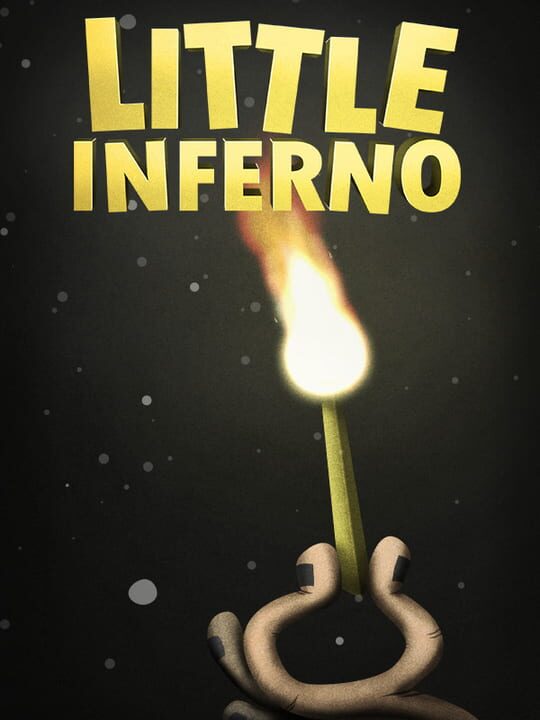
Little Inferno
Main Game
RELEASED
7.4
Nov 18, 2012
Wii ULinux+5byTomorrow Corporation•Experimental Gameplay Group
Overview:|
Little Inferno, a 2012 Indie Puzzle/Simulator Adventure, centers on burning objects ordered from catalogs in your personal entertainment fireplace. The core loop involves incinerating items—from toys to unstable devices—to earn money for more purchases, driving a subtle narrative forward through combustion reactions. Its distinctive feature is the highly interactive combustion system, where experimentation unlocks story progression, all set against a backdrop of cozy isolation contrasting with the cold world outside.
This is a unique puzzle and simulation experience originally released in late 2012, available across multiple platforms including PC (Windows), Linux, Mac, iOS, Android, Wii U, and Nintendo Switch. The game centers around a single, intimate setting: your very own Little Inferno Entertainment Fireplace. The core premise involves receiving catalogs filled with various objects—from flaming logs and screaming robots to unstable nuclear devices and tiny galaxies—which you then purchase and toss directly into the fire. The entire adventure unfolds almost exclusively from this vantage point, encouraging players to observe the resulting combustion and interactions.
Core Gameplay Loop: Burning and Discovery
The primary mechanic revolves around the act of burning. Players feed the fire with items ordered from the catalog, earning money based on how much they burn. This money is then used to purchase more items, creating a continuous, self-sustaining loop of consumption and observation. The game is categorized as an Indie title blending Puzzle, Simulator, and Adventure elements.
What is the objective of playing?
While the immediate action is burning objects, the game subtly guides the player toward uncovering the narrative. As you burn specific combinations of items, special events or reactions occur, pushing the story forward. The atmosphere is one of cozy isolation, contrasted by the increasingly strange and sometimes unsettling nature of the objects being incinerated.
Atmosphere and Setting
The game establishes a distinct atmosphere centered on warmth, domesticity, and the cold world just outside the chimney. The setting is intentionally confined, focusing the player's attention entirely on the fireplace and the immediate environment visible through the flue. This confinement serves to heighten the impact of the narrative discoveries made through the burning process.
Unique Features: Interactive Combustion
The most distinctive feature is the highly interactive combustion system. Objects do not simply disappear; they react dynamically to the flames, sometimes exploding, sometimes emitting sounds, and often revealing hidden elements or triggering story progression. Experimentation with different combinations of items is key to unlocking the game’s full scope. This title is presented as a main game experience, and while it does not feature traditional DLC, it does include one expansion that adds further content to the core experience.
What makes this game unique in the Puzzle/Simulator genre?
It blends elements of a simulator—managing purchases and observing physical reactions—with a narrative adventure structure, all while utilizing the simple, repetitive action of burning things as its central mechanic. It offers a contemplative, if slightly unsettling, journey focused on observation rather than complex mechanical challenges.
Game Details
Primary Name: Little Inferno
Alternative Names:
リトルインフェルノ (Japanese title - original)
Little Inferno.exe (Windows Executable)
Type: Main Game
Developer: Tomorrow Corporation
Publisher: Experimental Gameplay Group, Tomorrow Corporation
Release Information
Release Date: Nov 18, 2012
Genres & Themes
Genres: Puzzle, Simulator, Adventure, Indie
Themes: Sandbox, Action, Comedy
Platforms
Wii ULinuxiOSPC (Microsoft Windows)AndroidMacNintendo Switch
Game Modes
Perspective: Side view
Player Modes: Single-player
Game Modes: Single player
Age Ratings
ESRB:T (Teen)
PEGI:12+
The player is presented with a virtual fireplace in which he is required to burn a variety of objects from old toys to other flammable items. The acquisition of sufficient points then allows the player access to other items which may also be burned. Violent content includes setting fire to an animated cat and burning a miniature bus full of cartoony people who scream as the bus burns. None of the characters react realistically to this violence.
CERO:B (12+)
USK:12+
GRAC:12+
CLASS_IND:L (All Ages)
ACB:PG (Parental Guidance)
Mild Themes, Mild Crude Humour

 Soren
Soren