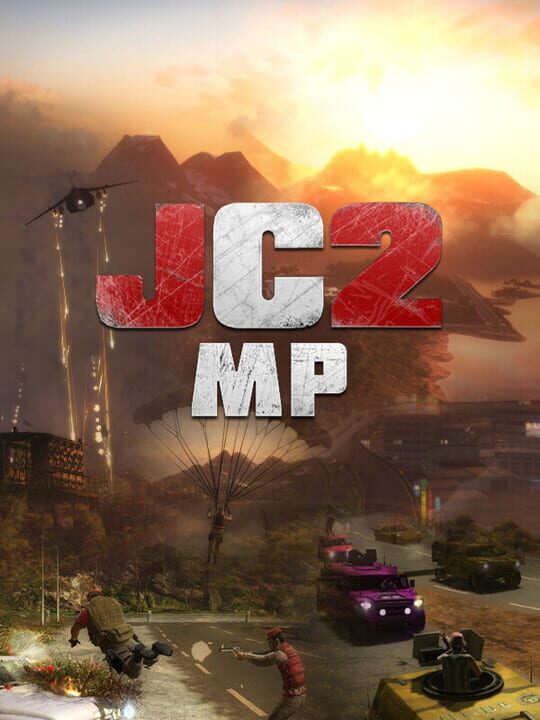
Just Cause 2: Multiplayer Mod
Mod
RELEASED
5.1
Dec 16, 2013
PC (Microsoft Windows)byAvalanche Studios•Square Enix
Part of: Just Cause 2
Overview:|
As a modification (Mod) released for PC in 2013, this project integrates robust multiplayer functionality into the base open-world adventure of Just Cause 2. The core loop involves scaling the original game's physics-based chaos—utilizing grappling hooks, parachutes, and explosives—to support dozens or even thousands of players simultaneously in a shared sandbox. Its primary appeal is emergent player interaction and large-scale mayhem across the tropical setting, offering an experience defined by community-driven scenarios rather than structured narrative content.
This is a modification project that brings robust multiplayer functionality to the celebrated open-world action-adventure experience of its parent title, Just Cause 2. Released in late 2013 for PC (Microsoft Windows), this mod transforms the single-player sandbox into a massive, shared environment. The core appeal lies in taking the established formula of explosive freedom, grappling hooks, and high-speed traversal, and scaling the chaos to accommodate dozens, hundreds, or even thousands of players simultaneously within the same world.
Core Experience and Mod Context
As a modification (Mod), this content is built upon the foundation of the original game, offering an experience that fundamentally alters the intended structure by introducing cooperative and competitive online play. Unlike standalone titles, its value proposition is rooted in extending the lifespan and replayability of the existing adventure through community-driven interaction.
The atmosphere remains true to the original setting: a tropical archipelago brimming with military installations, civilian infrastructure, and ample opportunity for large-scale destruction. The primary mechanic shift is the introduction of networked play, allowing players to interact directly with each other within this highly destructible environment.
What makes this multiplayer experience unique?
The defining feature is the sheer scale of player interaction possible. Imagine the signature traversal mechanics—the grappling hook and parachute—being utilized not just by one protagonist, but by a massive population of players all vying for control, engaging in vehicular stunts, or simply causing widespread mayhem across the map.
This mod focuses entirely on delivering a shared sandbox experience. There are no specific story missions or structured campaigns added by the mod itself; the narrative emerges organically from player-created scenarios and server configurations.
Key Gameplay Elements in Multiplayer
The gameplay centers on emergent chaos and large-scale physics interaction. Players can engage in:
- Massive vehicle pile-ups and aerial dogfights across the island chain.
- Cooperative objective completion on community-run servers.
- Unscripted, large-scale destruction events involving numerous participants utilizing the environment's physics engine.
Available Content and Updates
Since this is a community-driven modification, it does not adhere to the traditional DLC or expansion model of commercial releases. The content evolves based on community development efforts rather than official publisher schedules.
Platform Availability
This modification is exclusively available for the PC platform, running on Microsoft Windows operating systems.
Game Details
Primary Name: Just Cause 2: Multiplayer Mod
Alternative Names:
JcmpLauncher.exe (Windows Executable)
Type: Mod
Part of: Just Cause 2
Developer: Avalanche Studios
Publisher: Square Enix
Release Information
Release Date: Dec 16, 2013
Genres & Themes
Genres: Adventure
Themes: Action
Platforms
PC (Microsoft Windows)
Game Modes
Perspective: Third person
Player Modes: Single-player
Game Modes: Single player, Multiplayer

 Soren
Soren