
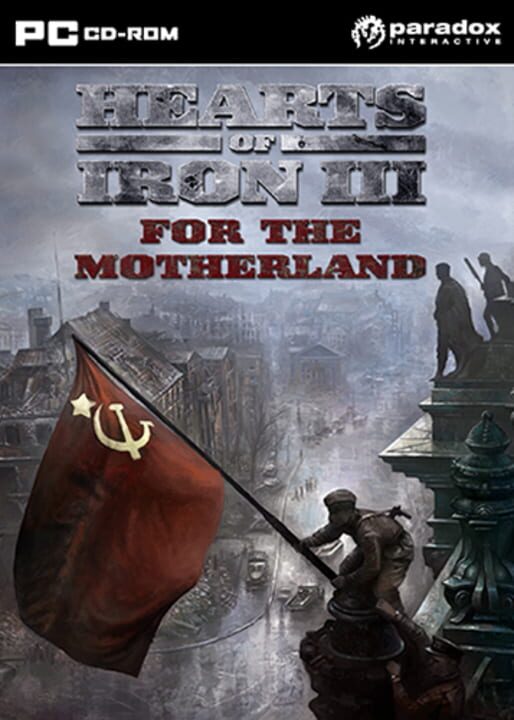
Hearts of Iron III: For the Motherland
Expansion
RELEASED
Jun 28, 2011
PC (Microsoft Windows)byParadox Development Studio•Paradox Interactive
Part of: Hearts of Iron III
Overview:|
This 2011 expansion for Hearts of Iron III deepens the grand strategy experience, requiring the base game to manage World War II from 1936 to 1948. You command nations across military, industrial, and diplomatic fronts. Key additions include a new Partisan system for resistance management, formalized War Goals within factions, improved internal politics with a coup mechanic, and a new Theatre Interface for better strategic oversight, substantially enhancing the complexity of the core simulation.
This content is an expansion for the grand strategy title, *Hearts of Iron III*, originally released in 2011 for PC (Microsoft Windows). It deepens the strategic simulation of World War II, allowing players to command any nation from 1936 through 1948. The core appeal lies in managing the conflict across military, industrial, and diplomatic fronts, offering an extensive scope that covers the entirety of the global conflict. This content requires the base game to function, substantially enhancing the depth and complexity of the original experience.
Expansion Focus and Scope
As an expansion, this content builds directly upon the foundation of *Hearts of Iron III*, introducing several major mechanical overhauls and new systems that affect national management and warfare. It is not a standalone product; it integrates fully with the base game to provide a more nuanced simulation of the era.
The scope of this addition is substantial, focusing heavily on internal politics, resistance, and the diplomatic maneuvering that occurred alongside military campaigns. It adds layers of complexity to how nations interact both internally and within their alliances.
What new gameplay mechanics does this expansion introduce?
This update brings several key features designed to increase strategic depth:
- War Goals and Enforced Peace: This system allows members within an alliance or faction to formally demand specific territorial claims when objectives are met, adding a layer of internal negotiation and potential friction within allied powers.
- New Partisan System: Players can now actively build and manage underground resistance movements within occupied territories. This involves organizing resistance not only against the occupying force but also potentially fighting against other ideological groups vying for control within the occupied country.
- Strategic Resource Seizure: Greater emphasis is placed on capturing and utilizing vital strategic resources necessary to fuel a nation's war machine, making supply lines and specific geographic objectives more critical.
- Improved Internal Politics and Coup System: The management of domestic stability is enhanced, featuring a new system that allows for the possibility of internal coups, adding a layer of risk to internal ideological shifts.
Interface and Scenario Updates
To better manage these added complexities, the expansion includes a New Theatre Interface, providing players with greater strategic information at a glance. Furthermore, it revives the battle scenario system, offering new, shorter mini-campaigns that focus on specific historical conflicts or situations within the broader World War II setting.
What level of control does the player have over their nation?
A defining feature highlighted by this content is the granular level of command available. Players have the option to take charge at virtually any level—from directing individual divisions on the battlefield to setting the overarching national strategy. Alternatively, players can choose to delegate command responsibilities, allowing for a more hands-off approach to certain aspects of the war effort.
How does this content integrate with the base game?
This expansion is designed to be layered directly onto the original *Hearts of Iron III* experience. It enhances the existing strategic framework, timeline (extending to 1948), and diplomatic interactions, rather than offering a separate experience. It requires the base game to access these new systems and content.
Game Details
Primary Name: Hearts of Iron III: For the Motherland
Alternative Names:
Hearts of Iron 3: For the Motherland (Other)
Type: Expansion
Part of: Hearts of Iron III
Series: Hearts of Iron
Developer: Paradox Development Studio
Publisher: Paradox Interactive
Release Information
Release Date: Jun 28, 2011
Genres & Themes
Genres: Strategy, Tactical
Themes: Warfare, Historical
Platforms
PC (Microsoft Windows)
Game Modes
Perspective: Bird view / Isometric
Player Modes: Single-player
Game Modes: Single player, Multiplayer, Co-operative
Videos
No videos available for this game.
 Soren
Soren