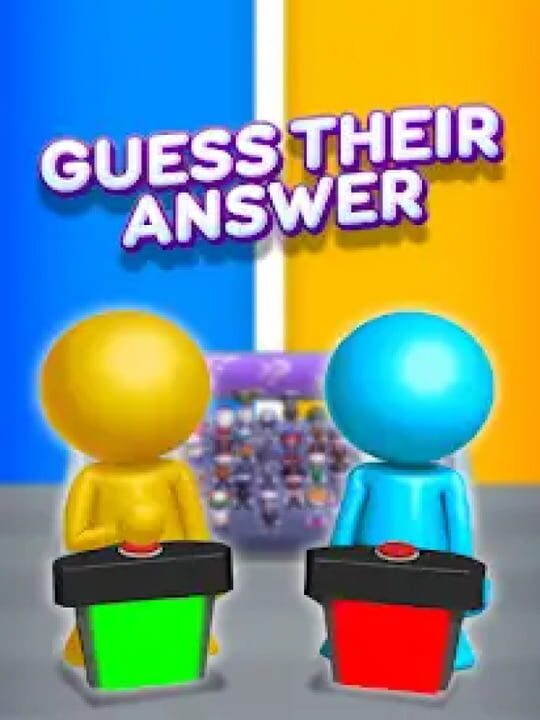
Guess Their Answer
Main Game
iOSAndroid+1byUnknown
Overview:|
Guess Their Answer is a mobile and web-based main game where the core loop involves submitting a personal response to a given prompt and then predicting the most frequent answers submitted by the collective player base. Its distinctive feature centers on testing players' intuition regarding group psychology and anticipating common consensus rather than traditional knowledge testing. The game is accessible across iOS, Android, and web platforms.
This title functions as a main game experience available across mobile platforms (iOS, Android) and web browsers. As a multiplayer social deduction and prediction game, its core objective revolves around understanding and anticipating the consensus of the player base.
Core Gameplay Loop: Predicting the Majority
The central mechanic requires players to respond to specific prompts or questions presented within the game interface. Following the submission of their individual answer, the player's subsequent task is to predict which answers other participants in the session have most frequently selected. Success is measured by the accuracy of this prediction regarding the collective group response.
Mechanics of Social Insight
The gameplay is structured around testing intuition concerning group psychology and common cultural knowledge, rather than traditional trivia or skill-based challenges. Players gain progression or points based on how closely their prediction aligns with the actual majority answer submitted by the community in that specific round.
What Makes This Game Distinctive?
The unique selling proposition of this game lies in its focus on collective thought anticipation. Unlike games where players compete based on personal knowledge, this title shifts the focus to understanding prevailing opinions and identifying the most commonly held, or perhaps most obvious, answer within a given social context.
Current State and Platform Availability
The game maintains its presence across mobile and web platforms, suggesting an emphasis on accessibility for quick, session-based play. Since the game relies heavily on a live player pool for its core mechanic, the ongoing health of the community directly influences the experience, as predicting the majority requires a sufficient volume of other responses.
How is the Game Played Sessionally?
Rounds typically involve a prompt, an individual submission phase, and then a prediction phase where players lock in their guess about the top answers. The system then reveals the actual distribution, scoring players based on their foresight into the group's consensus.
Game Details
Primary Name: Guess Their Answer
Type: Main Game
Developer: Unknown
Publisher: Unknown
Release Information
Release Date: Announced (no release date)
Platforms
iOSAndroidWeb browser
Game Modes
Perspective: Unknown
Player Modes: Single-player
Age Ratings
ESRB:E (Everyone)
Videos
No videos available for this game.
 Soren
Soren