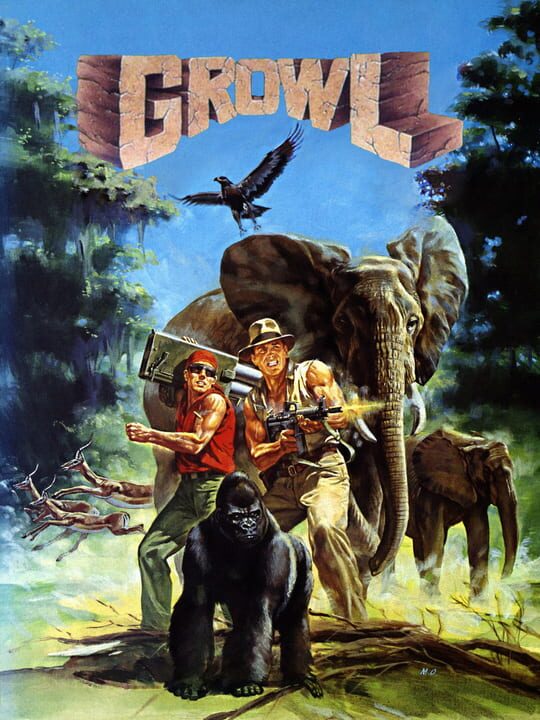
Growl
Overview:|
Growl is a 1991 Port of an arcade Hack and Slash/Beat 'em up, bringing Taito's action to the Sega Mega Drive/Genesis. In this side-scrolling title, you progress by defeating waves of enemies using close-quarters combat across various stages. A key distinction of this console version is that, unlike its arcade counterpart, it functions exclusively as a single-player experience, focusing the entire challenge on individual mastery.
This title is a home console adaptation of an earlier arcade experience, specifically a port of a popular coin-operated game brought to the Sega Mega Drive/Genesis platform. As a port, its primary value proposition lies in delivering the core arcade mechanics and atmosphere to a home setting, allowing players to experience the original design on their console. It was originally released on November 15, 1991.
Core Gameplay Loop: Hack and Slash Action
The game falls squarely into the Hack and Slash/Beat 'em up genre, characterized by side-scrolling action where the player progresses through various stages by defeating waves of enemies using close-quarters combat.
Players take on the role of a protagonist navigating diverse environments, engaging in continuous combat against a variety of opponents. The gameplay centers on movement, executing attack combinations, and interacting with the environment, adhering closely to the established mechanics of the arcade format.
What defines this console version?
A significant distinction of this specific port, compared to its arcade predecessor, is its structure regarding player count. While the original arcade version supported up to four simultaneous players, this 1991 release for the Sega Mega Drive/Genesis is configured exclusively as a single-player experience.
This configuration focuses the entire action and challenge onto the individual player, requiring mastery of the controls and mechanics without the option for cooperative support.
Game Specifications and Content
This release is categorized as a Port, meaning it is an adaptation of existing content for a new system. The game was published by Taito and was released solely for the Sega Mega Drive/Genesis.
Available Content and Updates
As of the current date, this specific version of the game features no downloadable content (DLCs), expansions, or subsequent remakes or remasters. The content remains fixed to the initial console release package.
What kind of atmosphere does the game present?
While detailed storyline information is not readily available, the atmosphere of this beat 'em up generally involves confronting escalating threats across distinct zones, relying on visceral action and progression through combat encounters rather than deep narrative exposition.
Game Details
Primary Name: Growl
Alternative Names:
Runark (Alternative spelling)
Type: Port
Part of: Growl
Developer: Unknown
Publisher: Taito
Release Information
Release Date: Nov 15, 1991
Genres & Themes
Genres: Hack and slash/Beat 'em up, Arcade
Themes: Action
Platforms
Sega Mega Drive/Genesis
Game Modes
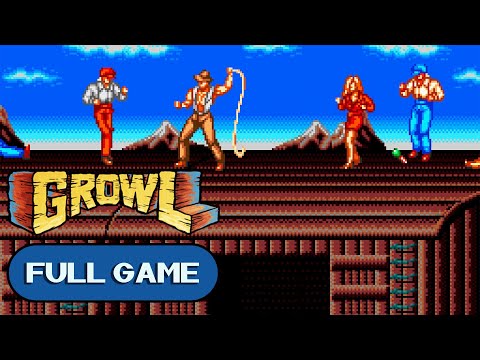
Perspective: Side view
Player Modes: Single-player
Game Modes: Single player
 Soren
Soren