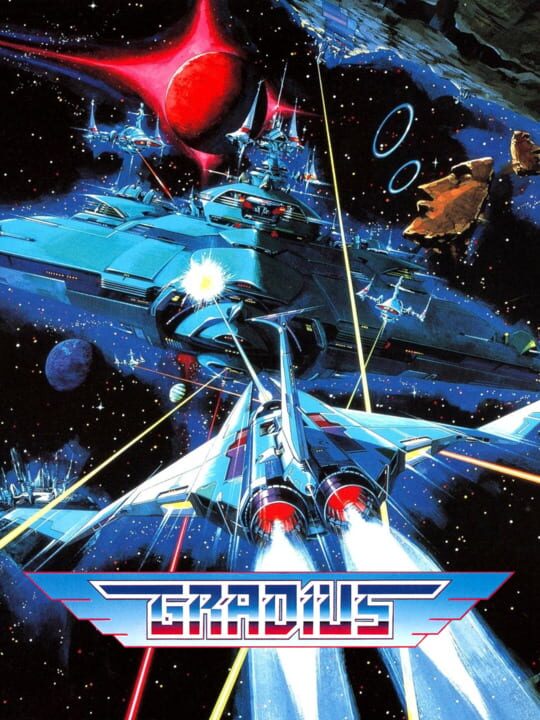
Gradius
Main Game
RELEASED
6.9
May 29, 1985
Sharp X68000ArcadebyKonami
Overview:|
As a foundational 1985 arcade shooter, this main game tasks you with piloting a spacecraft through relentless enemy waves. Its core mechanic is the unique power meter system: collecting items moves a highlight along the meter, requiring you to strategically choose when to activate the desired upgrade (like shields or lasers) before the highlight resets. This introduces a tactical layer to the fast-paced, horizontal scrolling action, demanding precise reflexes and resource management across its challenging stages.
This is a foundational title in the arcade shooter genre, originally released in 1985. As a main game, it established many conventions that would define subsequent horizontal-scrolling shooters. Players take control of a highly advanced spacecraft tasked with traversing dangerous, alien-infested territories across multiple stages. The atmosphere is tense, characterized by relentless enemy waves and challenging environmental obstacles that demand precise maneuvering and quick reflexes.
Core Gameplay Mechanics and Systems
The central appeal of this title lies in its unique approach to player progression and armament management. Unlike many contemporaries where power-ups are immediately applied, this game utilizes a distinct power meter system.
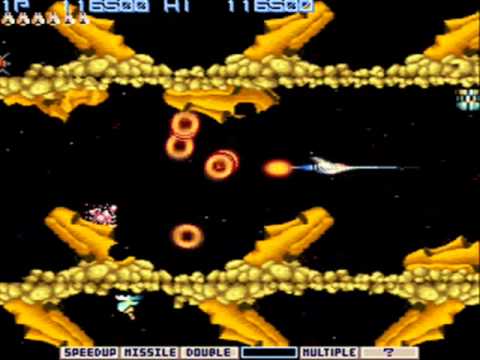
When a player collects a power-up item dropped by an enemy, it does not instantly grant a new weapon. Instead, it moves a highlight along the power meter displayed on the screen. The player must then choose the precise moment to activate the highlighted option.
- Power Meter Activation: Collecting an item advances the selection cursor on the meter.
- Strategic Selection: The player decides when to trigger the power-up, which causes the highlight to reset.
- Weapon Variety: Options typically include speed upgrades, shields, missiles, and iconic laser configurations, allowing for customization of the ship's offensive capabilities.
This mechanic introduces a layer of risk versus reward; players must decide whether to collect another item to reach a desired weapon or activate the current selection before being destroyed.
What makes this game unique in the genre?
The strategic depth provided by the power meter is the defining characteristic that sets this game apart. While the core gameplay loop involves constant forward movement and shooting down adversaries, the management of available upgrades transforms simple survival into a tactical decision-making process under pressure.
The game is presented as a pure arcade experience, focusing on high-score chasing and mastering stage layouts. It was initially available on Arcade hardware and later ported to systems such as the Sharp X68000.
Genre and Structure
This title falls under the Shooter and Arcade genres. It is a main game experience, meaning the focus is on completing the core set of stages rather than ongoing service updates.
What platforms is this classic available on?
This version of the game is documented as being available on the Arcade and Sharp X68000 platforms.
Content Availability
As a classic main game release, there are currently no official DLCs or expansions associated with this specific version.
Game Details
Primary Name: Gradius
Alternative Names:
Scramble 2 (Working title)
Type: Main Game
Series: Gradius
Developer: Konami
Publisher: Konami
Release Information
Release Date: May 29, 1985
Genres & Themes
Genres: Shooter, Arcade
Themes: Action, Science fiction
Platforms
Sharp X68000Arcade
Game Modes
Perspective: Side view
Player Modes: Single-player
Game Modes: Single player, Multiplayer
Age Ratings
ESRB:E (Everyone)
PEGI:7+
CERO:A (All Ages)
ACB:G (General)
The content is very mild in impact
 Soren
Soren