
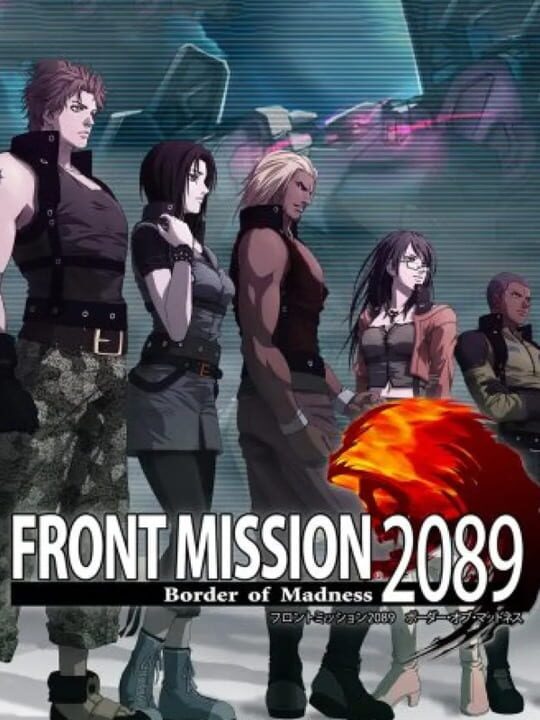
Front Mission 2089
Main Game
RELEASED
Mar 7, 2005
Legacy Mobile DevicebyMSF/Winds•Square Enix
Overview:|
Front Mission 2089 is a tactical RPG, originally released in 2005 for legacy mobile devices, where you command mechanized Wanzers in turn-based grid combat. The core loop involves completing varied missions, customizing your units during intermissions, and advancing through episodic story content. Distinctive features include an Arena for player-versus-player combat, mission rankings that reward new parts, and the ability to choose between two initial scenarios focusing on the O.C.U. or U.S.N. conflicts.
This title is a tactical role-playing game that places players in command of mechanized infantry units known as Wanzers. Originally released for legacy mobile devices starting in 2005, the core experience is built around a structured progression of story events, tactical combat missions, and preparation phases. Players engage in turn-based strategy engagements where positioning, unit customization, and tactical execution are paramount to success. The narrative follows a mercenary squad codenamed "Storm," led by Ernest J. Salinger, as they investigate mysterious disappearances along a volatile border, leading them into contact with an unknown mercenary faction.
Core Gameplay Mechanics and Structure
The gameplay loop adheres closely to established tactical RPG conventions. Between story cutscenes, players undertake missions that vary in objective, ranging from destroying all enemy targets to protecting a specific allied unit. These missions are interspersed with intermissions where players manage their Wanzers—customizing their loadouts, parts, and overall configuration before deploying for the next sortie.
Episodic Content Delivery
A notable aspect of this mobile release was its method of story delivery. The game progressed through episodic content, with new chapters or episodes being made available for download on the official website on a bi-weekly schedule following the initial release.
What defines the strategic depth in combat?
The strategic depth is rooted in the preparation and execution phases. Players must carefully configure their Wanzers using earned or acquired parts to suit the demands of upcoming missions. Success in combat is heavily influenced by unit placement and the careful management of actions within the turn-based grid system.
Returning Features from the Series
Several established features return to enhance replayability and competitive spirit:
- The Arena: Players can test their customized Wanzers against others in combat scenarios to earn monetary rewards.
- Mission Rankings: A scoring system, similar to that found in the third installment of the main series, allows players to earn new Wanzer parts and complete units based on performance metrics during missions.
- Briefings: Detailed mission briefings are provided before deployment to inform tactical planning.
How can players experience the story?
The game offers branching narrative paths, allowing players to choose between two distinct scenarios at the outset. These scenarios focus on the conflicts involving the Oceania Cooperative Union (O.C.U.) and the United States of the New Continent (U.S.N.), providing different perspectives on the overarching military tensions.
Are there post-launch content additions?
As a legacy mobile title, there are no officially released downloadable content packs or expansions associated with the base game. The primary method of content expansion during its active lifecycle was through the bi-weekly episodic story updates delivered via the official website.
Game Details
Primary Name: Front Mission 2089
Alternative Names:
フロントミッション 2089 (Japanese title)
Type: Main Game
Series: Front Mission
Developer: MSF/Winds, Square Enix Product Development Division 6
Publisher: Square Enix
Release Information
Release Date: Mar 7, 2005
Genres & Themes
Genres: Role-playing (RPG), Turn-based strategy (TBS)
Themes: Warfare, Science fiction
Platforms
Legacy Mobile Device
Game Modes
Perspective: Bird view / Isometric
Player Modes: Single-player
Game Modes: Single player, Multiplayer
Videos
No videos available for this game.
 Soren
Soren