
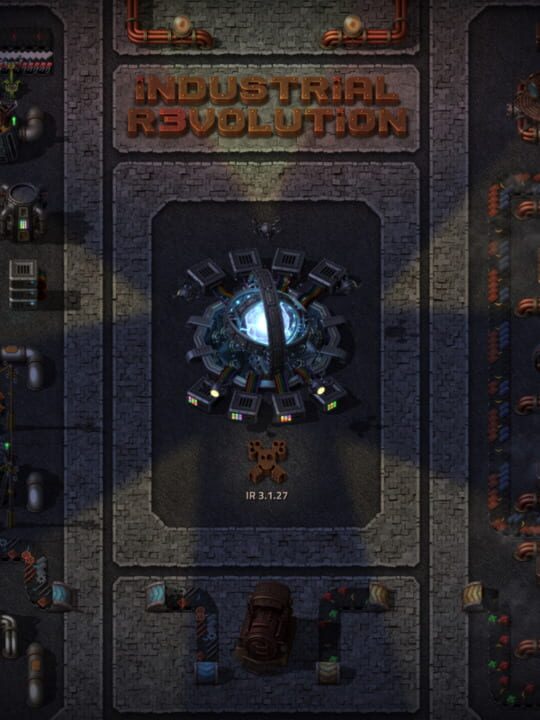
Factorio: IR3
Overview:|
Factorio: IR3 is a major modification focusing on vastly expanding the core automation and crafting experience. Players engage in deep resource management by utilizing hundreds of new sprites, buildings, technologies, and mechanics that introduce a significantly enriched material progression system, offering a fresh, complex challenge for veteran players.
This modification significantly enhances the core factory-building experience by introducing an expanded and deeply layered material progression system. Players engaging with this content will encounter a dramatically enriched crafting journey that demands deeper logistical planning and resource management than the base game.
Core Gameplay Loop and Mechanics
The fundamental objective remains automation and expansion, but the path to achieving high-tier production is substantially altered. You will be tasked with managing a significantly larger array of intermediate products and complex processing chains. This involves designing intricate production lines to handle hundreds of new components required for advanced research and construction.
The gameplay loop centers on unlocking new tiers of technology through extensive research. Each tier introduces new buildings, specialized machinery, and unique resource requirements. The introduction of new mechanics forces players to rethink established factory layouts, often requiring entirely new approaches to material transport and energy generation to support the increased complexity.
Distinctive Features and Content Additions
A major distinguishing feature is the sheer volume of new content integrated into the experience. This includes hundreds of original sprites and icons, ensuring a visually distinct feel across the new machinery and items. Furthermore, the modification adds numerous new buildings specifically designed to facilitate the expanded crafting recipes.
What new challenges does this content introduce?
The primary challenge lies in mastering the expanded resource management landscape. Players must now contend with more demanding input/output ratios and longer production sequences. Successfully scaling production requires meticulous planning regarding throughput and bottleneck identification across the expanded tech tree.
Audience Appeal and Current State
This content is specifically tailored for experienced players of the base game who seek a comprehensive overhaul of the late-game complexity and progression curve. It offers a fresh, long-term challenge centered on optimizing massive, intricate production networks.
How does this content affect established factory designs?
The integration of new technologies and materials often renders older, simpler designs obsolete for high-level output. Players must adapt by incorporating more specialized buildings and designing layouts that account for the increased number of required inputs per final product, pushing the boundaries of logistical efficiency.
Game Details
Game Modes
Perspective: Unknown
Player Modes: Single-player
Screenshots
No screenshots available for this game.
Videos
No videos available for this game.
 Soren
Soren