
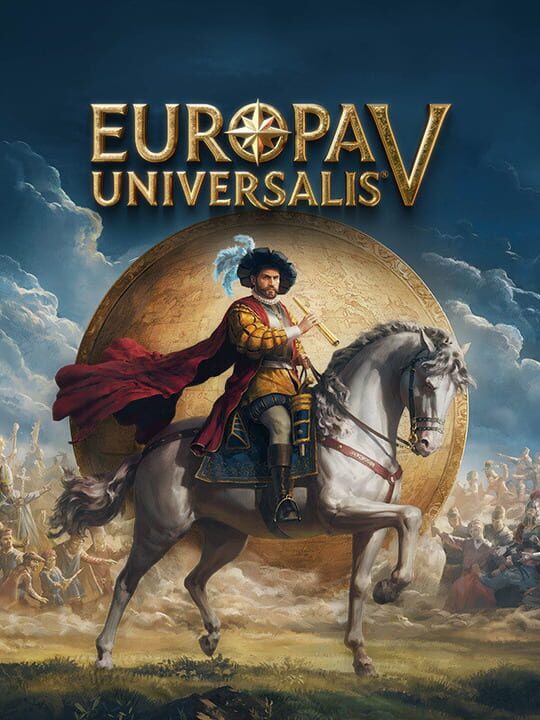
Europa Universalis V
Main Game
RELEASED
8.2
Nov 4, 2025
PC (Microsoft Windows)byParadox Tinto•Paradox Interactive
Overview:|
Europa Universalis V, newly released in 2025, is a grand strategy simulator where you assume control of a nation across centuries of history. The core loop centers on managing complex systems of warfare, international trade, and diplomacy to steer your chosen state toward its historical or alternate-history objectives. This title features deep simulation mechanics across single-player, multiplayer, and sandbox modes, appealing to those who enjoy intricate historical management.
This title is a newly released historical grand strategy simulator, launched in late 2025 for PC (Windows). The core experience centers on guiding a chosen nation through approximately five centuries of world history, beginning in the early modern period. Players engage in a complex management loop where success hinges on balancing military expansion, intricate trade networks, and nuanced diplomatic relations to realize their state's long-term objectives.
Core Gameplay Mechanics and Simulation Depth
The primary gameplay loop requires players to manage internal stability, technological advancement, and external geopolitical maneuvering simultaneously. Nation management involves detailed oversight of resources, population dynamics, and governmental structure. Players must actively engage with mechanics covering warfare—from troop composition and logistics to siege warfare—and economic systems that dictate production, taxation, and international commerce.
Diplomacy and International Relations
Diplomacy is a central pillar, allowing players to forge alliances, establish royal marriages, issue ultimatums, and manage complex vassal relationships. The system emphasizes historical context, meaning the political climate and the relative power of neighboring states significantly influence available diplomatic options.
What historical eras does this simulation cover?
The game spans a significant historical timeline, allowing players to take control of nearly any nation existing during the designated period. The simulation evolves dynamically based on player actions and historical events, meaning the path of history is not fixed. This adaptability ensures high replayability across different starting nations and scenarios.
Current State and Community Reception
As a title that has just entered the market, initial community feedback has focused heavily on the depth of the simulation systems and the scope of the map. The developers have been actively monitoring early player reports, leading to rapid deployment of hotfixes addressing initial stability issues and balancing concerns within the early game economy and military deployment systems. The reception highlights the game's commitment to deep, systems-driven gameplay over fast-paced action.
Available Game Modes
The game supports several modes of play, including a comprehensive single-player campaign where players guide a nation through the entire historical scope. It also offers multiplayer options, allowing multiple human players to compete or cooperate on the same world map, alongside sandbox modes that allow for customized starting conditions.
Key Distinguishing Features
A distinctive feature of this installment is the enhanced focus on internal politics and ideological development within the nation. Managing internal factions, religious tensions, and technological divergence now plays a more pronounced role in national stability and military effectiveness, adding another layer of strategic complexity beyond traditional map painting.
Game Details
Primary Name: Europa Universalis V
Alternative Names:
Europa Universalis 5 (Alternative title)
eu5.exe (Windows Executable)
Type: Main Game
Series: Europa Universalis
Developer: Paradox Tinto
Publisher: Paradox Interactive
Release Information
Release Date: Nov 4, 2025
Genres & Themes
Genres: Strategy
Themes: 4X (explore, expand, exploit, and exterminate), Historical
Platforms
PC (Microsoft Windows)
Game Modes
Perspective: Bird view / Isometric
Player Modes: Single-player
Game Modes: Single player, Multiplayer, Co-operative

 Soren
Soren