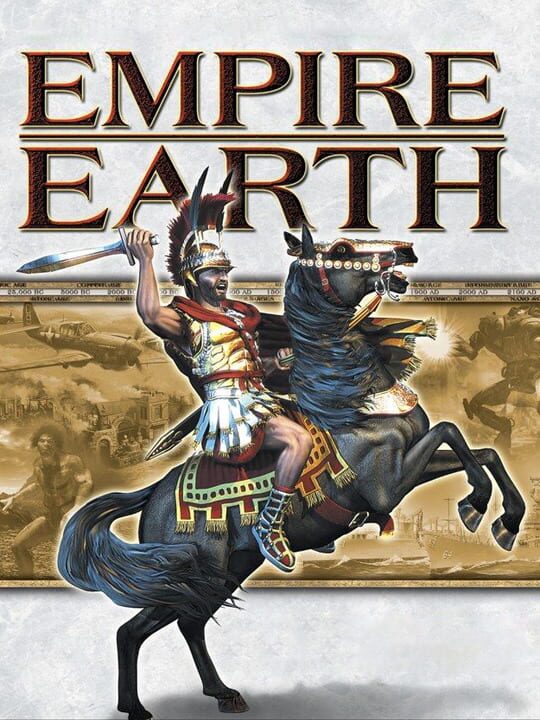
Empire Earth
Main Game
RELEASED
7.7
Nov 12, 2001
PC (Microsoft Windows)byStainless Steel Studios•Sierra Entertainment
Overview:|
As a seminal Real Time Strategy (RTS) game released in 2001 for PC, Empire Earth tasks you with guiding a civilization across 14 distinct historical epochs, starting in the Prehistoric Age and advancing into speculative future eras like the Digital and Nano Ages. The core loop involves resource management, base building, and military development, with advancement requiring significant investment to unlock new technologies and units. Its unique feature is this massive chronological span, forcing constant strategic adaptation as older units become obsolete while existing forces remain on the field, creating complex historical matchups.
This is a seminal Real Time Strategy (RTS) title released in 2001 for Microsoft Windows. Set against a backdrop of human history, the core appeal of this game lies in its ambitious scope, allowing players to guide a civilization from its earliest beginnings all the way into a speculative, technologically advanced future.
The Grand Sweep of History: Epoch Advancement
The central mechanic revolves around Epoch Advancement. Players begin in the Prehistoric Age and must manage resources, build necessary structures, and research technologies to progress through distinct historical periods. These epochs—ranging from the Stone Age and the Copper Age through the Renaissance, Imperial Age, and into the Atomic Ages—each introduce new unit types, architectural styles, and technological capabilities.
The progression is designed to feel monumental. Advancing to a later epoch requires significant investment, although the ability to gather required resources also increases substantially. While moving forward means abandoning the ability to produce older, obsolete units, any existing older units remain on the battlefield, allowing for strategic combinations of ancient and modern forces.
The base game features 14 distinct historical epochs, culminating in the Digital Age and the Nano Age, projecting the conflict into the near future. An official expansion pack is available which adds further content, including the Space Age, focusing on space colonization.
Core Gameplay Mechanics in an RTS Framework
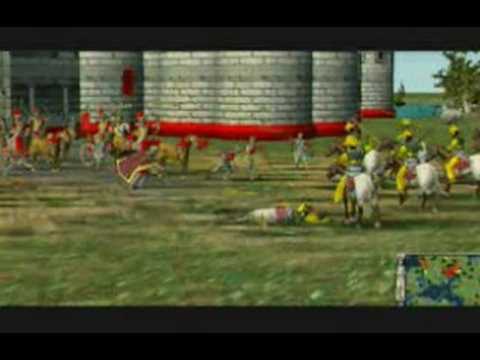
As a strategy game, the loop involves standard RTS elements: gathering resources, constructing a base, researching technology, and building an army for combat and defense. The sheer breadth of historical periods covered means that the strategic landscape is constantly shifting. A unit that was dominant in the Middle Ages might be completely ineffective against a foe utilizing technology from the Industrial Age.
Players must balance the immediate needs of their current age with the long-term investment required for the next technological leap. The cost of advancing increases with each subsequent epoch attained.
What makes this game unique in the RTS genre?
The defining feature that sets this title apart is its unprecedented chronological span. Unlike many RTS games that focus on a single historical period, this game forces players to manage a civilization across millennia. This historical breadth ensures that tactical engagements are never static; the composition of armies and the available defensive structures change dramatically as you transition from one age to the next.
Available Content and Platform
Available Content
The original 2001 release is the main game experience. It has one official expansion pack available that extends the technological progression further.
Platforms and Release
This strategy title was released for PC (Microsoft Windows).
Game Details
Primary Name: Empire Earth
Type: Main Game
Series: Empire Earth
Developer: Stainless Steel Studios
Publisher: Sierra Entertainment
Release Information
Release Date: Nov 12, 2001
Genres & Themes
Genres: Real Time Strategy (RTS), Strategy
Themes: Warfare, Science fiction, Historical
Platforms
PC (Microsoft Windows)
Game Modes
Perspective: Bird view / Isometric
Player Modes: Single-player
Game Modes: Single player, Multiplayer
Age Ratings
ESRB:T (Teen)
PEGI:12+
 Soren
Soren