
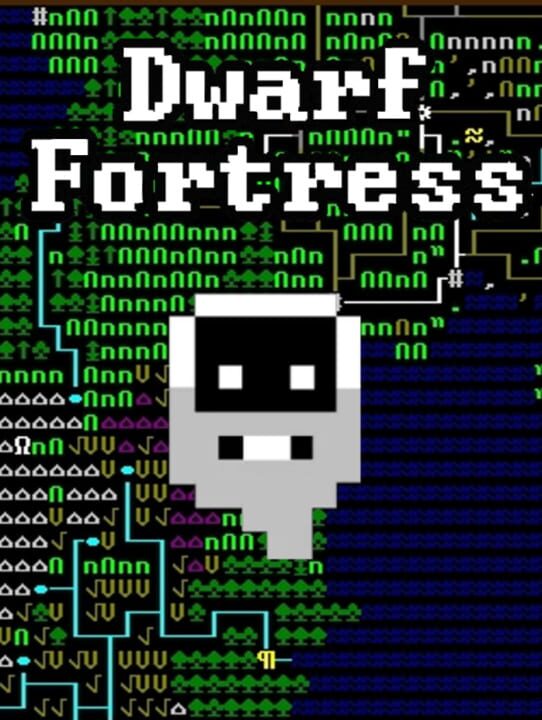
Dwarf Fortress
Main Game
8.7
LinuxPC (Microsoft Windows)+1byBay 12 Games
Overview:|
Dwarf Fortress is a single-player fantasy RPG/Strategy simulator where you manage a persistent, randomly generated world. Gameplay centers on either building and micromanaging a complex underground dwarven outpost or exploring the world as a single adventurer. Its distinctive feature is an unparalleled depth of simulation, modeling geology, individual dwarf memories, and social dynamics, leading to emergent, unscripted narratives. The core experience involves intricate resource management, crafting, and defense against emergent threats.
This is a single-player fantasy simulation and strategy experience where players delve into randomly generated, persistent worlds teeming with intricate detail. Available on PC (Microsoft Windows), Linux, and Mac platforms, this title blends elements of role-playing, turn-based strategy, and deep simulation mechanics. The core experience centers on managing the survival and prosperity of a dwarven community or embarking on personal adventures as an adventurer within these complex settings.
Core Gameplay Experience and Setting
The game presents players with two primary modes of interaction within its procedurally generated fantasy setting. In the fortress mode, the objective is to establish and manage a thriving underground dwarven colony. This involves meticulous planning, resource management, defense against external threats, and navigating the complex social dynamics of the dwarven population.
Alternatively, the adventurer mode allows players to explore the world on foot, interacting with the environment, engaging in quests, and developing a specific character through role-playing mechanics. Every world is unique, featuring its own history, geography, and inhabitants, all simulated simultaneously.
What makes the simulation depth so distinctive?
The defining characteristic of this title is its unparalleled depth of simulation. Nearly every aspect of the world is modeled, from the geological composition of the caverns to the individual memories, relationships, and physical attributes of every creature and dwarf. This results in emergent storytelling—unscripted events arising naturally from the complex interplay of the game's systems.
Mechanics include detailed crafting, combat simulation, hydrological modeling, and a sophisticated system tracking the mental and emotional states of your inhabitants. Success often hinges on understanding and manipulating these intricate systems.
Release Status and Content Availability
As of February 2026, this title is considered a main game release. It has seen one major remaster update, which significantly enhanced the user interface and accessibility compared to its initial iterations. Currently, there are no official downloadable content packs or expansions available for this core experience.
Simulation Depth and Emergent Narrative
The atmosphere is one of constant challenge and unexpected discovery. Because the world persists and evolves even when the player is not directly interacting with it, players often encounter unique historical artifacts, bizarre creatures, and complex political situations that have developed organically within the simulation.
Resource Management and Crafting
Managing the needs of the dwarves—including food, drink, shelter, and morale—is crucial. Crafting involves detailed material science, where the quality of the final product is often determined by the skill of the artisan and the quality of the raw materials sourced from the deep earth.
Game Details
Primary Name: Dwarf Fortress
Alternative Names:
Slaves to Armok 2: Dwarf Fortress (Alternative title)
Slaves to Armok II: Dwarf Fortress (Alternative spelling)
Slaves to Armok: God of Blood Chapter II: Dwarf Fortress (Alternative title)
Dwarf Fortress Classic (Alternative title)
Type: Main Game
Series: Slaves to Armok
Developer: Bay 12 Games
Publisher: Bay 12 Games
Engine: OpenGL
Release Information
Release Date: Announced (no release date)
Genres & Themes
Genres: Role-playing (RPG), Simulator, Strategy, Turn-based strategy (TBS), Indie
Themes: Sandbox, Open world, 4X (explore, expand, exploit, and exterminate), Fantasy, Survival, Stealth
Platforms
LinuxPC (Microsoft Windows)Mac
Game Modes
Perspective: Bird view / Isometric
Player Modes: Single-player
Game Modes: Single player

 Soren
Soren